
Logistik Syarikat Perlombongan Kerikil Pasir


Logistik Syarikat Perlombongan Kerikil Pasir: Optimizing Material Flow from Pit to Plant
The Hidden Cost of Inefficient Material Movement
Your sand and gravel operation faces three persistent challenges that directly impact your bottom line. Pertama, haulage costs consume 4560% of your total operational budget—every unnecessary mile, every idle truck hour, every rehandle of material represents margin erosion. Kedua, plant feed inconsistency causes 1218% throughput reduction when surge piles segregate or conveyors starve. Ketiga, regulatory pressure on road transport—truck weight limits, keperluan penindasan habuk, and traffic impact fees—adds compliance costs that compound daily.
Are you moving material from extraction point to processing plant with the same methods you used five years ago? Can your current logistics system handle the seasonal demand spikes without overtime premiums? Does your material handling chain introduce contamination or degradation that reduces final product quality?
Gambaran Keseluruhan Produk: Integrated PittoPlant Logistics Systems
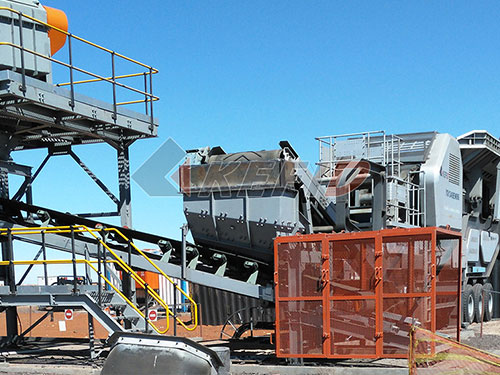
Sand gravel mining companies logistics solutions encompass the complete material transfer infrastructure between excavation face and primary processing. These systems replace fragmented truckandloader operations with continuous flow technology.
Aliran Kerja Operasi:
1. Primary Extraction Feed – Mobile hopper feeders or portable field conveyors receive material directly from excavators or wheel loaders at the mining face
2. Overland Conveying – Troughed belt conveyors transport material 5005,000 feet to the processing plant at speeds of 350600 kaki seminit
3. Surge Management – Automated stacking systems create live storage with 2,00010,000 ton capacity for plant feed buffering
4. Tuntut semula & Pemeteran – Variablespeed belt feeders or apron feeders control discharge rates to match plant capacity within ±5%
5. Scalping & Screening Integration – Grizzly feeders remove oversize (+6 inci) material before primary crushing
Skop Permohonan: Suitable for dry pit operations with 2002,000 tons per hour production rates. Not recommended for dredging operations or sites with extreme moisture content exceeding 12% in fines.
Ciri Teras
Continuous Flow Architecture | Asas Teknikal: Belt conveyor theory (CEMA standards) | Faedah Operasi: Eliminates batch loading cycles and truck queuing delays | Kesan ROI: Reduces perton haulage cost by $0.80$1.50 compared to truck haulage over distances exceeding 1,500 kaki
Automated Surge Pile Management | Asas Teknikal: PLCcontrolled luffing and slewing stacker with laser level sensing | Faedah Operasi: Maintains consistent plant feed regardless of extraction rate fluctuations (±20% variation) | Kesan ROI: Meningkatkan daya pengeluaran loji sebanyak 814% through elimination of starvation events
Modular Conveyor Components | Asas Teknikal: Bolted frame construction with standardized idler spacing (4foot centers) | Faedah Operasi: Relocation completed in 35 hari berbanding 23 weeks for fixed installations | Kesan ROI: Reduces pit relocation costs by $40,000$120,000 setiap langkah
Integrasi penindasan habuk | Asas Teknikal: Enclosed transfer points with belt wipers and water spray misting at loading zones | Faedah Operasi: Meets EPA PM10 standards without separate dust collection systems | Kesan ROI: mengelak $15,000$30,000 annual dust control fines while reducing water consumption by 40%

Variable Frequency Drive Control | Asas Teknikal: VFD motors on all main drive pulleys (1800 RPM base speed) | Faedah Operasi: Softstart reduces mechanical stress; speed adjustment matches plant demand in realtime | Kesan ROI: Extends belt life by 25% and reduces power consumption by 18% during partial load conditions
Pemantauan Jauh & Diagnostik | Asas Teknikal: SCADA interface with belt scale data (±0.5% ketepatan), penderia suhu galas, and belt alignment tracking | Faedah Operasi: One operator monitors entire logistics chain from control room; predictive alerts prevent unscheduled downtime | Kesan ROI: Mengurangkan waktu buruh penyelenggaraan dengan 30% and emergency repairs by $50,000 setiap tahun
HeavyDuty Belt Construction | Asas Teknikal: Rubbercovered fabric carcass (EP400/3 to EP800/4 rating) with vulcanized splices | Faedah Operasi: Handles sharpedged gravel without carcass damage; splice life exceeds conveyor component lifespan (biasanya 5+ tahun) | Kesan ROI: Menghapuskan $8,000$15,000 annual belt replacement costs compared to lighterduty alternatives
Kelebihan Kompetitif
| Metrik Prestasi | Piawaian Industri (Truck Haulage) | Sand Gravel Mining Logistics Solution | Kelebihan |
|||||
| Perton transport cost (1mile distance) | $2.10 $3.40 setiap tan (including fuel + buruh + penyelenggaraan) | $0.85 $1.20 setiap tan (electric power + belting wear) | 6065% pengurangan |
| Material segregation risk during transport (%) Coefficient of variation in particle size distribution across load/unload cycle Coefficient of variation in particle size distribution across load/unload cycle Coefficient of variation in particle size distribution across load/unload cycle Coefficient of variation in particle size distribution across load/unload cycle Coefficient of variation in particle size distribution across load/unload cycle Coefficient of variation in particle size distribution across load/unload cycle Coefficient of variation in particle size distribution across load/unload cycle Coefficient of variation in particle size distribution across load/unload cycle Coefficient of variation in particle size distribution across load/unload cycle Coefficient of variation in particle size distribution across load/unload cycle Coefficient of variation in particle size distribution across load/unload cycle Coefficient of variation in particle size distribution across load/unload cycle Coefficient of variation in particle size distribution across load/unload cycle Coefficient of variation in particle size distribution across load/unload cycle Coefficient of variation in particle size distribution across load/unload cycle Coefficient of variation in particle size distribution across load/unload cycle