
Roller Mill Crusher
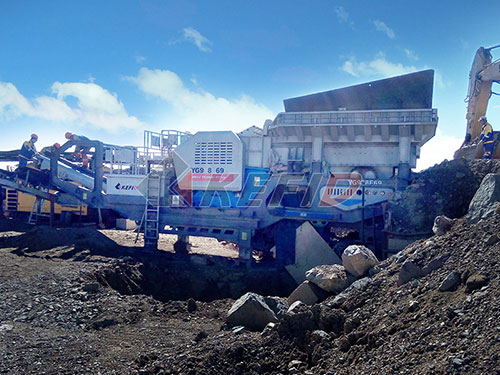

The Roller Mill Crusher: Precision and Power in Particle Size Reduction
Within the demanding environments of mineral processing, Pengeluaran simen, power generation, and numerous industrial sectors, the efficient reduction of raw materials into specific particle sizes is paramount. While various crushing and grinding technologies exist, the Roller Mill Crusher stands out as a sophisticated and highly effective solution, particularly for intermediate to fine grinding applications requiring precise control over product fineness. This article delves into the mechanics, kelebihan, aplikasi, and critical considerations surrounding this essential piece of industrial equipment.
Melampaui penghancuran mudah: Understanding the Roller Mill Principle
Pada terasnya, a Roller Mill Crusher operates on the principle of interparticle comminution. Unlike primary crushers that rely on impact or compression between metal surfaces and rock (seperti penghancur rahang atau gyratory), or traditional ball mills using tumbling media for grinding, roller mills exert pressure primarily through rotating rollers onto a bed of material.
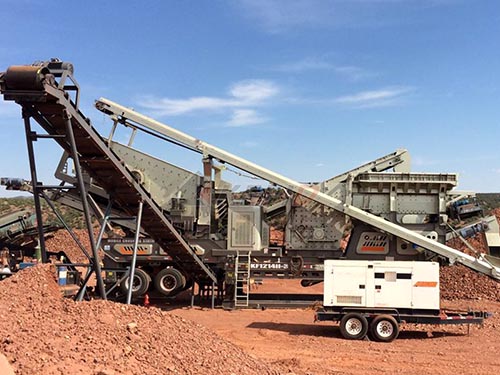
Here's a breakdown of its fundamental operation:
1. Suapan Bahan: Bahan mentah (mis., batu kapur, clinker, arang batu, bijih) is fed centrally or across the width onto a rotating grinding table or pan.
2. Centrifugal Distribution: As the table rotates (driven by a powerful motor underneath), centrifugal force throws the material outwards towards the periphery.
3. The Grinding Zone: Stationary or independently driven rollers (typically two to four) are positioned above the grinding table path. These rollers exert significant hydraulic or spring-loaded pressure downwards.
4. Interparticle Breakage: The key mechanism is not primarily the roller crushing material directly against the table. Sebaliknya:
Material entering the narrow gap between roller and table forms a compacted "bed" or layer.
As subsequent material enters this zone under pressure from above (roller) and below (table), particles within this bed are forced against each other.
Stress is transferred from one particle to another within this densely packed layer.
Breakage occurs predominantly at contact points between particles (interparticle breakage) rather than by direct impact with metal components.
5. Grinding Force Application: The high pressure applied by the rollers creates immense shear and compressive forces within this particle bed.
6. Material Transport & Pengelasan: Ground material moves further outward due to centrifugal force until it reaches an adjustable dam ring at the periphery of the table.
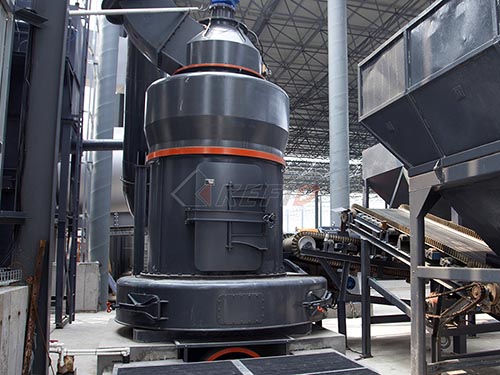
7. Air Sweep & Separation: A controlled stream