
Kilang Penghancur Bijih Besi Industri

Content Body: Kilang Penghancur Bijih Besi Industri
1. PEMBUKAAN PAINPOINT DRIVEN
Is your current iron ore crushing circuit struggling to maintain a consistent P80 of 1012mm for downstream ball mill feed? Are you facing unplanned downtime exceeding 15% due to premature liner wear from high silica content (SiO₂ > 8%)? Many operations report that inefficient primary crushing alone adds $0.50–$1.20 per ton in energy costs, while poor reduction ratios force secondary and tertiary stages to run at 110% kapasiti, accelerating component fatigue.
Can your existing plant handle the shift from hematite to magnetite ore bodies without a complete reconfiguration? How much production are you losing to bridging and blockages in the jaw cavity during wet season operations? These are the operational bottlenecks that directly impact your cost per ton and overall plant availability.
2. GAMBARAN KESELURUHAN PRODUK
ini Kilang Penghancur Bijih Besi Industri adalah bersepadu sepenuhnya, modular crushing system designed specifically for hightonnage (1,000–6,000 TPH) iron ore processing. The operational workflow follows a proven fourstage reduction path:
1. Penghancuran Gyratory Primer: Runofmine (ROM) bijih (up to 1,500mm) is reduced to 200300mm using a heavyduty gyratory crusher with a spider bearing design for high eccentric throw.
2. Penghancuran Kon Sekunder: Ore is fed into a heavyduty cone crusher (mis., CH880 or equivalent) for secondary reduction to 5075mm, with a closedside setting (CSS) of 2540mm.
3. Tertiary HPGR (Gulungan Pengisar Tekanan Tinggi): The material passes through an HPGR unit for interparticle comminution, reducing it to 612mm, which significantly reduces ball mill work index (Wi) oleh 1525%.
4. Pemeriksaan & Recirculation: Multideck banana screens classify the product. Oversize material is recirculated to the tertiary crusher, while the final product is conveyed to the stockpile.
Skop Permohonan: Ideal for greenfield projects and brownfield expansions processing hard, bijih besi yang kasar (Indeks Kerja Bon 1422 kWj/t). Batasan: Not recommended for highclay content (>15%) lateritic ores without prewashing stages, as material handling issues may arise.
3. CIRI TERAS
HighThrust Gyratory Spider | Asas Teknikal: Analisis Unsur Terhingga (FEA) optimized mainshaft | Faedah Operasi: Handles slabby, irregular feed without bridging, reducing crusher stall events by 40% | Kesan ROI: Increases uptime by 812%, saving $200k+ annually in lost production for a 2,000 loji TPH.
Sistem Penyesuaian CSS Hydroset | Asas Teknikal: Hydraulic cylinder with accumulator for tramp iron relief | Faedah Operasi: Allows operators to adjust the closedside setting in under 30 saat tanpa menghentikan penghancur | Kesan ROI: Reduces liner changeout time by 2 jam setiap syif, improving utilization by 35%.
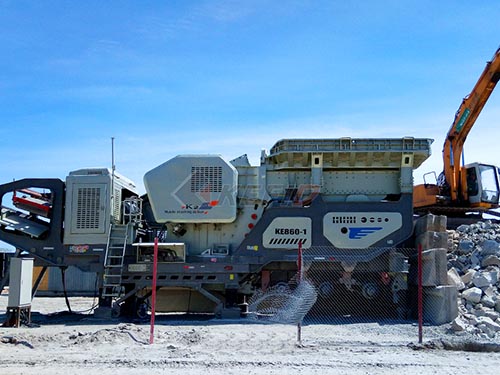
DualDrive HPGR with Variable Frequency Drives (VFDS) | Asas Teknikal: dua 3,000 kW motors with torquesharing control | Faedah Operasi: Provides precise control over specific pressing force (3.55.0 N/mm²) to optimize flake formation | Kesan ROI: Mengurangkan penggunaan tenaga tertentu (kWj/t) oleh 18% compared to traditional cone crusheronly circuits.
Modular SkidMounted Frame | Asas Teknikal: Pra-kejuruteraan, bolted steel structures with vibration dampening | Faedah Operasi: Reduces site civil works by 60% and allows for phased commissioning | Kesan ROI: Shortens project timeline by 46 months for a 5,000 loji TPH.
Automated Metal Detector & Reject System | Asas Teknikal: Inductive sensors with pneumatic diverter gates | Faedah Operasi: Removes tramp iron (bit gerudi, gigi baldi) before the crusher, mencegah kerosakan bencana | Kesan ROI: Reduces crusher rebuild costs by 90% and avoids 35 days of downtime per incident.
WearLiner Monitoring System | Asas Teknikal: Acoustic emission sensors embedded in the mantle and bowl liner | Faedah Operasi: Provides realtime wear profile data, predicting liner life to within 50 jam | Kesan ROI: Optimizes liner change scheduling, reducing unplanned shutdowns and inventory holding costs by 15%.
Dust Suppression via Dry Fog System | Asas Teknikal: Ultrasonic atomization creating 110 micron water droplets | Faedah Operasi: Captures respirable crystalline silica (RCS) at transfer points without wetting the ore | Kesan ROI: Helps achieve OSHA PEL compliance (50 µg/m³) and reduces water consumption by 90% vs. traditional spray bars.
4. KELEBIHAN KOMPETITIF
| Metrik Prestasi | Piawaian Industri (Conventional Jaw + Kon) | Industrial Iron Ore Crushing Plant Factory Solution | Kelebihan (% Penambahbaikan) |
| : | : | : | : |
| Tenaga Khusus (kWj/t) | 1.8 – 2.4 kWj/t | 1.2 – 1.6 kWj/t | 3035% pengurangan |
| Product P80 (mm) | 1825 mm | 812 mm | 50% finer product |
| Ketersediaan Loji | 8588% | 9497% | 810% masa operasi yang lebih tinggi |
| Kehidupan Pelapik (Mangan) | 46 minggu (utama) | 812 minggu (utama) | 50100% hayat lebih panjang |
| Masa Pemasangan | 1218 bulan | 69 bulan | 4050% lebih pantas |
| Tahap Kebisingan (dan 1m) | 95105 db(A) | 8592 db(A) | 1015 db(A) pengurangan |
5. SPESIFIKASI TEKNIKAL
Penilaian Kapasiti: 1,200 – 6,500 Ton metrik sejam (based on bulk density of 2.4 t/m³ and feed size F80 of 800mm).
Keperluan kuasa: Total installed power: 8,500 – 22,000 kw (including conveyors, skrin, and dust collection). Voltan: 6.6 kV / 11 kV primary, 480V secondary.
Spesifikasi Bahan: All contact surfaces: 18% Keluli mangan (ASTM A128 Grade B2) for crushers; AR400/500 plate for chutes and hoppers; Hardox 600 for wear liners in HPGR.
Dimensi Fizikal: Primary crusher footprint: 12m x 15m x 18m (H). Jumlah jejak tumbuhan: approximately 150m x 80m (excluding stockpile and ROM pad).
Julat Operasi Persekitaran: Suhu persekitaran: 20°C hingga +50°C. Ketinggian: up to 4,500m (with derating for motor power). Kelembapan: 0100% condensing.
6. SENARIO APLIKASI
Kajian Kes 1: HighSilica Hematite Operation (Western Australia)
Cabaran: A 4,000 TPH plant was experiencing 22% downtime due to severe liner wear from quartz inclusions (SiO₂ 12%). Annual liner replacement costs exceeded $1.8M.
Penyelesaian: Implemented the Industrial Iron Ore Crushing Plant Factory with a primary gyratory featuring a concave profile optimized for highsilica feed, and an HPGR with tungsten carbide studs.
Keputusan: Kehidupan pelapik meningkat daripada 5 minggu ke 11 minggu. Specific energy dropped from 2.1 kWj/t kepada 1.4 kWj/t. Annual liner cost savings: $950,000.
Kajian Kes 2: Brownfield Expansion (Brazil)
Cabaran: An existing plant needed to increase throughput from 2,500 TPH kepada 4,000 TPH without expanding the existing footprint.
Penyelesaian: Replaced two secondary cone crushers with a single HPGR unit and added a modular screening tower.
Keputusan: Tercapai 4,200 Daya pengeluaran TPH. Plant footprint increased by only 15%. Capital expenditure was 40% lower than a traditional greenfield expansion.
Kajian Kes 3: HighAltitude Operation (Andes, Peru)
Cabaran: A 4,500m altitude site faced motor overheating and reduced crusher throughput due to lower air density.
Penyelesaian: Specified the plant with oversized VFDs (1.15 faktor perkhidmatan) and forcedair cooling for all motors.
Keputusan: Maintained 95% of rated capacity at altitude. Motor winding temperatures stayed below 135°C, eliminating thermal trips.
7. PERTIMBANGAN KOMERSIL
Peringkat Harga Peralatan:
Pakej Standard (1,2002,500 Tph): $8.5M – $14M (Includes primary gyratory, kon sekunder, skrin, penghantar, basic PLC).
Pakej Lanjutan (2,5004,500 Tph): $15M – $25M (Includes HPGR, advanced wear monitoring, dry fog system, Tahap 2 Automasi).
Pakej Premium (4,5006,500 Tph): $28M – $42M (Includes dual HPGR lines, online particle size analyzer, predictive maintenance suite, diagnostik jauh).
Ciri Pilihan: Automated liner changing system (+$1.2M), highangle sandwich belt conveyor for steep inclines (+$800k), integrated water treatment plant for dust suppression (+$500k).
Pakej Perkhidmatan:
asas (12 bulan): Pemantauan jauh, pemeriksaan tahunan, spare parts discount (10%).
Komprehensif (36 bulan): Onsite service engineer, guaranteed availability (95%), all wear parts included, quarterly performance audits.
Pilihan Pembiayaan: Available through OEM financing partners. Options include 10% down with 60month terms at 68% APR (tertakluk kepada kelulusan kredit). Operating lease options available for 35 terma tahun.
8. Soalan Lazim
S1: Can this plant handle ore with a high moisture content (812%)?
A: ya. The primary gyratory is designed with a steep nip angle and a spider arm configuration that prevents packing. For the HPGR, we recommend a feed moisture limit of 10% to avoid material slippage. Above this, a predrying or dewatering screen is advised.
S2: What is the typical payback period for the HPGR upgrade?
A: Based on field data from 12 installations, the payback period for the HPGR module (compared to a tertiary cone circuit) is typically 1422 bulan, driven by energy savings ($0.300.50/ton) and improved ball mill throughput.
S3: How does the plant perform with different ore types (magnetite vs. hematit)?
A: The plant is designed for variable feed. For magnetite, the HPGR can be operated at a higher specific pressing force (4.5 N/mm²) to achieve microcracking. For hematite, the focus is on reducing fines generation. The VFDs allow for realtime tuning.
S4: What is the lead time for a 4,000 loji TPH?
A: Current lead time is 1416 months from order to FOB port. This includes 8 months for fabrication, 2 months for preassembly, dan 4 months for shipping. Onsite installation typically takes 68 bulan.
S5: What is the warranty on the crusher mainshaft?
A: The mainshaft carries a 5year warranty against manufacturing defects, provided the crusher is operated within the specified power draw and CSS limits. Liner wear is excluded from the standard warranty.
S6: Can the plant be integrated with an existing SCADA system?
A: ya. The control system uses standard OPCUA and Modbus TCP/IP protocols. We provide a full data mapping document for integration with Rockwell, Siemens, or ABB DCS/SCADA platforms.
S7: What are the power requirements for a 3,000 loji TPH?
A: The total connected load is approximately 14,500 kw. The primary crusher motor is typically 1,200 kw, the HPGR motors are 2 x 2,800 kw, and the remaining load is for conveyors and screens. A 33 kV incoming supply is recommended.