
Cameroon 200tph Granite Crushing Line
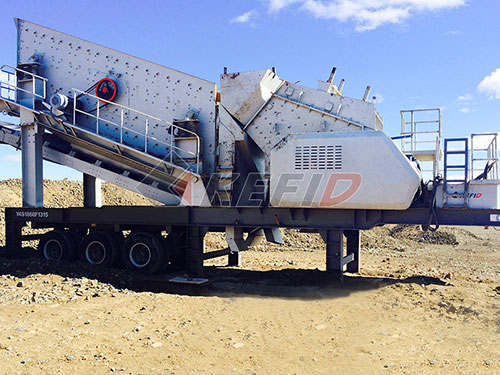

Cameroon 200tph Granite Crushing Line: Model kecekapan dan kemampanan
Pengenalan
Cameroon, endowed with abundant granite resources, has witnessed growing demand for high-quality aggregates to support infrastructure development and urbanization. To meet this demand, a state-of-the-art 200-ton-per-hour (tph) granite crushing line was established, showcasing advanced engineering solutions and sustainable practices. This article explores the project’s design, technological innovations, kecekapan operasi, and its impact on Cameroon’s construction sector.
Gambaran Keseluruhan Projek
The Cameroon 200tph granite crushing line was designed to process raw granite into high-quality aggregates for road construction, Pengeluaran konkrit, dan aplikasi seni bina. Located in a resource-rich region, the project prioritizes efficiency, pematuhan alam sekitar, and adaptability to local conditions. objectives included:
- Kapasiti Pengeluaran Tinggi: Achieving a steady output of 200tph to meet large-scale infrastructure needs.
- Optimal Resource Utilization: Minimizing waste through advanced crushing and screening processes.
- Perlindungan Alam Sekitar: Implementing dust suppression and noise reduction technologies.
Equipment Configuration and Workflow
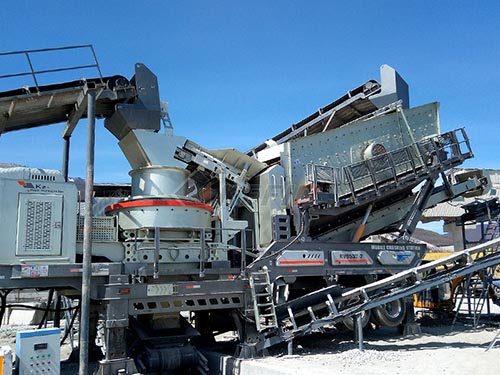
The crushing line integrates robust machinery tailored for granite’s hardness and abrasiveness. Konfigurasi termasuk:
1. Penghancuran utama: Penghancur rahang tugas berat (mis., PE750×1060) reduces raw granite blocks (<630mm) to ≤150mm particles. Its high crushing ratio ensures efficient initial size reduction.
2. Menghancurkan sekunder: Penghancur kerucut hidraulik (mis., HPT300) further processes materials into ≤40mm intermediate products while maintaining low wear costs.
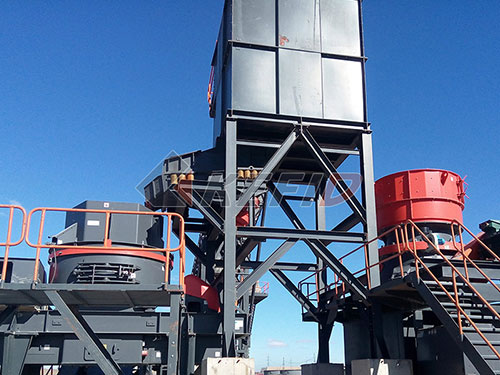
3. Tertiary Crushing and Screening: A multi-deck vibrating screen (mis., 3YZS2160) classifies materials into 0-5mm, 5-10mm, 10-20mm, and 20-40mm specifications. Oversized particles are recirculated through a vertical shaft impact crusher (Semua orang) for precise shaping.
This three-stage process ensures uniform particle size distribution and enhances product quality for diverse applications.
Overcoming Challenges
The project faced several challenges inherent to Cameroon’s operational environment:
1. Had Infrastruktur: Remote locations necessitated modular equipment designs for easier transportation and assembly.
2. Power Supply Instability: Diesel generators were incorporated as backup systems to ensure uninterrupted operations during grid outages.
3. Dust and