
Mining Rock Crushers
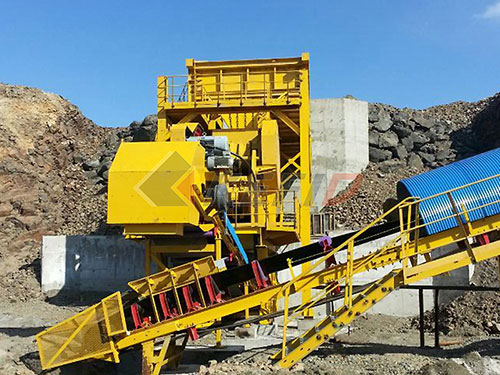

Mining Rock Crushers: The Engine of Mineral Extraction
The relentless pursuit of mineral resources – the metals, aggregates, and industrial minerals underpinning modern civilization – hinges on a fundamental process: reducing colossal chunks of rock unearthed from the earth into manageable, usable sizes. At the heart of this critical size reduction stage stand Mining Rock Crushers, robust and sophisticated machines engineered to conquer the immense forces inherent in fracturing hard, abrasive geological formations. Far more than simple brute-force devices, modern crushers represent the culmination of mechanical engineering, materials science, and increasingly, digital intelligence. They are the indispensable workhorses that transform raw potential locked within bedrock into tangible economic value.
Understanding the Core Mission: Size Reduction in Mining
Before delving into crusher types and technologies, it's crucial to grasp why crushing is non-negotiable in mining:
1. Liberation: Many valuable minerals (e.g., gold, copper) are finely disseminated within host rock (gangue). Crushing breaks down the rock matrix to physically liberate these target mineral particles for subsequent separation processes like flotation or leaching.
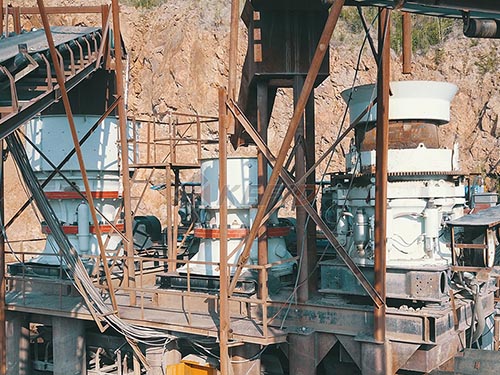
2. Handling & Transport: Massive run-of-mine (ROM) ore blocks (often exceeding 1 meter in diameter) are impractical and uneconomical to handle via conveyors, trucks, or feed into processing mills. Crushers reduce them to conveyable sizes.
3. Downstream Processing Efficiency: Grinding mills (ball mills, SAG mills), which perform finer comminution for liberation or final product sizing, operate vastly more efficiently when fed with optimally sized material from primary crushing stages. Oversized feed drastically reduces mill throughput and increases energy consumption per ton.
4. Product Specification: For aggregates used in construction (concrete, asphalt), precise size fractions are mandated by industry standards. Crushers are configured with screens in closed circuits to produce specific product gradations.
The Crusher Arsenal: Matching Machine to Task
No single crusher type is universally optimal. The choice depends heavily on:
Ore Characteristics: Hardness (compressive strength), abrasiveness (silica content), moisture content, clay content, feed size distribution.
Required Throughput Capacity: Tons per hour (tph).
Desired Product Size: Top size and particle size distribution curve.
Stage of Crushing: Primary (first reduction from ROM), Secondary (further reduction after primary), Tertiary/Quaternary (final shaping/sizing).