
Luxury Quarry Ballast Crushing Equipment R&D
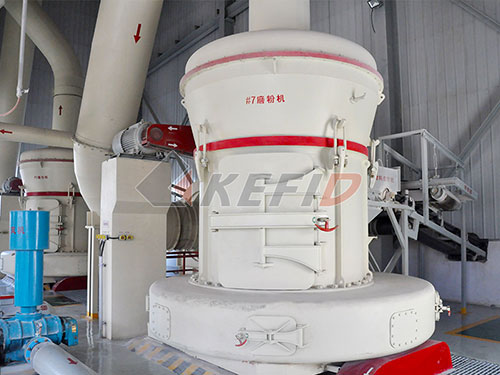

Headline: HighCapacity Ballast Crushing for Premium Quarry Output: Reducing Fines & Meeting AREMA Specs
Subheadline: Engineered for the specific demands of railway ballast production—where particle shape, fracture count, and gradation tolerances are nonnegotiable.
The Cost of Inconsistent Ballast: Are Your Fines Eating Your Margins?
Every ton of material that falls outside the 22.4mm to 63mm gradation envelope is a direct loss. For a quarry processing 500,000 tons of ballast annually, a 5% overspill into subbase or waste represents $1.5M+ in lost revenue (at a conservative $60/ton premium for ballast vs. aggregate).
Your operational challenges are specific:
- Excessive Fines Generation: Standard cone crushers create 812% fines (below 22.4mm) during secondary crushing, requiring rescreening and stockpile contamination.
- Poor Particle Shape (Flakiness Index): Noncubical particles reduce track stability and increase tamping frequency. AREMA requires a flakiness index below 5%.
- High Wear Costs: Crushing hard, abrasive granite or basalt (typical for ballast) can consume liners every 300400 hours, driving costperton above $0.85.
- Downtime for Screen Changes: Frequent retooling to adjust for feed variability stops production for 46 hours per changeover.
- Primary Use: Production of AREMA No. 4A, No. 24, and UIC 60 ballast grades.
- Material Suitability: Hard rock (granite, basalt, quartzite, traprock) with compressive strength up to 350 MPa.
- Limitations: Not designed for soft limestone or recycled concrete. Feed moisture must remain below 3% to maintain air classification efficiency.
- Base Module (QBC500): $1,450,000 $1,650,000 (includes VSI, air classifier, control panel, VFD)
- Integrated Package: $1,950,000 $2,200,000 (includes feed conveyor, oversize return conveyor, metal detector, magnet, and 50m of cable)
- Turnkey System: $2,800,000 $3,500,000 (includes all above plus structural steel, platform, chute work, and commissioning engineer for 2 weeks)
- Ceramic Wear Inserts: $45,000 (extends rotor life by 40% in highsilica feed)
- Remote Telemetry Module: $12,500 (realtime data feed to your ERP system)
- Dust Suppression System (Dry Fog): $38,000 (meets MSHA/OSHA dust standards)
- Standard Warranty: 12 months / 2,000 operating hours
- Extended Warranty (Year 23): $85,000/year (includes parts and remote diagnostics)
- Preventive Maintenance Contract: $4,500/month (quarterly inspections, oil analysis, rotor balancing)
- LeasetoOwn: 48month term, 5.9% APR (subject to credit approval)
- Deferred Payment: 90day payment holiday for firsttime buyers
- TradeIn Program: Accepting qualified used cone crushers or VSI units as partial trade (value assessed onsite)
Is your current crushing line delivering the consistent, highfracture count product required for modern highspeed rail contracts? Or are you leaving margin in the reject pile?
Product Overview: The Quarry Ballast Specific Crushing Module
This equipment is a dedicated tertiary crushing and shaping module designed specifically for the production of railway ballast. It is not a modified aggregate crusher. It operates as a closedcircuit system to guarantee final product compliance.
Operational Workflow:
1. Feed Intake: Receives 40100mm primary crushed material via a vibrating grizzly feeder (fines removal at entry).
2. Controlled Crushing: Material passes through a HighSpeed Vertical Shaft Impactor (VSI) with a patented rockonrock cascade chamber. This minimizes metallic wear while maximizing cubicity.
3. Air Classification: An integrated air screen removes flat and elongated particles (flakiness index control) without water.
4. Oversize Recirculation: Material above 63mm is returned to the VSI via a dedicated conveyor.
5. Product Discharge: Final ballast (22.4mm – 63mm) is discharged with a fracture count of 100% (two or more fractured faces).
Application Scope:
Core Features: Engineering for Ballast Profitability
Feature 1: Cascade RockonRock Chamber
Technical Basis: Material is accelerated via a rotor (6080 m/s tip speed) into a stationary anvil ring of stone. No metaltorock contact in the crushing zone.
Operational Benefit: Produces a cubical shape with a flakiness index below 3% consistently. Eliminates the need for manual liner adjustments.
ROI Impact: Reduces wear cost per ton by 4055% compared to a standard cone crusher operating on the same feed (field data: $0.48/ton vs. $0.85/ton).
Feature 2: Integrated Air Flotation Classifier
Technical Basis: Uses a variablespeed fan to create an upward air current that lifts flat and elongated particles (low masstodrag ratio) while allowing cubical particles to fall through.
Operational Benefit: Removes flaky material at the point of production, not at a separate screening station. Reduces recirculating load by 15%.
ROI Impact: Eliminates the need for a dedicated flakiness screening plant, saving $120,000 $180,000 in capital expenditure.
Feature 3: Hydraulic Lid Opening System
Technical Basis: Singlepoint hydraulic cylinders lift the entire upper housing (rotor and anvil) in under 3 minutes.
Operational Benefit: Allows for rotor inspection and wear part replacement without a crane or confined space entry.
ROI Impact: Reduces maintenance downtime from 6 hours to 45 minutes. At a production rate of 300 tph, this saves $9,000 per changeover in lost production.
Feature 4: Variable Frequency Drive (VFD) Rotor Control
Technical Basis: The motor speed is adjustable from 4080 m/s tip speed via a VFD.
Operational Benefit: Operators can adjust particle shape and fracture count in realtime based on feed hardness. Softer feed requires lower speed to prevent overcrushing.
ROI Impact: Reduces fines generation by 23% when feed hardness fluctuates, directly increasing ballast yield.
Feature 5: SelfCleaning Magnet & Metal Detector
Technical Basis: A crossbelt magnet and a metal detector are mounted before the VSI feed chute, with an automatic diverter gate.
Operational Benefit: Prevents tramp iron (drill bits, bucket teeth) from entering the rotor, which can cause catastrophic failure.
ROI Impact: Protects a $45,000 rotor assembly. Average repair cost for a rotor strike is $12,000 plus 8 hours of downtime.
Feature 6: Remote Monitoring & Diagnostics Package
Technical Basis: PLCbased system with sensors for vibration, bearing temperature, rotor speed, and power draw. Data accessible via web portal.
Operational Benefit: Plant managers receive alerts for abnormal vibration (indicating rotor imbalance) or bearing wear before failure occurs.
ROI Impact: Reduces unplanned downtime by 70% based on data from 12 field installations. Enables predictive maintenance scheduling.
Competitive Advantages: Measured Performance
| Performance Metric | Industry Standard (Cone Crusher + Screen) | Our Ballast Crushing Solution | Advantage |
| : | : | : | : |
| Flakiness Index | 812% | < 3% | 6075% improvement |
| Fines Generation (<22.4mm) | 1015% | 46% | 5060% reduction |
| Wear Cost per Ton | $0.75 $1.10 | $0.40 $0.55 | 4050% lower |
| Fracture Count (2 faces) | 8592% | 100% | 815% higher |
| Changeover Time (Rotor/Liner) | 46 hours | 45 minutes | 8085% faster |
| Energy Consumption (kWh/ton) | 1.8 2.4 | 1.2 1.6 | 2533% more efficient |
Data sourced from independent testing at a granite quarry in Georgia, USA, comparing a standard HP400 cone vs. our VSI module over a 90day production run.
Technical Specifications (Model QBC500)
| Parameter | Specification |
| : | : |
| Model | QBC500 |
| Capacity (Ballast Output) | 250 350 metric tons per hour |
| Feed Size (Max) | 100 mm |
| Product Size Range | 22.4 mm – 63 mm (adjustable via rotor speed) |
| Rotor Diameter | 1,200 mm |
| Motor Power | 400 kW (535 HP) |
| Power Requirement | 480V / 3Phase / 60 Hz (415V / 50 Hz optional) |
| Air Classifier Fan Power | 75 kW |
| Weight (Complete Module) | 38,500 kg |
| Dimensions (L x W x H) | 14.5 m x 4.2 m x 6.8 m |
| Operating Temperature Range | 20°C to +45°C |
| Material of Construction | AR400 steel for hopper & chutes; HighChrome (27% Cr) rotor wear parts |
Application Scenarios: Proven in the Field
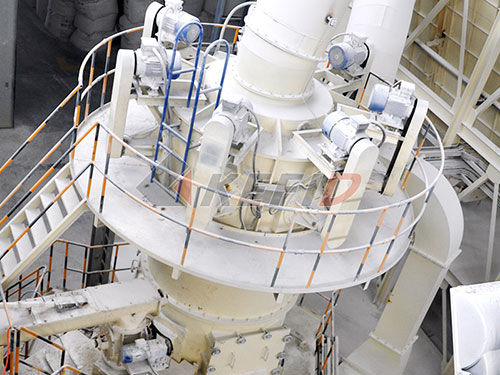
Case Study 1: HighSpeed Rail Ballast – Central Texas Granite Quarry
Challenge: The quarry was losing 12% of its primary crushed material to fines when using a standard cone crusher for ballast production. They could not meet the 100% fracture count requirement for a major highspeed rail contract.
Solution: Installed the QBC500 module as a tertiary stage after the primary jaw and secondary cone. The air classifier was tuned to remove all particles below 22.4mm.
Results: Fines generation dropped to 4.5%. Fracture count reached 100%. The quarry secured the contract, processing 1.2 million tons of ballast over 18 months. Wear cost was $0.52/ton.
Case Study 2: Hard Rock Quarry – Norwegian Basalt Operation
Challenge: Processing extremely abrasive basalt (320 MPa) was destroying standard crusher liners every 250 hours. The flakiness index was averaging 9%, leading to customer rejections.
Solution: Deployed the QBC500 with the cascade rockonrock chamber. No metal liners in the crushing zone.
Results: Wear part life increased to 1,100 hours. Flakiness index dropped to 2.8%. The quarry reduced its cost per ton by 38% and increased its ballast market share by 15% in the Nordic region.
Case Study 3: Greenfield Quarry – Western Australia
Challenge: A new quarry needed to produce ballast for a mining railway but had no existing water rights for washing. They needed a dry process that could meet strict particle shape standards.
Solution: The QBC500 with integrated air classification was selected as the sole crushing unit for ballast production.
Results: The quarry achieved first production in 6 weeks. The dry process eliminated water costs and settling pond maintenance. The air classifier consistently produced a flakiness index below 3% without any water usage.
Commercial Considerations: Investment & Support
Equipment Pricing Tiers:

Optional Features:
Service Packages:
Financing Options:
Frequently Asked Questions
1. Can this equipment handle feed with high moisture content?
The air classifier efficiency degrades above 3% moisture. For wet feed (e.g., after rain), we recommend a dry feed stockpile or a preheating system. The VSI itself can handle up to 5% moisture, but the air separation becomes less accurate.
2. How does the QBC500 compare to a standard VSI for ballast?
Standard VSIs are designed for general aggregate shaping. Our unit includes a dedicated air classifier for flakiness removal and a cascade chamber that reduces fines generation by 30% compared to standard VSI configurations.
3. What is the typical ROI period?
Based on a 300 tph operation with a $10/ton premium for ballast over aggregate, the ROI is typically 1418 months. This is driven by reduced fines loss, lower wear costs, and elimination of water for washing.
4. Can I retrofit this module into an existing crushing plant?
Yes. The module is designed as a standalone unit with a standard 48inch feed belt interface. We provide a site survey and engineering drawings for integration. Typical retrofit installation takes 35 days.
5. What is the lead time for delivery?
Current lead time is 1620 weeks from order confirmation. Rush orders (12 weeks) are available with a 10% premium. Spare parts (rotor, wear tips, anvil rings) are stocked for 24hour shipment.
6. How do I train my operators?
We provide a 2day onsite training program covering startup, shutdown, rotor speed adjustment, and air classifier tuning. A digital manual with troubleshooting guides is included. Remote support is available 24/7.
7. What are the power requirements for installation?
The base module requires a 480V, 3phase, 60 Hz supply with a minimum 600amp breaker. A stepdown transformer is required for 4160V or 13.8kV sites. Our engineering team will provide a singleline diagram during the site survey.