
Jaw Crusher

A jaw crusher is a primary crushing machine used in mining, quarrying, and construction industries to reduce large rocks, ores, or other hard materials into smaller, more manageable pieces. Here’s a detailed breakdown:
How It Works
1. Crushing Mechanism:
- A jaw crusher consists of two vertical jaws—one fixed (stationary) and one movable (swing jaw).
- The movable jaw exerts force on the material by pressing it against the fixed jaw.
- Material is crushed progressively until small enough to pass through the bottom gap (discharge opening).
2. Key Components:
- Fixed Jaw Plate: Attached to the crusher frame.
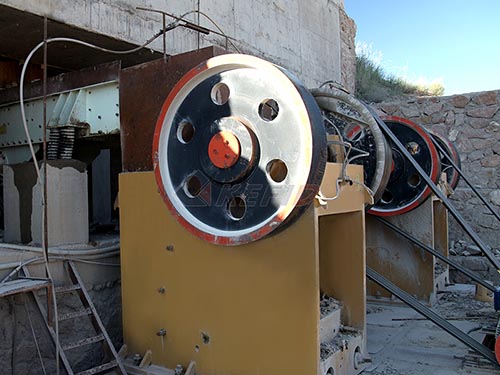
- Movable Jaw Plate: Driven by an eccentric shaft (pitman) that creates an elliptical motion.
- Toggle Plate: Safety mechanism to protect the crusher from overload.
- Flywheel: Stores energy for consistent crushing force.
Types of Jaw Crushers
1. Blake (Double Toggle): Older design with a pivoted swing jaw; robust but less efficient.
2. Dodge (Single Toggle): Movable jaw pivots at the bottom; simpler but limited in capacity.
3. Universal (Overhead Eccentric): Modern single-toggle design with higher efficiency and adjustability.
Applications
- Primary crushing of hard materials (granite, basalt, iron ore).
- Recycling concrete and demolition waste.
- Laboratory-scale crushing for research.
Advantages
- Simple structure, low maintenance.
- High reduction ratio (typically 6:1 to 8:1).
- Handles abrasive materials well.
Disadvantages
- Less efficient than gyratory crushers for high-capacity needs.
- Wear-prone parts (jaw plates) require regular replacement.
Maintenance Tips
- Regularly check jaw plates for wear and replace as needed.
- Lubricate bearings and eccentric shafts to prevent overheating.
- Monitor discharge settings to ensure optimal particle size output.
Would you like details on sizing, operational parameters, or comparisons with other crushers (e.g., cone/impact)?