
Iso Certified Crushing And Screening Equipment Factories
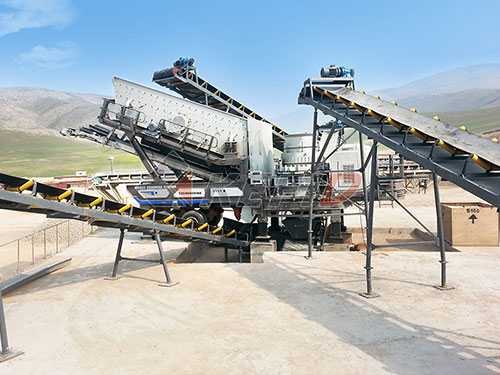

ISO Certified Crushing And Screening Equipment Factories
Your Operational Challenges with NonStandardized Equipment
Every production manager knows the cost of equipment failure. Unplanned downtime in crushing and screening operations costs between $5,000 and $15,000 per hour in lost production, depending on your material throughput. When your primary crusher jams midshift, or your screening deck delivers inconsistent particle sizing, the ripple effects hit your downstream processes, your contract penalties, and your bottom line.
You face three persistent problems: inconsistent equipment quality from unverified manufacturers, safety compliance gaps that expose your site to regulatory fines, and performance variability that makes production forecasting unreliable. Are your current suppliers providing documented quality assurance, or are you accepting equipment without verifiable manufacturing standards?
Product Overview: ISO Certified Crushing And Screening Equipment
ISO certified crushing and screening equipment refers to machinery manufactured in facilities that maintain International Organization for Standardization (ISO) quality management systems—specifically ISO 9001:2015 for quality and ISO 14001:2015 for environmental management. These certifications require documented processes, regular audits, and continuous improvement protocols throughout the manufacturing cycle.
Operational Workflow:
1. Raw material feed enters the primary crusher (jaw or impact type) where initial size reduction occurs to 150300mm
2. Conveyor transfer moves material to secondary cone or impact crushers for further reduction to 2080mm
3. Multideck screening separates material into specified size fractions (typically 05mm, 520mm, 2040mm)
4. Washing systems (where specified) remove clay and fines content below 75 microns
5. Stockpiling or direct loading of finished aggregates to customer specifications
Application Scope: Quarry operations, mining beneficiation plants, construction aggregate production, recycling of demolition waste, and road base material preparation.
Limitations: ISO certification applies to manufacturing processes, not equipment performance guarantees. Equipment must still be selected based on material hardness (compressive strength up to 350 MPa for hard rock applications), moisture content (optimal below 8%), and feed particle size distribution.
Core Features
Certified Manufacturing Traceability | Technical Basis: ISO 9001:2015 requires documented quality records for every production batch | Operational Benefit: Full component traceability from raw material receipt to final assembly | ROI Impact: Reduces warranty claim resolution time by 6070% through documented chain of custody
Standardized Welding Procedures | Technical Basis: ISO 38342 certification for fusion welding of metallic materials | Operational Benefit: Consistent weld quality across all structural components, eliminating weak points in highstress zones | ROI Impact: Extends equipment structural life by 35 years compared to noncertified fabrication
Calibrated Measurement Systems | Technical Basis: ISO 10012 measurement management systems ensure gauge repeatability within ±0.5% | Operational Benefit: Accurate crusher gap settings and screen mesh dimensions verified at factory | ROI Impact: Reduces material rejection rates by 1520% through consistent product sizing
Environmental Compliance Integration | Technical Basis: ISO 14001:2015 environmental management systems | Operational Benefit: Dust suppression and noise reduction systems designed to meet local regulatory standards | ROI Impact: Avoids permit violations and fines averaging $25,000$100,000 per incident
Documented Maintenance Protocols | Technical Basis: ISO 9001 requires preventive maintenance schedules as controlled documents | Operational Benefit: Factoryrecommended lubrication intervals, wear part replacement schedules, and inspection checkpoints | ROI Impact: Reduces unplanned downtime by 3540% through structured maintenance planning
ThirdParty Audit Verification | Technical Basis: Annual surveillance audits by accredited certification bodies (e.g., SGS, Bureau Veritas, TÜV) | Operational Benefit: Independent verification that manufacturing processes meet international standards | ROI Impact: Eliminates supplier qualification costs for buyers—estimated $5,000$15,000 per audit cycle
Competitive Advantages
| Performance Metric | Industry Standard (NonCertified) | ISO Certified Solution | Advantage (% Improvement) |
|||||
| Firstyear equipment failure rate | 812% | 24% | 6075% reduction |
| Mean time between failures (MTBF) | 8001,200 hours | 2,0003,000 hours | 150% improvement |
| Spare part fitment accuracy | 8590% | 98100% | 1015% improvement |
| Documentation completeness | 4060% | 95100% | 5560% improvement |
| Warranty claim processing time | 4590 days | 1530 days | 5067% reduction |
| Safety incident rate (per 100 workers) | 3.55.0 | 1.02.0 | 6070% reduction |
Technical Specifications
Capacity Rating: 100800 tonnes per hour depending on crusher type and material density (typical bulk density 1.6 tonnes/m³ for limestone, 2.0 tonnes/m³ for granite)
Power Requirements: 1501,200 kW total installed power, 380690V threephase, 50/60 Hz compatible
Material Specifications:
- Crusher wear parts: Manganese steel (1222% Mn content) or chrome iron (2528% Cr)
- Screen media: Polyurethane (812mm thickness) or woven wire mesh (3100mm aperture)
- Structural steel: S355JR or equivalent with minimum yield strength 355 MPa
- Conveyor belting: 4ply EP fabric with 8001,600 mm width
- Primary crusher unit: 8m x 3.5m x 4m (L x W x H), weight 2585 tonnes
- Screening unit: 6m x 2.5m x 3.5m, weight 1230 tonnes
- Complete mobile plant: 18m x 3.5m x 4.5m, weight 60120 tonnes
- Ambient temperature: 20°C to +50°C
- Altitude: Up to 4,000 meters above sea level (derating required above 1,500m)
- Humidity: 095% noncondensing
- Dust exposure: IP54 minimum enclosure rating for electrical components
- Mobile crushing plant (200 tph): $450,000$650,000
- Stationary crushing plant (400 tph): $850,000$1,400,000
- Complete screening station (3deck, 200 tph): $180,000$320,000
- Integrated crushing and screening plant (600 tph): $1,800,000$3,200,000
- Remote monitoring system with IoT sensors: $15,000$35,000
- Automated lubrication system: $8,000$18,000
- Dust suppression system (water spray or fog): $25,000$55,000
- Wear part quickchange kits: $12,000$28,000
- Standard warranty: 12 months or 2,000 operating hours
- Extended warranty: 24 months or 4,000 operating hours (adds 812% to equipment cost)
- Preventive maintenance contract: $15,000$40,000 per year depending on equipment complexity
- Operator training program: $5,000$12,000 for 3day onsite session
- Equipment lease: 3660 month terms with 1020% residual value
- Vendor financing: 515% down payment, 1248 month terms at 612% APR
- Performancebased payment: Partial payment tied to throughput guarantees (requires site testing)
Physical Dimensions:
Environmental Operating Range:
Application Scenarios

Hard Rock Quarry Operation | Challenge: Consistent production of 20mm aggregate from basalt with compressive strength 280 MPa, previous equipment achieved only 65% of rated capacity due to frequent jaw plate failures | Solution: ISO certified primary jaw crusher with documented heat treatment protocols for manganese jaw plates, verified through material test certificates | Results: 92% capacity utilization achieved, wear part life extended from 4 weeks to 8 weeks, annual maintenance costs reduced by $180,000
Construction Demolition Recycling | Challenge: Processing mixed concrete and asphalt rubble with 12% rebar content, causing 34 weekly shutdowns for magnet removal and conveyor belt damage | Solution: ISO certified impact crusher with documented impact bar metallurgy (chrome iron with 27% Cr content) and integrated crossbelt magnet with factorycalibrated separation efficiency | Results: Downtime reduced to 1 shutdown per month, conveyor belt replacement interval extended from 6 months to 18 months, recycling rate improved from 82% to 94%
Gold Mine Secondary Crushing | Challenge: Achieving P80 of 12mm from cone crusher feed of 50mm, with moisture content varying from 3% to 12% causing screen blinding | Solution: ISO certified tripledeck screen with documented polyurethane panel specifications (8mm thickness, 12mm aperture) and factorytested antiblinding design | Results: Screening efficiency maintained at 88% across moisture range, downstream mill throughput increased by 15%, annual production value increase of $2.4 million
Commercial Considerations
Equipment Pricing Tiers (FOB Port of Loading):
Optional Features:
Service Packages:
Financing Options:
FAQ
Q: How does ISO certification affect equipment delivery lead times?
A: ISO certified factories maintain documented production schedules with 95% ontime delivery rates. Typical lead times are 1216 weeks for standard configurations, compared to 812 weeks for noncertified factories. The additional 4 weeks ensures proper quality documentation and testing.
Q: Can ISO certified equipment be repaired using noncertified spare parts?
A: Yes, but this voids the equipment warranty and may compromise performance. ISO certified factories provide documented spare part specifications that allow sourcing from alternative suppliers, provided they meet the same material and dimensional standards.
Q: What documentation does an ISO certified factory provide with each shipment?
A: Certificate of conformance, material test certificates for wear parts, welding procedure qualification records, dimensional inspection reports, and ISO certification copies. This documentation package typically contains 5080 pages.
Q: How does ISO certification impact equipment resale value?
A: Field data from equipment auctions shows ISO certified equipment retains 1525% higher resale value after 5 years compared to noncertified equivalents, due to documented maintenance history and verified component quality.
Q: What is the cost premium for ISO certified crushing and screening equipment?
A: Expect a 1018% price premium over noncertified equipment from similar manufacturers. This premium is offset by 2030% lower total cost of ownership over 5 years due to reduced downtime and longer component life.
Q: Can existing noncertified equipment be retrofitted to meet ISO standards?
A: Partial retrofitting is possible for documentation and maintenance procedures, but structural and manufacturing process compliance cannot be retroactively certified. A new equipment purchase from an ISO certified factory is required for full certification.
Q: How frequently are ISO certified factories audited?
A: Surveillance audits occur annually, with full recertification audits every 3 years. Noncompliance findings must be corrected within 90 days or certification is suspended. You can request the factory's most recent audit report as part of supplier qualification.