
Iron Ore Crushing Plant Supplier Sourcing
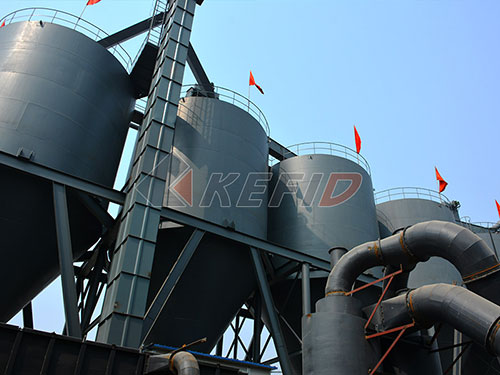

Targeting Plant Managers & Engineering Contractors: Optimize Your Iron Ore Crushing Circuit for Maximum Tonnage and Minimum Cost
1. PAINPOINT DRIVEN OPENING
Managing an iron ore crushing plant presents distinct, highcost challenges that directly impact your bottom line. Are you contending with:
Excessive Downtime for Maintenance: Frequent liner changes and unplanned stops to address wear in primary and secondary crushers, costing hundreds of production hours annually.
Unpredictable Throughput Volatility: Inconsistent feed size and hardness leading to chokefed crushers or idle downstream processes, reducing overall plant efficiency by 1525%.
Spiraling Operational Costs: Premature failure of wear parts under highabrasion conditions, with replacement costs for liners, mantles, and jaws representing a significant recurring capital expenditure.
Product Quality Inconsistency: Inability to reliably produce a consistent 40mm or 20mm product, causing bottlenecks in grinding circuits and pelletizing plants.
The central question is: how can you achieve predictable, hightonnage crushing with lower costpertonne and improved system reliability? The solution lies in specifying a purposeengineered iron ore crushing plant.
2. PRODUCT OVERVIEW
An iron ore crushing plant is a engineered system of primary, secondary, and often tertiary stationary crushers, screens, and material handling conveyors designed specifically for the highvolume reduction of runofmine (ROM) hematite or magnetite ore.
Operational Workflow:
1. Primary Crushing: ROM ore (up to 1.5m) is reduced to <250mm typically using a gyratory or jaw crusher built for high throughput and abrasive service.
2. Secondary Crushing: Material is further reduced to <75mm via cone crushers configured for heavyduty crushing pressure.
3. Screening & Tertiary Crushing: Screens classify material; onspec product is sent to stockpile, while oversize is recirculated through tertiary cone crushers for closedcircuit operation.
4. Material Handling: A network of heavyduty conveyors transfers material between stages.
Application Scope: Designed for largescale mining operations processing >5 million tonnes per annum (Mtpa) of abrasive iron ore.
Limitations: Not suitable for smallscale or pilot operations under 1 Mtpa due to capital intensity. Requires stable feed consistency from upstream mining operations for optimal performance.
3. CORE FEATURES
HeavyDuty AbrasionResistant Liners | Technical Basis: Highchrome white iron or manganese steel alloys | Operational Benefit: Liner life extended by 3050% compared to standard materials in highabrasion iron ore applications | ROI Impact: Reduces liner inventory costs and downtime for changes, improving mechanical availability.
Advanced Chamber Automation System | Technical Basis: Realtime hydraulic adjustment and monitoring of crusher settings | Operational Benefit: Maintains optimal chokefed condition and product size distribution despite feed variability | ROI Impact: Delivers up to 10% higher consistent throughput and protects downstream processes.
Centralized Grease Automation | Technical Basis: Programmable automatic lubrication to all critical bearing points | Operational Benefit: Eliminates manual lubrication errors and ensures optimal bearing health under highload conditions | ROI Impact: Prevents catastrophic bearing failures, a leading cause of extended unplanned downtime.
Modular Wear Part Design | Technical Basis: Segmented liner plates and selflocking bolt systems | Operational Benefit: Enables faster replacement using standard site equipment, reducing maintenance window duration | ROI Impact: Cuts planned maintenance time by up to 25%, returning the line to production faster.

Integrated Condition Monitoring | Technical Basis: Vibration, temperature, and pressure sensors with centralized PLC reporting | Operational Benefit: Provides early warning of mechanical issues like uneven wear or bearing distress | ROI Impact: Enables conditionbased maintenance planning, preventing unexpected failures that cost over $100k per incident in lost production.
HighEfficiency Drive Systems | Technical Basis: Direct drive or lowloss fluid coupling transmission matched to crusher duty cycle | Operational Benefit: Maximizes power transfer to the crushing chamber with lower parasitic energy loss | ROI Impact: Reduces specific energy consumption (kWh/tonne) by up to 8% over the plant's lifecycle.
4. COMPETITIVE ADVANTAGES
| Performance Metric | Industry Standard Baseline | Our Iron Ore Crushing Plant Solution | Advantage (% Improvement) |
| : | : | : | : |
| Mechanical Availability (Primary Crusher) | 9294% | 9698% | +4% (+~300 hrs/yr production) |
| Liner Wear Life (Secondary Cone) | 800,000 tonnes per set | 1.1 1.2 million tonnes per set| +38% |
| Specific Energy Consumption| 0.8 1.0 kWh/tonne crushed| 0.74 0.85 kWh/tonne crushed| 12% avg. |
| Mean Time Between Failure (MTBF) Critical Components| ~2,000 hours| ~2,800 hours| +40% |
| Product Size Consistency (40mm fraction)| ±8% variance from target| ±4% variance from target| +50% tighter control |
5. TECHNICAL SPECIFICATIONS
Capacity/Rating: Configurable from 2,500 to over 10,000 tonnes per hour (tph) system throughput.
Power Requirements: Primary crusher drives from 400 kW to over 1 MW; total installed plant power typically ranges from 38 MW depending on scale.
Material Specifications: Fabricated from ASTM A514/A517 grade steel; liners use ASTM A532 Class III Type A (HighChrome Iron) or proprietary manganese steel alloys.
Physical Dimensions: Primary station footprint approximately 20m x 30m; full circuit including conveyors can span over 200m in length.
Environmental Operating Range: Designed for ambient temperatures from 40°C to +50°C; dust suppression systems maintain emissions below local regulatory thresholds (e.g., <25 mg/Nm³).
6. APPLICATION SCENARIOS
LargeScale Magnetite Concentrator Expansion
Challenge: A major producer needed to increase primary crushed tonnage by 35% without expanding the existing primary crusher footprint or structural supports.
Solution: Implementation of a new primary gyratory crusher within the existing structure as part of a complete modular iron ore crushing plant redesign.
Results: Achieved required throughput increase within space constraints; new liner design extended wear life by 45%, contributing to an overall project ROI period of under 22 months.
Hematite Operation Combating High Abrasion
Challenge: Excessive wear in secondary/tertiary cone crushers was causing monthly downtime events and unsustainable parts expenditure at a hematite operation.
Solution: Retrofit of existing secondary circuit with new cone crushers featuring advanced chamber profiles and proprietary abrasionresistant liners specifically formulated for hematite.
Results:Liner life increased from an average of 550k tonnes to over $850k tonnes; annual downtime related to cone crusher maintenance reduced by $320 hours.
7. COMMERCIAL CONSIDERATIONS
Pricing Tiers: Capital expenditure is projectspecific based on required throughput ($tph). Systems typically range from midseven figures for a $3k tph circuit to eight figures for systems exceeding $7k tph.
Optional Features: Advanced predictive analytics software packages; automated tramp metal detection/release systems; hybrid drive systems for peak load shaving.
Service Packages: Tiered offerings include Basic (remote monitoring), Silver (annual health checks + parts discount), Gold (onsite dedicated technician + guaranteed parts availability).
Financing Options: Project financing partnerships available through affiliated institutions; operating lease structures can be arranged to preserve capital budget.
8.FAQ
Q1:What level of feed size variability can this iron ore crushing plant handle?
A system equipped with chamber automation can compensate for significant variation.Field data shows it maintains product specification with feed size fluctuations up tp ±30$from the design nominal size
Q2 How does this solution integrate with our existing screening and conveying infrastructure?
Our engineering team conducts full interface analysis.Plant designs are based on industrystandard layouts ensuring compatibility with most major OEMs' downstream equipment through properly designed transfer points
Q3 What are the expected operational cost savings per tonne?
Based on historical performance savings typically range between $0$15$0$25 per tonne processed derived from reduced energy consumption longer wear part life higher availability
Q4 What is the typical delivery lead time from contract signing?
For a complete engineered system lead times range from1218 months depending on scale complexity This includes detailed engineering manufacturing FAT testing
Q5 Are performance guarantees offered?
Yes we provide contractual guarantees on key metrics including throughput capacity final product P80 size specific energy consumption kwh tonne mechanical availability
Q6 What training is provided for our operations maintenance teams
We supply comprehensive training covering normal operation shutdown procedures routine maintenance troubleshooting Training occurs both at FAT site during commissioning
Q7 Can you provide support during commissioning rampup
A team of senior commissioning engineers remains onsite until sustained design throughput product specification are achieved typically covering initial30 days