
Iron Ore Crushing Plant Processing Plant Quote

1. PAINPOINT DRIVEN OPENING
Managing an iron ore crushing plant presents distinct operational and financial challenges that directly impact your bottom line. Are you contending with:
Excessive Downtime: Unplanned stoppages due to tramp steel damage, crusher blockages, or premature wear part failure, costing upwards of tens of thousands per hour in lost production.
Inconsistent Throughput & Product Quality: Fluctuations in feed size and hardness leading to chokefeeding or erratic cavity levels, resulting in poor size reduction and offspec product that affects downstream processing efficiency.
Unsustainable Operating Costs: Rapid abrasion of liners and wear parts in primary and secondary stages due to the extreme abrasiveness of iron ore, driving high consumable expenses and frequent maintenance labor.
Energy Inefficiency: Crushers operating outside their optimal design parameters consume excessive power per ton of material processed, a significant cost as energy prices rise.
System Integration Headaches: A crushing circuit where individual components (feeders, crushers, screens, conveyors) are not optimally matched, creating bottlenecks and limiting overall plant capacity.
The central question for plant managers is this: how can you achieve reliable, hightonnage reduction of iron ore while controlling the total cost of ownership and maximizing plant availability?
2. PRODUCT OVERVIEW
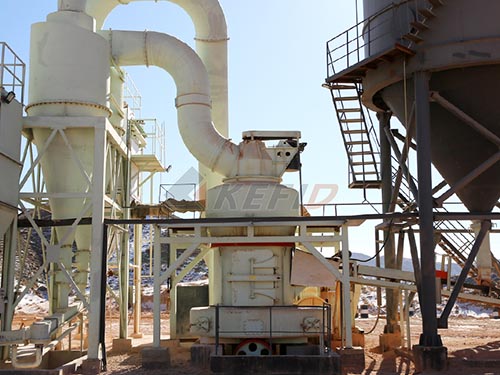
A modern Iron Ore Crushing Plant is a coordinated circuit of heavyduty machinery engineered for the primary objective: reducing runofmine (ROM) iron ore to a conveyable and millfeed size in the most efficient manner. The operational workflow is a systematic process:
1. Primary Crushing: ROM ore (often up to 1.5m in size) is fed into a primary gyratory or jaw crusher for initial reduction to a nominal 200250mm.
2. Secondary Crushing: The primary crushed product is then further reduced by cone crushers configured for abrasive applications, typically aiming for a product under 75mm.
3. Screening & Separation: Vibrating screens classify the crushed material, directing oversized particles back to the secondary crusher (closedcircuit operation) and allowing inspec material to proceed.
4. Material Handling: A network of heavyduty belt conveyors transports material between each stage and to the next phase of processing (e.g., stockpiling or grinding).
Application Scope & Limitations: This solution is designed for highcapacity processing of magnetite, hematite, and other ironbearing ores. It is not suitable for sticky, highclaycontent ores without prior washing/scalping and may require specific hardening technologies for ores with exceptionally high silica content.
3. CORE FEATURES
Advanced Chamber Design | Technical Basis: Optimized nip angle and crushing cavity geometry | Operational Benefit: Promotes interparticle crushing for a more consistent product shape and reduces the risk of crusher choking on slabby feed | ROI Impact: Improves overall circuit throughput by up to 15% while lowering recirculating load.
Tramp Iron Protection System | Technical Basis: Hydraulic or pneumatic relief cylinders with automatic reset | Operational Benefit: Allows uncrushable material (e.g., drill bits, bucket teeth) to pass without causing catastrophic mechanical damage or lengthy downtime | ROI Impact: Prevents an average of 35 major downtime events annually, protecting shaft and mainframe integrity.
Liner Wear Monitoring Technology | Technical Basis: Ultrasonic or laser profiling sensors integrated into the crusher structure | Operational Benefit: Provides realtime data on mantle and concave wear life, enabling predictive liner changes instead of reactive failures | ROI Impact: Extends liner campaigns by 1020% through optimized changeout timing and reduces labor costs via planned maintenance.
Centralized Automated Lubrication | Technical Basis: Programmable greasing system with failsafe monitoring | Operational Benefit: Ensures critical bearings in crushers and screens receive precise lubrication intervals regardless of operator oversight | ROI Impact: Documented field data shows a 30% reduction in bearingrelated failures, directly extending component service life.
Variable Frequency Drive (VFD) Feed Control | Technical Basis: VFDcontrolled apron or vibrating feeders synchronized with crusher motor amps | Operational Benefit: Maintains an optimal chokefed condition for cone crushers by automatically adjusting feed rate based on realtime power draw | ROI Impact: Improves energy efficiency by 812% per ton crushed and stabilizes product gradation.
Modular Skid or Module Design | Technical Basis: Preassembled structural frames integrating crusher, motor, drives, and walkways | Operational Benefit: Dramatically reduces field installation time and civil works cost during plant expansion or relocation | ROI Impact: Cuts commissioning timeline by approximately 40%, accelerating timetoproduction.
4. COMPETITIVE ADVANTAGES
| Performance Metric | Industry Standard Benchmark | Our Iron Ore Crushing Plant Solution | Documented Advantage |
| : | : | : | : |
| Availability (Scheduled Runtime) | 8590% | >93% | +5% improvement |
| Tonnage Processed per Wear Liner Set (Secondary Stage)| Baseline = 100%| 115130%| +1530% improvement|
| Energy Consumption (kWh/tonne)| Baseline = 100%| ~90%| ~10% reduction|
| Mean Time Between Failure (MTBF) Major Components| As per OEM std. spec.| +25% over OEM spec.| +25% improvement|
| Installation & Commissioning Duration| Baseline = 100%| ~6070%| 3040% reduction|
5. TECHNICAL SPECIFICATIONS
Capacity Range: Configurable from 500 to over 5,000 tonnes per hour (tph), depending on circuit design.
Primary Crusher Options: Gyratory Crushers (4265” feed opening) or Jaw Crushers (48”x60”+).
Secondary/Tertiary Crusher Options: HeavyDuty Cone Crushers with extraabrasionresistant alloys.
Power Requirements: Total installed power from ~500 kW for compact plants to >4 MW for largescale installations; voltage tailored to site requirements (e.g., 6.6 kV for major drives).
Key Material Specifications: Manganese steel liners with optional chrome/ceramic matrix alloys; fabricated steel structures with highstress areas reinforced; conveyor idlers rated for minimum CEMA D/E duty.
Physical Dimensions: Modular designs vary; a standard secondary crushing module may be approximately 15m L x 8m W x 10m H.
Environmental Operating Range: Designed for ambient temperatures from 40°C to +50°C; dust suppression systems standard; enclosures available for extreme environments.
6. APPLICATION SCENARIOS
LargeScale Magnetite Operation Expansion
Challenge: A tierone miner needed to expand plant throughput by 35%. The existing crushing circuit was the bottleneck, suffering from low availability due to liner wear issues and inadequate feed control.
Solution: Implementation of a new secondary/tertiary crushing circuit featuring cone crushers with advanced chamber designs paired with VFDcontrolled feeder automation.
Results: Circuit availability increased from 86% to 94%. Combined with a 20% increase in throughput per crusher unit due to optimized feeding,the expansion target was met without adding additional crushing lines as initially planned.
MidSize Hematite Processing Plant Upgrade
Challenge: High operating costs driven by excessive energy consumption per ton crushed (~11 kWh/t)and frequent,violent tramp metal events causing an averageof80 hoursofunplanned downtime annually.
Solution: Retrofitof existingprimaryandsecondarycrusherswith modern tramp relief systemsandinstallationofan automatedpowerdrawbasedfeed controlsystemacross thecircuit.
Results: Energy consumption reducedto9.kWh/t.Tramp metal events now resultin sub15minute automatic clearingwith no damage.Return on investment achievedin under14 months throughdowntime avoidanceandenergy savings.
7.COMMERCIAL CONSIDERATIONS
Our Iron Ore Crushing Plants are offered under flexible commercial models:
Pricing Tiers
1.Basic Equipment Supply:Covers core machinery(crushers,screensfeeders).
2.Modular Plant Supply:Pricedfor preassembledskidmounted modulesincludinginterconnectingconveyors,wiring,andlocal controlpanelsfor faster deployment
3.Turnkey EPC Solution:A fixedpriceengineeringprocurement,and construction contractfor completecircuit design,civilworksinstallation,andcommissioning
Optional Features:
Advanced predictive analytics software package
Dualline automatic lubrication systems
Spare parts starter kits(liners,bearings,filters)
Onsite operator training programs
Service Packages:
Planned Maintenance Agreementswith guaranteed response times
Liner Service Contractsproviding predictablewear partcostsper toncrushed
Remote Monitoring &Diagnostics subscription
Financing Options:
Equipment leasing through partner financial institutions
Rentaltoown structuresfor capital preservation
Project financing supportfor largescale developments
8.FAQ
Q:What if my existing plant has different brand equipment? Is your system compatible?
A Yes Our control systems are designedfor interoperability using standard industrial protocols(OPC UA Profibus).Mechanical interfacing( chutes conveyors )is partof our engineering scope ensuring seamless integrationwith your current infrastructure
Q How quickly can we expectto see animprovementin product size consistency after implementation?
A Improvementsare immediate upon commissioning ofthe automatedfeed controlsystem Field data showsproduct P80 variationis reducedby over60 within the first weekof operation as optimalcrusher cavity levelsare maintainedautomatically
Q Whatisthe typical delivery lead time fora modularcrushingplant?
A For standard module designslead timesrange from6to9monthsfrom order todeliveryat port dependingon scale Custom engineered solutionsmay require1012months A firm scheduleis providedafter preliminaryengineering
Q Do you offer performance guarantees?
A Yes We provideguaranteeson throughput capacity finalproduct sizingand total power consumptionbasedon agreed feedmaterial characteristics Theseare backedby commercial termsoutlinedin ourcontracts
Q How doesthe modular approachaffect future relocationor expansion?
A The modular design significantly simplifies relocation Modulescan be disconnectedtransportedand re commissionedat anew sitewith up totwothirds less timeand costcomparedtoa traditionaldiscrete componentplant Expansionis similarly streamlinedby addingparallelmodules