
Iron Ore Crushing Plant Oem Factory

1. PAINPOINT DRIVEN OPENING
Managing an iron ore crushing plant presents distinct operational and financial challenges. Are you experiencing any of these critical issues?
Unscheduled Downtime: Unplanned stoppages due to crusher blockages, wear part failures, or mechanical issues can cost over $10,000 per hour in lost production.
High Maintenance Costs: Frequent replacement of liners, mantles, and other wear components under extreme abrasion creates significant recurring expenditure and labor hours.
Inconsistent Throughput & Product Size: Fluctuations in feed size or hardness lead to offspec product, creating bottlenecks for downstream grinding circuits and reducing overall plant efficiency.
Excessive Energy Consumption: Older or improperly configured crushing stages consume disproportionate power per ton of material processed, directly impacting operational margins.
Rigid Plant Layout Limitations: Fixed crushing stations hinder optimization and expansion, making it difficult to adapt to new ore body characteristics or increased production targets.
The central question for plant managers is: how can you achieve higher availability, predictable operating costs, and optimized yield from your primary crushing stage?
2. PRODUCT OVERVIEW
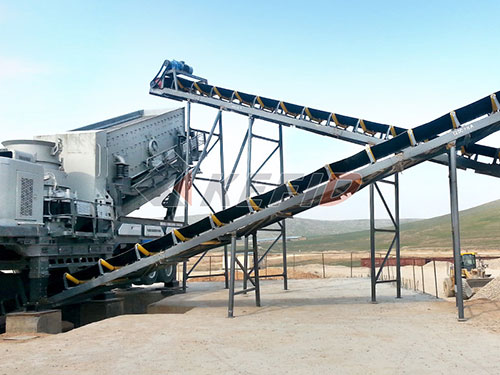
Our solution is a heavyduty, modular Iron Ore Crushing Plant engineered for primary and secondary reduction of magnetite, hematite, and taconite ores. This stationary or semimobile system is designed to accept runofmine (ROM) feed up to 1500mm and deliver a consistent product sized for optimal SAG or ball mill feed.
Operational Workflow:
1. Primary Dumping & PreScreening: ROM ore is dumped into a rugged grizzly feeder, removing fine material bypass and scalping oversize to the primary crusher.
2. Primary Size Reduction: A primary jaw or gyratory crusher performs the initial crushing, reducing ore to a manageable size (typically 250mm).
3. Material Handling & Stockpiling: Conveyors transport crushed ore to intermediate stockpiles or directly to secondary crushing modules.
4. Secondary/Tertiary Crushing (Optional): Cone crushers further reduce the ore size in closed circuit with screens to ensure precise final product gradation.
5. Final Product Dispatch: Correctly sized ore is conveyed to live stockpiles feeding the downstream beneficiation plant.
Application Scope & Limitations:
Scope: Ideal for greenfield mining projects, brownfield plant expansions, and replacement of aging, inefficient crushing circuits. Suitable for processing medium to highly abrasive iron ores.
Limitations: Not designed for wet, sticky ore without prior drying or specialized feed arrangements. Maximum feed size and capacity are determined by model selection.
3. CORE FEATURES
HeavyDuty Crusher Frame | Technical Basis: Finite Element Analysis (FEA) optimized steel fabrication | Operational Benefit: Eliminates stress cracking under shock loads from uncrushable material | ROI Impact: Reduces structural repair costs by an estimated 60% over plant lifetime
Advanced Wear Part Metallurgy | Technical Basis: Austenitic Manganese Steel with ceramic composite inserts | Operational Benefit: Increases service life of liners and mantles by 3050% in highly abrasive conditions | ROI Impact: Lowers costperton for wear parts and extends maintenance intervals
Intelligent Drive & Power System | Technical Basis: Hightorque hydraulic or direct Vbelt drives with loadsensitive control | Operational Benefit: Prevents crusher stall on tramp metal/uncrushables; optimizes power draw | ROI Impact: Reduces energy consumption by up to 15% versus fixedspeed systems
Integrated Metal Detection & Tramp Release | Technical Basis: Inline electromagnetic metal detectors coupled with automatic hydraulic release systems | Operational Benefit: Protects crusher from damaging steel contaminants like drill bits | ROI Impact: Avoids catastrophic damage costing upwards of $250k in repairs and weeks of downtime
Modular Skid Design | Technical Basis: Preassembled structural skids for major components (crusher, feeder, drive) | Operational Benefit: Reduces field installation time by up to 40%, minimizes site civil work | ROI Impact: Accelerates timetoproduction by several weeks, lowering project capital outlay
Centralized Greasing & Monitoring | Technical Basis: Automated lubrication systems with PLCcontrolled points and feedback sensors | Operational Benefit: Ensures critical bearings receive correct lubrication without manual intervention | ROI Impact: Prevents bearing failures, a leading cause of extended unplanned downtime
Dust Suppression Integration Points | Technical Basis: Preinstalled piping manifolds and spray nozzle mounts at transfer points | Operational Benefit Enables effective dust control from commissioning day one| ROI Impact Ensures compliance with site health standards avoids regulatory work stoppages
4. COMPETITIVE ADVANTAGES
| Performance Metric | Industry Standard | Our Iron Ore Crushing Plant Solution | Advantage (% improvement) |
|||||
| Mechanical Availability | 8590% | >93% | +5% |
| Wear Life (Primary Liners) | 800,000 1.2M tons | 1.4M 1.8M tons | +40% |
| Specific Energy Consumption (kWh/t) 79 kWh/t 67.5 kWh/t 15% |
| Installation & Commissioning Time (for equivalent capacity) 1622 weeks 1216 weeks 30% |
| Fines Generation (10mm) in Primary Stage 1825% 1218% 30% reduction |
5. TECHNICAL SPECIFICATIONS
Capacity Range: Configurable from 1,200 to over 6,000 tonnes per hour (tph).
Power Requirements: Total installed power from 800 kW to 3 MW depending on configuration; supplied for 6kV/50Hz or other industrial standards.
Material Specifications: Crusher frames fabricated from highgrade steel plate; liners use premium AMS with optional TIVAR® linings in hoppers; conveyor idlers rated CEMA E4/F4.
Physical Dimensions (Example Primary Module): Feed Hopper Volume: 60m³; Primary Crusher Feed Opening: 1.5m x 2m; Module Footprint (LxW): ~24m x 8m.
Environmental Operating Range: Designed for ambient temperatures from 30°C to +50°C; dust protection rating IP65 on electrical enclosures; wind load rating up to 150 km/h.
6. APPLICATION SCENARIOS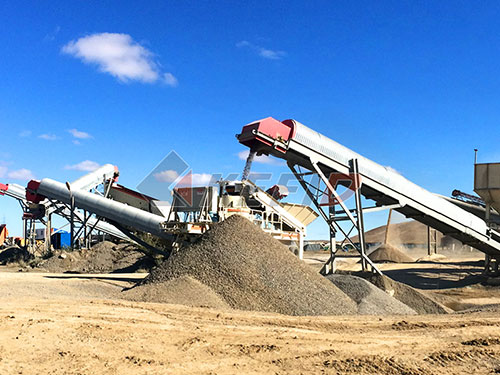
Greenfield Magnetite Project in Western Australia
Challenge A new mine required a highcapacity primary crushing plant capable of processing very hard magnetite ore with minimal fines generation ahead of HPGR circuits
Solution Installation of a gyratory primary crusherbased Iron Ore Crushing Plant with integrated prescreening and heavyduty apron feeder
Results Achieved design throughput of 2 800 tph within one week of commissioning Fines generation below target at <15% contributing directly to improved downstream HPGR efficiency
Brownfield Expansion in Pilbara Region
Challenge An existing hematite operation needed to expand throughput by >35 but was constrained by space limitations around the fixed primary crusher station
Solution Deployment of a semimobile primary crushing module located closer to the new pit Shell allowing use of shorter cheaper overland conveyors
Results Increased total plant throughput by >40 while reducing haul truck cycle time Capital expenditure was contained as civil works were minimized
Aging Plant Modernization in North America
Challenge Chronic downtime due to failures in an aging jaw crusher system leading unpredictable maintenance costs and inability meet pellet plant feed requirements
Solution Complete replacement with a modern modular Iron Ore Crushing Plant featuring intelligent drive system automated wear monitoring
Results Mechanical availability increased from 94 within first quarter Annual maintenance costs reduced by an estimated Product consistency improved enabling pellet plant operate at design capacity
7 COMMERCIAL CONSIDERATIONS
Equipment pricing tiers are structured around capacity core configuration:
Tier : Primary Crushing Only Module For operations with existing secondary tertiary circuits Starting range $ million USD
Tier : Complete TwoStage Crushing Plant Including primary secondary crushers screens conveyors Starting range $ million USD
Tier : Fully Integrated System With advanced automation dust control surge capacity engineering Starting range $ million USD
Optional Features Advanced predictive analytics package Remote diagnostic capability Specialized wear packages for extremely abrasive ores Sound attenuation enclosures
Service Packages Proactive Maintenance Plans including scheduled inspections parts discounts Emergency Response Contracts guaranteeing technician dispatch Factory Training Programs for onsite operations maintenance teams
Financing Options Available capital lease agreements operating lease structures Project financing support through partner institutions Tradein programs available for qualifying existing equipment
8 FAQ
What level ground preparation is required for your modular Iron Ore Crilling Plant?
Our skidded modules require a compacted level gravel or concrete pad Detailed civil engineering drawings are provided as part of the purchase agreement ensuring minimal site preparation cost delay
How does your plant handle variations iron ore hardness abrasiveness within single deposit?
Crushers are selected equipped variable speed drives hydraulic adjustment systems These allow operators quickly adjust CSS Closed Side Setting compensate hardness changes maintaining consistent product size distribution throughput
Can your system integrate with our existing PLC SCADA system?
Yes Our standard control package includes industrystandard communication protocols OPC UA Modbus TCP Interfaces We provide documentation support necessary integration during commissioning phase ensure seamless data flow your central control room
What typical lead time delivery commissioning?
For standard configurations lead time ranges from months order placement Delivery schedule depends final configuration shipping logistics Site commissioning supervised our engineers typically requires weeks following module arrival readiness
Do you offer performance guarantees?
Yes We provide guaranteed performance metrics including minimum throughput product P curve mechanical availability These are detailed commercial contract based specific ore characteristics test data