
Iron Ore Crushing Plant Importer Bulk Order

1. PAINPOINT DRIVEN OPENING
Managing an iron ore crushing plant presents distinct operational and financial challenges. Are you experiencing persistent bottlenecks that limit your overall processing throughput? Do unscheduled maintenance events and premature wear on crusher liners and components drive your operating costs and downtime unpredictably higher? Is inconsistent feed size or moisture content causing chokeups, reducing capacity, and increasing energy consumption per ton? Furthermore, are you facing pressure to improve yield of onspec product while managing the total cost of ownership of your primary crushing assets? These issues directly impact plant availability, maintenance budgets, and profitability. The selection of a robust, efficient primary crushing station is not merely an equipment purchase; it is a critical decision for longterm operational stability.
2. PRODUCT OVERVIEW
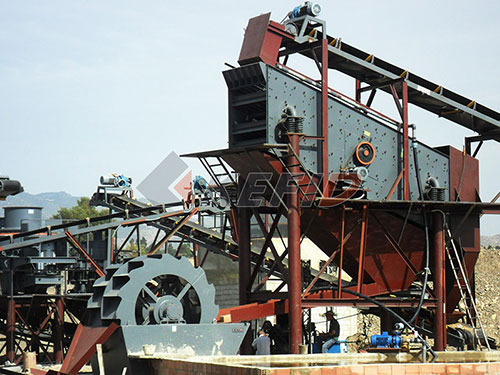
This solution focuses on a Stationary Primary Jaw Crusher Plant, engineered as the first stage in a hard rock iron ore reduction circuit. It is designed to receive runofmine (ROM) feed directly from haul trucks and perform initial size reduction for downstream processing.
Operational Workflow:
1. Feed Reception: ROM iron ore is dumped into a heavyduty vibrating grizzly feeder (VGF).
2. PreScreening & ByPass: The VGF separates subfines (typically 50mm) to bypass the crusher, reducing wear and improving overall system efficiency.
3. Primary Crushing: Oversize material is conveyed to the robust jaw crusher, where it is compressed between fixed and moving jaws.
4. Product Conveyance: Crushed product is discharged onto a main conveyor belt for transport to secondary crushing or stockpiling.
Application Scope & Limitations:
Scope: Ideal for hightonnage, continuous mining operations processing abrasive magnetite or hematite ores. Suited for greenfield installations or legacy plant upgrades requiring a reliable primary stage.
Limitations: Not designed as a standalone solution; requires integration with downstream screening and secondary/tertiary crushing circuits for final product sizing. Feed size is limited by crusher opening dimensions.
3. CORE FEATURES
HeavyDuty Vibrating Grizzly Feeder (VGF) | Technical Basis: Highstrength steel construction with adjustable grizzly bar spacing | Operational Benefit: Removes fines at the feed point, preventing crusher overload and reducing wear on jaw dies | ROI Impact: Lowers energy consumption by up to 15% by ensuring only oversize material enters the crusher, extending liner life.
WedgeBased Jaw Adjustment System | Technical Basis: Mechanically locked wedges replace traditional shim plates for CSS adjustment | Operational Benefit: Enables safe, rapid closedside setting changes in under 30 minutes without special tools | ROI Impact: Increases plant availability by minimizing adjustment downtime, allowing quick response to changing product size requirements.
Integrated Bypass Chute & Fines Conveyor | Technical Basis: Preengineered channelling for separated fines with dedicated discharge | Operational Benefit: Eliminates rehandling of alreadysized material, preventing belt wear from abrasive fines | ROI Impact: Reduces capital cost by integrating bypass logistics into the plant design, lowering longterm conveyor maintenance.
Centralized Greasing & Lube Points | Technical Basis: Manifolded lubrication lines routed to key bearing points from accessible platforms | Operational Benefit: Enables routine maintenance from safe locations, improving technician adherence to schedules | ROI Impact: Directly reduces bearing failure rates, a leading cause of unplanned stoppages in dusty environments.

Modular Walkways & Access Platforms | Technical Basis: Bolttogether galvanized steel platforms with nonslip grating | Operational Benefit: Provides 360degree safe access for inspection, maintenance, and liner changeouts | ROI Impact: Mitigates safety risk and improves maintenance efficiency, contributing to higher overall plant utilization rates.
HighInertia Flywheel Design | Technical Basis: Precisely calculated flywheel mass to store kinetic energy during the crushing cycle | Operational Benefit: Maintains consistent power through each stroke, promoting smoother operation and more uniform product gradation | ROI Impact: Reduces peak power demands on the motor and drive system, lowering stress on electrical components.
4. COMPETITIVE ADVANTAGES
| Performance Metric | Industry Standard Benchmark | This Primary Crusher Plant Solution | Documented Advantage |
| : | : | : | : |
| Mechanical Availability (Abrasive Ore) | 9092% per annum >95% per annum +35 percentage points |
| Liner Life (Manganese Jaw Dies) | 800,000 1M tons 1.2M 1.5M tons +2540% improvement |
| Time for CSS Adjustment (2person crew) ~90 minutes <30 minutes ~67% reduction |
| Power Consumption per Ton Crushed Baseline X kW/t X8% kW/t Up to 8% reduction |
| Installation & Commissioning Time (Greenfield) ~46 weeks ~34 weeks ~25% faster |
5. TECHNICAL SPECIFICATIONS
Capacity Rating: Configurable from 1,200 to over 3,500 tonnes per hour (TPH), depending on feed size and material characteristics.
Crusher Specifications: Jaw crusher sizes from 48"x60" up to 60"x89". Maximum feed size up to 1,300mm. Adjustable CSS range from 150mm to 300mm.
Power Requirements: Main crusher drive powered by a 300kW to 450kW electric motor (50/60Hz). Total installed plant power typically ranges from 450kW to 700kW.
Material Specifications: Crusher frame constructed from fabricated steel plate (minimum yield strength 355 MPa). Jaw dies are premium manganese steel (1822%). Grizzly bars are AR400 abrasionresistant steel.
Physical Dimensions (Typical): Overall footprint approximately 25m (L) x 12m (W) x 10m (H). Feed hopper capacity from 40m³.
Environmental Operating Range: Designed for ambient temperatures from 20°C to +45°C. Dust suppression system connections are standard at all transfer points.
6. APPLICATION SCENARIOS
LargeScale Magnetite Operation Upgrade
Challenge An aging primary gyratory crusher was the bottleneck in a 12 MTPA concentrator plant,
suffering from excessive downtime for mantle changes and high energy costs.
Solution Replacement with a highcapacity stationary jaw crusher plant featuring an integrated VGF
and advanced drive system.
Results Field data shows mechanical availability increased from 88% to 96%. Combined with
the efficient feeder design,
overall system energy use dropped by 9%, achieving payback in under 22 months.
New Hematite Direct Shipping Ore (DSO) Project
Challenge A new project required a lowoperationalrisk primary circuit capable of handling highly
variable,
lumpy ore with minimal supervision and fast commissioning.
Solution Installation of a preassembled modular jaw crusher plant with centralized controls
and easyaccess maintenance features.
Results The modular design reduced onsite construction time by 30%. The robust jaw profile
handled lump sizes without bridging,
consistently achieving the target 250mm product for transport,
with less than 0.5% unscheduled downtime in the first year of operation.
7. COMMERCIAL CONSIDERATIONS
Pricing Tiers: Solutions are configured based on required throughput capacity:
Tier I (3,
000 TPH): Fully customized solutions with advanced monitoring systems.
Optional Features: Automated lubrication systems,
rock level sensors in feed hopper,
dust encapsulation packages,
extendedwear liner packages,
remote performance monitoring telematics.
Service Packages: Available tiers include Basic Warranty,
Comprehensive Annual Inspection Plans,
and FullService Maintenance Contracts including parts supply.
Financing Options: Flexible commercial structures are available including capital purchase,
operating lease agreements,
and project financing partnerships tailored for largescale mineral development projects.
8.FAQ
Q1:
Is this primary crushing plant compatible with my existing secondary cone crushers and conveyors?
A:
Yes.
Engineering specifications include detailed interface points for discharge height,
belt width/speed,
and control system protocols (
e.g.,
PLC/DCS)
to ensure integration with your downstream circuit can be planned effectively.
Q2:
What is the expected operational impact during liner changeouts?
A:
The design prioritizes serviceability.
With proper planning using standard mobile crane access,
complete jaw die replacement can typically be accomplished within one scheduled 8hour shift.
Q3:
How does this solution handle wet or sticky iron ore feed conditions?
A:
While robust against moisture,the VGF can be specified with heated decks or alternative bar profiles
to mitigate sticking.For severe conditions,a separate scalping screen ahead of the VGF may be recommended as an upgrade option.This will be assessed during project specification based on your specific ore characteristics
Q4:
What are typical commercial terms regarding delivery and commissioning?
A:
Delivery terms are exworks or FOB port based on agreement.Commissioning support typically includes supervision by factory engineers for mechanical completion check,cold alignment,and hot commissioning over an agreed period until stable operation is achieved.Training for your operations team is included
Q5:
Can this equipment be relocated if my mining plan changes?
A:
The stationary foundationbased design is intended for permanent installation.Relocation is possible but constitutes a major dismantle,move,and reinstallation project.Modular skidmounted primary solutions offer greater mobility if frequent relocation is anticipated
Q6:
What key spare parts should we plan to hold in inventory?
A:
We recommend initial critical spares including one set of jaw dies,VGF deck liners,and key drive belts.A sitespecific recommended spare parts list will be provided as part of the final technical documentation package
Q7:
How does pricing compare over total lifecycle versus other primary options like gyratory crushers?
A:
Industry analysis demonstrates that while initial capital investment may differ,the total cost of ownership over 10 years often favors welldesigned jaw plants due primarily to lower maintenance complexity,faster service times,and reduced reliance on specialized lifting equipment.The exact comparison depends heavily on required throughput scale