
Iron Ore Crushing Plant Company Price


1. PAINPOINT DRIVEN OPENING
Managing an iron ore crushing plant presents distinct operational and financial challenges. Are you experiencing pressure to reduce cost per ton while maintaining consistent feed for downstream processing? Common pain points include:
Unplanned Downtime: Frequent mechanical failures in primary crushers from uncrushable material or tramp steel, halting the entire processing line for hours.
Inconsistent Throughput & Product Size: Fluctuations in feed size and hardness lead to chokefeeding or erratic cavity levels, resulting in poor product gradation and reduced screening efficiency.
High Maintenance Costs & Labor: Excessive wear on manganese liners and bearings from abrasive iron ore, demanding frequent manual inspections, liner changes, and associated labor costs.
Energy Inefficiency: Older crushing circuits operate with fixed speed drives, consuming maximum power regardless of actual feed conditions, directly impacting your operational expenditure.
The central question is: how can you achieve higher availability, predictable output, and lower total cost of ownership from your primary crushing station?
2. PRODUCT OVERVIEW
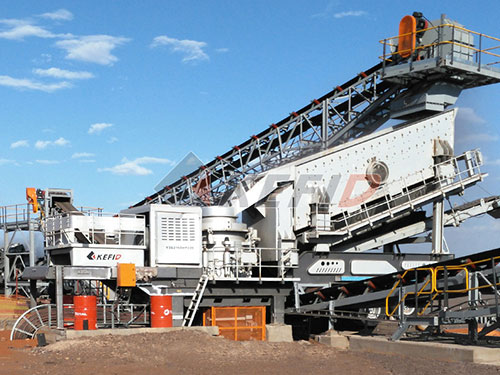
Our solution is a heavyduty, modular primary crushing station engineered specifically for the rigorous demands of iron ore processing. This turnkey system is centered on a robust gyratory or jaw crusher designed to accept runofmine (ROM) iron ore directly from haul trucks.
Operational Workflow:
1. ROM Receiving & PreScreening: Dump haul truck material onto a rugged apron feeder which regulates flow and removes fine material via a grizzly section to bypass the crusher.
2. Primary Size Reduction: The core crusher reduces large lumps (up to 1.5m) to a manageable conveyorable size in a single pass.
3. Material Handling & Stockpiling: Crushed product is conveyed to a surge pile or directly to secondary crushing modules, ensuring consistent feed.
Application Scope: Ideal for greenfield mine development or the replacement of aging, unreliable primary crushers in existing magnetite or hematite operations with capacities from 2,000 to over 10,000 tonnes per hour.
Limitations: This primary station is not a finished product solution. For pellet feed or directshipping ore specifications, it must be integrated with secondary/tertiary crushing and grinding circuits.
3. CORE FEATURES
Advanced Chamber Design | Technical Basis: Optimized kinematics & nip angle geometry | Operational Benefit: Handles slabby feed without bridging, produces a more cubical product with fewer fines generation | ROI Impact: Reduces secondary crusher load and liner wear by up to 15%, lowering overall circuit consumables cost.
Automated Setting Regulation System (ASRi) | Technical Basis: Realtime hydraulic adjustment based on continuous cavity level monitoring | Operational Benefit: Maintains optimal crusher loading and discharge setting without operator intervention | ROI Impact: Delivers consistent product size (+/ 10% tolerance) and up to 10% higher throughput versus manual operation.
Patented Wear Protection | Technical Basis: Interlocking manganese steel liners with composite alloy backing plates | Operational Benefit: Extends liner service life by distributing wear more evenly and simplifying replacement procedures | ROI Impact: Reduces liner changeout frequency by an average of 25%, decreasing labor costs and planned downtime.
Direct Drive & SlipProof Torque Transmission | Technical Basis: Hightorque motor coupled directly via fluid coupling or Vbelt drive | Operational Benefit: Eliminates gear wear issues, provides smooth start under load, and protects against uncrushable objects | ROI Impact: Improves mechanical availability above 95% and reduces transmission system maintenance events.
Integrated Dust Suppression & Sealing | Technical Basis: Multipoint water spray nozzles at intake/discharge combined with labyrinth seals | Operational Benefit: Effectively controls dust emissions at transfer points, protecting bearings and improving site environmental compliance | ROI Impact: Minimizes bearing failures due to contamination and reduces water consumption versus blanket spraying.
Modular Base Frame & Walkways | Technical Basis: Preassembled, bolttogether heavy steel sections with integrated access platforms | Operational Benefit: Significantly reduces civil works scope and installation time onsite; improves safety for maintenance personnel | ROI Impact: Cuts installation timeline by up to 30%, accelerating timetoproduction.
4. COMPETITIVE ADVANTAGES
| Performance Metric | Industry Standard (Average) | Our Iron Ore Crushing Plant Solution | Advantage (% Improvement) |
| : | : | : | : |
| Mechanical Availability (Primary Crusher) | 90 92% | > 95% (Documented) +35% |
| Liner Life (Manganese in Abrasive Ore) | 800,000 1M tonnes | 1.2 1.5M tonnes +2025% |
| Specific Energy Consumption (kWh/tonne)| Baseline (100%)| Reduced by optimized chamber & drive efficiency |812% |
| Mean Time Between Maintenance (MTBM)| ~300 operating hours| >450 operating hours +50% |
| Installation & Commissioning Time| ~12 weeks for similar capacity| ~89 weeks 25% |
5. TECHNICAL SPECIFICATIONS
Capacity Range: Configurable from 2,500 TPH to 12,000 TPH of crushed iron ore (S.G. ~2.6 t/m³).
Crusher Options: Gyratory Crusher (5475” models) or HeavyDuty Jaw Crusher (60”x80”+), selected based on feed topsize and moisture content.
Power Requirements: Main crusher drive from 300 kW up to 600 kW; total station power including feeders/conveyors typically ranges from 800 kW to 1.8 MW.
Material Specifications: Mainframe fabricated from highstrength steel plate; liners in premiumgrade manganese steel (14%18%); shafting in forged alloy steel.
Physical Dimensions (Typical Station Footprint): Approximately 25m L x 18m W x 15m H for a midrange capacity unit including feeder hopper.
Environmental Operating Range: Designed for ambient temperatures from 40°C to +50°C; dust protection rating IP65 for critical electrical components; capable of handling ore moisture up to 8%.
6. APPLICATION SCENARIOS
LargeScale Magnetite Operation – Australia
Challenge: A tierone miner required higher primary circuit throughput to feed a new concentrator but was constrained by frequent tramp metal damage causing catastrophic downtime in their existing crusher.
Solution: Implementation of our gyratorybased iron ore crushing plant equipped with an advanced tramp release system and noncontact cavity level sensors.
Results: Unplanned stoppages due to tramp metal were eliminated. The plant achieved a sustained throughput increase of 18%, contributing directly to the concentrator meeting its nameplate capacity targets within three months of commissioning.
Hematite DSO Producer – West Africa
Challenge: An existing jaw crusher setup produced excessive flaky material leading to poor screening performance downstream and premature wear on conveyor belts due to sharp edges.
Solution: Replacement with our configured primary crushing station featuring an optimized chamber geometry designed for slabby hematite ore.
Results: The proportion of cubical product increased by 22%. This improved screening efficiency by 15% and reduced belt wear costs by an estimated 30%, delivering payback on the new unit in under two years through operational savings alone.
7. COMMERCIAL CONSIDERATIONS
Our iron ore crushing plants are offered in three primary tiers:
Standard Duty Plant: For consistent feed under <6k TPH capacities; includes core crusher, base frame, motor starter panel.
HeavyDuty Plant (<10k TPH): Includes all Standard features plus ASRi automation package enhanced dust suppression composite backing plates
UltraHeavyDuty Plant (>10k TPH): Incorporates full condition monitoring sensors dualpoint hydraulic setting adjustment walkin maintenance platforms
Optional features include modular secondary crushing skids scalping screens preengineered conveyor systems
Service packages range from basic commissioning support multiyear scheduled maintenance agreements complete performancebased service contracts guaranteeing uptime
Financing options are available including capital purchase finance lease operating lease structures tailored project financing can be discussed based on project scale
FAQ
Q1 Is your iron ore crushing plant compatible with my existing secondary circuit conveyors?
A Yes engineering specifications include detailed interface drawings for discharge height conveyor speeds load capacities ensuring integration with your downstream equipment minimal retrofit required
Q2 What is the expected impact on my overall plant manpower requirements?
A Field data shows that automated systems like ASRi reduce the need for constant operator adjustment typically allowing one controller manage multiple stations Maintenance planning tools also reduce reactive labor needs
Q3 How does your pricing structure work?
A We provide firm turnkey quotations based detailed client specifications Pricing reflects chosen equipment tier optional features scope supply EPC services Quotations clearly separate equipment service installation costs
Q4 What guarantees do you provide on throughput liner life?
A We offer performance guarantees tied specific project parameters These include guaranteed minimum throughput product P80 size maximum power consumption Liner life warranties are provided as guaranteed minimum tonnage processed under defined conditions
Q5 What does implementation look like timeline disruption?
A For greenfield sites we follow staged delivery modular erection For brownfield replacements we develop detailed execution plan minimize downtime often involving parallel construction switchover during planned shutdowns Typical brownfield replacement takes weeks not months