
Iron Ore Crushing Plant Companies Samples

Targeting: Plant Managers, Procurement Directors, and Engineering Contractors in Mineral Processing
1. Addressing Critical Challenges in Iron Ore Crushing
Managing an iron ore crushing plant presents distinct operational hurdles that directly impact throughput, maintenance budgets, and overall plant availability. Common challenges include:
Abrasive Wear & Component Life: The extreme abrasiveness of iron ore (often with 56 Mohs hardness) leads to rapid wear of liners, impact elements, and conveyor systems, resulting in frequent, costly shutdowns for component replacement.
Unplanned Downtime from Tramp Iron: Despite upstream protection, occasional tramp metal can enter the circuit, risking catastrophic damage to crushers and causing extensive, unplanned production halts.
Inconsistent Feed Size & Throughput Bottlenecks: Variability in runofmine (ROM) feed size can choke primary crushers or underutilize secondary stages, preventing the plant from achieving its designed capacity and increasing cost per ton.
High Energy Consumption per Ton: Older crushing technologies and inefficient circuit design can lead to excessive power draw, making energy costs a significant and growing portion of operational expenditure.
Are you evaluating how to increase mean time between failures (MTBF), reduce your cost per ton crushed, and achieve more predictable production schedules?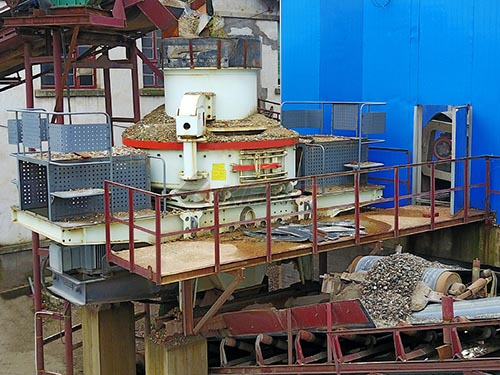
2. Product Overview: HeavyDuty Iron Ore Crushing Plant Solutions
Our engineered iron ore crushing plants are modular or stationary systems designed for hightonnage, continuous operation in demanding mining environments. The typical workflow integrates:
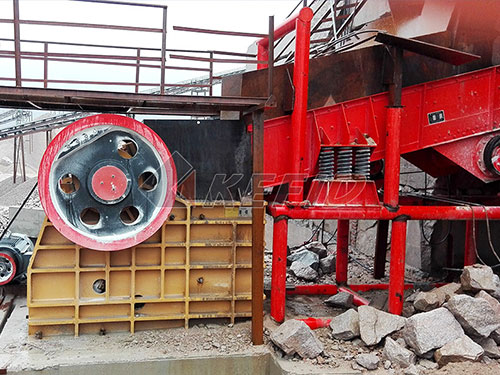
1. Primary Crushing: Gyratory or jaw crushers reduce ROM ore to a conveyable size.
2. Secondary & Tertiary Crushing: Cone crushers or highpressure grinding rolls (HPGR) further reduce material to a specified feed size for downstream processing.
3. Screening & Material Handling: Vibrating screens classify material for recirculation or nextstage processing, with robust conveyor systems ensuring continuous flow.
Application Scope: These plants are engineered for processing magnetite or hematite ores in greenfield projects or major plant upgrades. Limitations: Optimal performance requires integration with adequate upstream feeding and downstream processing capacity; standalone units require careful system engineering.
3. Core Features of Our Iron Ore Crushing Plant
Our solutions are built around key features that address the specific demands of iron ore.
Advanced Liner Technology | Technical Basis: Ultrahighchrome white iron or composite metal matrix liners | Operational Benefit: Increases service life by up to 30% compared to standard manganese steel in abrasive iron ore applications | ROI Impact: Reduces liner inventory costs and downtime for changeouts, lowering cost per ton.
Automated Tramp Metal Protection | Technical Basis: Hydraulic release and clearing systems on crushers paired with metal detectors on feeders | Operational Benefit: Prevents major mechanical damage by automatically discharging uncrushable material | ROI Impact: Avoids catastrophic failure and associated repair costs exceeding hundreds of thousands in lost production and parts.
Intelligent Process Control System | Technical Basis: PLCbased system with crusher load and power monitoring | Operational Benefit: Optimizes feed rate and crusher settings in realtime for consistent product size and maximum throughput | ROI Impact: Improves overall plant efficiency by 515%, maximizing yield from existing infrastructure.
Modular Structural Design | Technical Basis: Bolttogether, heavyduty modules with integrated walkways and maintenance platforms | Operational Benefit: Reduces civil works cost and accelerates onsite installation by up to 40% | ROI Impact: Faster commissioning delivers revenue sooner and lowers project capital risk.
Centralized Lubrication & Conditioning Monitoring | Technical Basis: Automated grease/oil delivery with continuous temperature and pressure sensors | Operational Benefit: Ensures optimal bearing health, prevents lubricationrelated failures, and provides predictive maintenance data | ROI Impact: Extends major component life and allows maintenance scheduling during planned stops.
4. Competitive Advantages
Field data from operational benchmarks demonstrates clear performance differentials.
| Performance Metric | Industry Standard Baseline | Our Iron Ore Crushing Plant Solution | Documented Advantage |
| : | : | : | : |
| Liner Life (Abrasive Ore) | 100% (Baseline) | Up to 130% of baseline life | +30% improvement |
| Plant Availability (%)| ~8588% | Consistently >92% availability| +47% improvement |
| Energy Efficiency (kWh/t) Varies by circuit| Baseline kWh per ton| Reduction through optimized chamber design & drives| Up to 10% reduction |
| Installation/Relocation Time| Fixed foundation timeline| Modular design reduces time significantly| Up to 40% faster |
5. Technical Specifications
Specifications vary by plant configuration (Primary/Secondary/Tertiary) and required throughput (TPH). The following represents a midrange secondary/tertiary cone crusher module specification: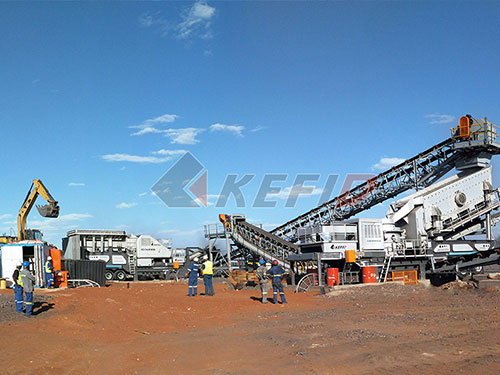
Capacity/Rating: Designed for 1,200 1,800 TPH of crushed iron ore (80mm feed to 16mm product).
Power Requirements: Main crusher motor up to 500 kW; total module connected load approximately 750 kW. Voltage customizable to site requirements (e.g., 6.6 kV).
Material Specifications: Crusher liners manufactured from AARH600+ grade alloy; structural steel ASTM A572 Grade 50; wear plates on chutes minimum AR400.
Physical Dimensions (Module): Approximately 22m L x 8m W x 12m H (excluding feed/discharge conveyors).
Environmental Operating Range: Designed for ambient temperatures from 25°C to +50°C; dustsealed bearings and components standard for highdust environments.
6. Application Scenarios
Magnetite Concentrator Upgrade | Challenge: An aging tertiary crushing circuit was the bottleneck, limiting mill feed rate and producing inconsistent size distribution. Unplanned failures occurred monthly.| Solution: Replacement with a new tertiary crushing module featuring advanced cone crushers with automated settings adjustment and superior liner geometry.| Results: Circuit throughput increased by 18%. Product P80 variability reduced by over 60%. Annual maintenance hours on the circuit decreased by an estimated 35%.
Greenfield Hematite Processing Plant | Challenge: The remote site required minimized construction time and needed a reliable plant designed for future expansion.| Solution: A fully modular iron ore crushing plant was supplied with three primarysecondarytertiary modules.| Results: Erection time was reduced by an estimated twelve weeks versus conventional build. The plant achieved nameplate capacity within four weeks of commissioning.
7. Commercial Considerations
Our iron ore crushing solutions are offered under flexible commercial models to align with your project capital planning.
Pricing Tiers: Ranges from individual crusher station upgrades ($500k $2M) to complete turnkey modular plants ($5M $50M+), scaled by throughput capacity.
Optional Features: Includes advanced dust suppression systems, onboard craneage for maintenance, spare parts kits (initial fill), extended automation packages.
Service Packages: Multitiered offerings from basic commissioning support up to comprehensive multiyear Performance Care Agreements covering planned maintenance, liner changes, and process optimization support.
Financing Options: Available through partner institutions include traditional equipment leasing, project financing solutions for large installations,
8.Frequently Asked Questions
Q1: Is your equipment compatible with our existing primary feeders/screens/conveyors?
A1. Yes. Our engineering team conducts a full interface review during the proposal phase. We design transfer points, chutes,and control system interfaces to integrate seamlessly into your current layout,making our solution ideal for brownfield upgrades.
Q2:What is the expected operational impact during installation?
A2.For modular plants,the impact is minimized.Modules are preassembledand tested offsite.Onsite work focuses on foundation preparation,crane lifts,and connection.This approach typically reduces site disruptionby over50% comparedto stickbuilt alternatives.
Q3:What are the typical payment terms?
A3.We offer structured milestone payments alignedwith key project phases:a deposit upon order,major payment upon shop completion/shipment,and final payment upon successful commissioning.This shares risk appropriately between both parties.
Q4:What training is providedfor our operationsandmaintenance teams?
A4.Comprehensive training is included.It covers classroom instructionon system principlesand handson trainingfor operation,troubleshooting,and routine maintenance procedures.We provide detailed manualsand often recommenda "trainthetrainer" approachfor key site personnel.
Q5:What is the lead timefor a standardcrushing module?
A5.For a standard configuredmodule,the lead timefrom order placementto shipmentis typicallyin the rangeof810 months.This includesdetailed engineering,material procurement,fabrication,and full factoryassemblyand testing.Customconfigurationsmay extend this timeline slightly
Q6:Doyou provideperformanceguarantees?
A6.We stand behindour equipmentwith guaranteedcapacity ratingsbasedon agreedfeed material specifications.Wear part life estimatesare providedbasedon empirical data but are not guaranteeddue touncontrollablevariationsin feed material characteristics
Q7:Canyou assistwith permittingand foundationdesign documentation?
A7.Absolutely.As partof our scope,weprovidecomprehensivefoundationload drawings,vibrationanalysisdata,and generalarrangementdrawingsrequiredfor localpermittingandinformingyour civil contractor'sdesignwork