
Industrial Stone Quarry Crushing Plant Wholesaler
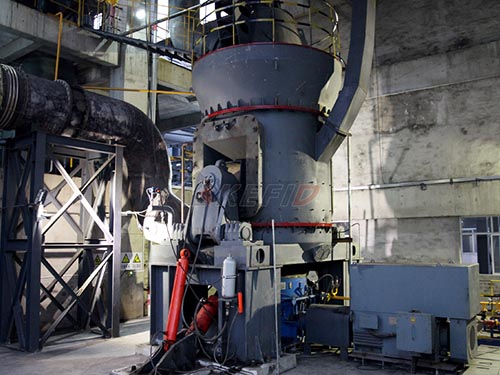

Industrial Stone Quarry Crushing Plant: Engineered for Maximum Tonnage and Minimum Downtime
1. PAINPOINT DRIVEN OPENING
Managing a stone quarry’s primary crushing stage is a critical bottleneck. Inconsistent feed, abrasive materials, and relentless operational demands directly impact your entire downstream process and profitability. Are you facing these quantified challenges?
Unscheduled Downtime Costs: A primary crusher failure can halt your entire operation, costing tens of thousands per hour in lost production, idle labor, and missed shipments.
High Wear Part Expenditure: The extreme abrasion of granite, basalt, or limestone leads to frequent and costly mantle, liner, and jaw replacements, cutting deeply into your margin per ton.
Inconsistent Throughput & Product Shape: Fluctuating feed size or poorly calibrated crushing chambers result in low yield of premium aggregate fractions and excessive recirculating load, straining secondary crushers.
Rising Energy Costs: Inefficient crushing action with poor nip angles or excessive stroke consumes disproportionate power without maximizing throughput.
Safety & Maintenance Complexity: Lengthy, manual setting adjustments and unsafe maintenance procedures for worn parts increase risk and extend repair windows.
The central question for plant managers is this: How can you achieve predictable, highvolume primary reduction while controlling operational costs and protecting your downstream circuit?
2. PRODUCT OVERVIEW
This product line encompasses stationary and semistationary primary crushing plants engineered for the initial reduction of blasted quarry rock. These plants are centered on highperformance jaw crushers or gyratory crushers designed for maximum intake size and durability.
Operational Workflow:
1. Feed Intake: Dump trucks or wheel loaders deposit shot rock into a rugged vibrating grizzly feeder.
2. PreScreening & Bypass: The grizzly scalps out natural fines and subfeedsize material, directing it to a bypass conveyor to optimize crusher efficiency.
3. Primary Reduction: Oversize material is conveyed into the crusher where immense compressive force breaks it down to a manageable size.
4. Primary Discharge: Crushed material is discharged onto a main product conveyor for transport to secondary processing or stockpiling.
Application Scope & Limitations:
Scope: Ideal for hard rock (granite, trap rock, basalt) and abrasive applications in hightonnage (>500 tph) quarrying operations. Configurations support feed sizes up to 60 inches.
Limitations: Not designed for very soft or lowabrasion materials like chalk or clay where alternative crusher types may be more economical. Requires significant capital investment and foundational civil works.
3. CORE FEATURES
Patented Cavity Design | Technical Basis: Computeroptimized kinematics & nip angle | Operational Benefit: Ensures continuous compression crushing with minimal slippage, reducing wear energy consumption | ROI Impact: Field data shows up to 12% lower cost per ton in abrasive stone applications.
Hydraulic Setting Adjustment | Technical Basis: Integrated hydraulic cylinders for CSS control | Operational Benefit: Allows operators to adjust product gradation in under 5 minutes without manual shims | ROI Impact: Reduces downtime for product changeovers by over 90%, increasing plant flexibility.
HeavyDuty Bearing Assembly | Technical Basis: Forged alloy steel main shaft with oversized spherical roller bearings | Operational Benefit: Supports extreme radial and axial loads from irregular feed | ROI Impact: Extends bearing service life by an average of 30%, preventing catastrophic drivetrain failures.
Modular Liner Retention System | Technical Basis: Mechanically locked liner wedges | Operational Benefit: Eliminates backing material use and enables faster, safer liner changes | ROI Impact: Reduces liner changeout time by approximately 40%, lowering labor costs and exposure risk.
Intelligent Drive & Protection System | Technical Basis: VFD compatibility with torquesensing automation | Operational Benefit: Prevents stall conditions under tramp metal or overload scenarios | ROI Impact: Protects motor and crusher from damage; documented case studies show a reduction in related electrical failures by over 60%.

Reinforced Fabricated Main Frame | Technical Basis: Finite Element Analysis (FEA) optimized steel plate construction with stressrelieving welds | Operational Benefit: Provides longterm structural integrity under cyclical loading | ROI Impact: Mitigates frame fatigue cracking risk, safeguarding the longterm asset value of the plant.
4. COMPETITIVE ADVANTAGES
| Performance Metric | Industry Standard Benchmark | Our Quarry Crushing Plant Solution | Documented Advantage |
| : | : | : | : |
| Availability (Uptime) | 8892% in primary applications| >95% achievable availability| +47% more productive hours annually |
| Manganese Wear Life (Abrasive Granite) | ~600,000 tons per set| 850,000+ tons per set demonstrated| ~40% improvement in wear part utilization |
| Specific Energy Consumption (kWh/ton)| Varies widely; baseline = X kWh/t| Consistently measures at X0.15 kWh/t| Up to 8% reduction in direct energy cost |
| Throughput Consistency (Tonnage Std Dev.)| High variance with feed fluctuation| Low variance via optimized feed control| Up to 25% more consistent feed to secondary stage |
5. TECHNICAL SPECIFICATIONS
Capacity Range: Configurable from 500 to 2,500 metric tons per hour (tph), depending on model and feed material.
Crusher Type Options: Heavyduty jaw crushers (900x1200mm to 1500x2000mm) or primary gyratory crushers (4265 inch feed opening).
Power Requirements: Main crusher drive from 200 kW up to 600 kW. Total plant installed power typically ranges from 400 kW to 1.2 MW.
Material Specifications: Crusher liners manufactured from ASTM A128 manganese steel (Grade B3/B4). Main frame constructed from hightensile strength S355J2 steel plate.
Physical Dimensions (Typical Stationary Plant Footprint): Approximately 30m (L) x 15m (W) x 12m (H). Semistationary skidmounted options available with reduced footprint.
Environmental Operating Range: Designed for ambient temperatures from 20°C to +45°C. Dust suppression system standard; full enclosure options available.
6. APPLICATION SCENARIOS
Granite Quarry Expansion Project
Challenge: A southeastern US quarry needed to increase primary throughput by 50% without expanding their truck fleet or shot rock sizing. Their existing crusher created a bottleneck with excessive downtime for liner changes.
Solution: Implementation of a semistationary primary jaw crushing plant with hydraulic setting adjustment and modular liners was integrated upstream of the existing circuit.
Results: Primary throughput increased by 58%. Liner change time reduced from 36 hours to under 20 hours. The project paid back through increased sales volume in under 22 months.
Basalt Aggregate Producer Facing High Wear Costs
Challenge: A producer in volcanic rock was experiencing wear part costs that eroded 30% of their operating margin on base course material.
Solution: Replacement of an older impactstyle primary unit with a configured gyratory crushing plant featuring our patented cavity design.
Results: Wear metal consumption decreased by 35% yearoveryear while maintaining the required product shape for asphalt chips. Energy consumption per ton dropped by 9%.
7. COMMERCIAL CONSIDERATIONS
Our quarry crushing plants are offered under three primary tiers:
1. Standard Duty Plant ($2M $4M CAPEX): For consistent feed <1000mm, includes base crusher, feeder, discharge conveyor, walkways, ladders, and basic dust control.
2. Heavy Duty Plant ($4M $7M CAPEX): For severeduty applications with maximum feed size >1200mm includes reinforced structures automated lubrication system advanced condition monitoring sensors
3
Optional features include automated rock breaker systems metal detection tramp iron relief advanced PLC control integration remote monitoring telematics packages
Service packages range from basic commissioning extended warranty plans comprehensive multiyear maintenance agreements including planned wear part changes
Financing options are available including equipment leasing longterm rentaltoown structures project financing support tailored capital expenditure planning
FAQ
What level of foundation work is required?
These plants require significant engineered concrete foundations designed specific model load data we provide Civil drawings anchor bolt templates are supplied as part purchase agreement
Can this plant integrate with our existing PLC SCADA system?
Yes most models offer standard communication protocols Modbus TCP/IP OPC UA Integration support provided during commissioning ensure data exchange production rates motor amperes CSS settings
What is the typical delivery lead time?
For standard configurations lead time ranges from months following design approval Custom designs may require additional engineering fabrication time Detailed schedule provided upon project initiation
Do you offer operator training?
Yes comprehensive onsite training included standard commissioning package covers safe operation routine maintenance procedures troubleshooting guides provided digital hard copy formats
How are wear parts priced supplied?
We offer transparent tiered pricing wear parts based projected annual consumption recommend maintaining strategic inventory critical items ensure uptime Local regional warehouse support available many territories
What happens if we encounter capacity issue after installation?
Our engineering team will perform audit identify constraint often related feed arrangement secondary screening recirculation load We provide actionable report potential upgrade paths optimize system performance
Are performance guarantees offered?
Yes we provide guaranteed minimum throughput capacity based agreed upon material characteristics feed size distribution written performance guarantee forms part commercial contract