
Industrial Slag Crusher Plant Specification

1. PAINPOINT DRIVEN OPENING
Are you managing the complex and costly challenge of industrial slag handling? Processing this abrasive, highvolume byproduct often leads to significant operational bottlenecks. Common pain points include:
Excessive Downtime: Frequent liner wear and component failure in standard crushers lead to unplanned maintenance stops, halting downstream operations.
High Operational Costs: The abrasive nature of slag accelerates equipment wear, resulting in high spare parts consumption and labor costs for replacements.
Inconsistent Output: Inadequate crushing force or chamber design produces uneven particle size distribution, complicitating subsequent sorting or recycling processes and reducing material value.
Space & Throughput Constraints: Inefficient plant layouts with undersized or poorly configured crushing circuits cannot meet increasing slag volume targets.
Is your current system causing unpredictable downtime and eroding your bottom line? The solution lies not just in a crusher, but in a purposeengineered Industrial Slag Crusher Plant.
2. PRODUCT OVERVIEW
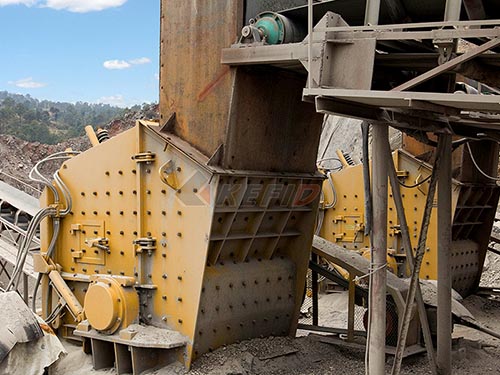
The Industrial Slag Crusher Plant is a stationary or semimobile processing system engineered specifically for the primary and secondary reduction of metallurgical slag (blast furnace, steel furnace, copper, etc.). It transforms large, irregular slag chunks into a controlled, sized aggregate for recycling as construction material, road base, or raw feed for further metal recovery.
Operational Workflow:
1. Feed & PreScreening: Runoffurnace slag is fed via loader into a robust hopper, often with a grizzly section to bypass subsize material.
2. Primary Crushing: A heavyduty jaw crusher or impactor performs the initial size reduction, handling large feed sizes with high compressive force.
3. Material Transfer & Secondary Crushing: A conveyor network transfers material to a secondary cone crusher or impact crusher for final sizing to the required specification (typically 040mm).
4. Sizing & Stockpiling: A vibrating screen classifies the crushed product; oversize material is recirculated, while correctly sized aggregate is conveyed to stockpiles.
Application Scope & Limitations:
Scope: Ideal for integrated steel plants, foundries, nonferrous smelters, and standalone slag processing yards handling medium to high volumes (50500 TPH+).
Limitations: Not designed for primary rock mining operations or processing of highly plastic/sticky materials without specific feeder modifications. Maximum feed size and hardness are bounded by the model's engineering specifications.
3. CORE FEATURES
HeavyDuty Rotor & Crushing Chamber | Technical Basis: Highinertia rotor design with optimal chamber geometry | Operational Benefit: Sustains crushing force against highly abrasive slag with minimal velocity loss | ROI Impact: Consistent throughput over longer campaigns reduces costperton processed
Hydraulic Adjustment & Clearing | Technical Basis: PLCcontrolled hydraulic systems for CSS adjustment and unblocking | Operational Benefit: Operators can adjust product size or clear blockages in minutes from a safe location | ROI Impact: Eliminates manual hammering/downtime; improves plant availability by up to 15%
AbrasionResistant Liner Package | Technical Basis: Martensitic steel alloys and composite liners in highwear zones | Operational Benefit: Liner service life extended by 23x compared to standard manganese steel | ROI Impact: Direct reduction in liner inventory costs and changeout labor expenses
Integrated Metal Trap & Tramp Release | Technical Basis: Permanent magnet overband separator and automatic tramp iron release system | Operational Benefit: Protects downstream crushers from uncrushable metallic remnants ("tramp metal") within the slag | ROI Impact: Prevents catastrophic damage to crusher internals; avoids repair costs exceeding $50k per incident
Centralized Greasing & Condition Monitoring | Technical Basis: Automated lubrication system with bearing temperature and vibration sensors | Operational Benefit: Ensures critical bearings receive proper lubrication; provides early fault detection alerts | ROI Impact: Extends bearing life by up to 40%; enables predictive maintenance planning
Modular Plant Design | Technical Basis: Preassembled skid or modulebased plant sections (feedercrusherscreen) | Operational Benefit: Reduces civil works and onsite assembly time by approximately 30% | ROI Impact: Faster commissioning and earlier return on investment
4. COMPETITIVE ADVANTAGES
| Performance Metric | Industry Standard Solution | Our Industrial Slag Crusher Plant Solution | Advantage (% Improvement) |
| : | : | : | : |
| Liner Wear Life (Primary Chamber) | Standard Manganese Steel Liners (300400 hrs)| Martensitic Alloy/Composite Liners (750+ hrs)| +90% |
| Throughput Consistency at High Abrasion| ~15% drop over an 8hr shift due to wearrelated power/velocity loss| <5% drop due to highinertia rotor & optimized feed control| +67% Consistency |
| Unplanned Downtime per Month (Avg.)| 1218 hours for liner changes/blockages/repairs| 50% Reduction |
| Total Cost of Ownership (TCO) / Tonne Over 5 Years| Baseline = 100% (High parts/labor)| Estimated at ~6575% of baseline due to extended wear life & availability| 25% to 35% TCO |
5. TECHNICAL SPECIFICATIONS
Capacity Range: Configurable from 50 Tonnes Per Hour (TPH) to over 400 TPH.
Power Requirements: Primary crushing circuit typically requires 150kW 400kW total installed power (380V/50Hz or 460V/60Hz). Custom configurations available.
Material Specifications: Engineered for Slag MOHs hardness up to 78; Feed size up to 800mm lump; Output sizes adjustable from 40mm down to <10mm.
Physical Dimensions (Example MidRange Plant): Approx. Length x Width x Height = 25m x 8m x 6m. Fully modular design adaptable to site constraints.
Environmental Operating Range: Designed for ambient temperatures from 20°C to +45°C; dust suppression kit standard; noise emissions compliant with <85 dB(A) at operator stations.
6. APPLICATION SCENARIOS
Integrated Steel Plant – Blast Furnace Slag Processing
Challenge: A major steel producer faced weekly liner changes on their secondary cone crusher processing granulated blast furnace slag, causing ~16 hours of monthly downtime and high maintenance costs.
Solution: Implementation of a tailored Industrial Slag Crusher Plant featuring an abrasionresistant secondary cone crusher package with automated CSS adjustment.
Results: Liner life extended from ~200 hours to over 600 hours. Monthly crusherspecific downtime reduced by 70%. Achieved payback on upgrade within 14 months through parts/labor savings.
Copper Smelter – Slag Aggregate Production
Challenge: A smelter needed to process dumped legacy slag into saleable construction aggregate but faced constant clogging and uneven output from repurposed mining equipment.
Solution: Deployment of a semimobile primary jaw and secondary impactor slag crusher plant with an aggressive prescreening and metal removal circuit.
Results: Plant achieved consistent production of certified 32mm aggregate at 120 TPH. Metal recovery increased revenue streams. System mobility allowed processing of multiple legacy stockpiles.
7. COMMERCIAL CONSIDERATIONS
Our Industrial Slag Crusher Plants are offered in three primary tiers:
1. Standard Duty Plant: For lowervolume (<100 TPH), less variable feed conditions. Includes core features like abrasionresistant liners and basic metal trap.
2. HeavyDuty Plant: Recommended for most applications (100250 TPH). Includes all core features listed above—hydraulic adjustment, full condition monitoring, advanced liner packages—as standard.
3. Turnkey Modular Plant: For highvolume (>250 TPH) or fasttrack projects includes full electrical control houses, dust suppression systems,and commissioning services.
Optional features include advanced aircooled oil systems for extreme climates,tiremounted mobile configurations,and remote telemetry connectivity.Service packages range from basic preventative maintenance plans tooffsite monitored performance contracts with guaranteed availability.Financing options including equipment leasingand tollprocessing partnerships are availableto align capital expenditurewith project cash flow.
8.FAQ
Q1:What is the typical lead timefor deliveryand commissioningof an IndustrialSlagCrusherPlant?
A1.For standard configurationsin our HeavyDuty rangelead timesare typically2024 weeksfrom orderconfirmationto exworks delivery.Sitecommissioningrequiresan additional23 weeksdependingon civil readiness.Completeturnkeyproject timelinesare definedduringthe feasibilitystudy phase.
Q2:Canyourplantbe integratedintoourexistingmaterialhandlingand screeningcircuit?
A2 Yes.The plantsaredesignedwithstandardizeddischarge heightsand conveyorinterfaces.Most integrationprojectsrequirea detailedreview ofyourflowsheetto ensurecompatibilityof chuteworktransferpointsandcontrolsysteminterfacingwhichwe provideas partof ourpresaleengineering support.
Q3:Whatistheexpectedpowerconsumptionfora200TPHslagprocessingplant?
A3 Basedon fielddataforgranulatedblastfurnaceslagat200TPHtotalconnectedloadtypicallyrangesbetween280kWand320kW.Activerunningloadis approximately8085%of thisfigure.A detailedpowerassessmentis providedwith eachprojectquotation.
Q4:Doyouprovidewearpartconsumablesguarantees?
A4 We offerperformancebasedwearpartpackageswith guaranteedtonnagethroughputfiguresforprimaryandsecondarycrusherlinersunderdefinedoperatingconditions.Thisprovidespredictablecostpertonforeasybudgeting.
Q5:Whatoperator trainingis included?
A5 We providecomprehensiveonsite trainingforplantoperatorsandmaintenanceteamscoversnormaloperationtroubleshootingbasicsafetyproceduresandroutine maintenancechecklists.Documentationincludesfullmanualsandschematicdrawings