
Industrial 500 Tph Gold Mining Washing Plant Maker


1. PAINPOINT DRIVEN OPENING
Are you facing escalating operational costs and unpredictable recovery rates in your highvolume gold mining operation? Managing a 500tonperhour feed presents distinct challenges that directly impact profitability. Common pain points include:
High Clay and Fines Content: Agglomeration and blinding of traditional scrubbers and screens, leading to significant gold loss in fines, reduced throughput, and constant maintenance.
Water and Power Inefficiency: Ineffective washing and screening loops consuming excessive water (often 500+ m³/hr) and highpower motors, driving up operational expenses.
Frequent Downtime for Maintenance: Abrasive feed materials causing rapid wear on components, resulting in unplanned shutdowns that cost tens of thousands per hour in lost production.
Inconsistent Feed Grade Handling: The inability of a static plant design to efficiently process variable ore hardness and clay content, forcing a compromise on either recovery or throughput.
Is your current setup struggling to maintain 500 TPH with high availability while ensuring optimal gold recovery from complex, alluvial or weathered deposits? The solution requires a purposebuilt washing plant designed for scale and resilience.
2. PRODUCT OVERVIEW
The Industrial 500 TPH Gold Mining Washing Plant is a modular, heavyduty processing system engineered for the primary scrubbing, clay breakdown, screening, and gravity preconcentration of goldbearing alluvial, eluvial, or weathered hard rock ore at a nominal 500 metric tons per hour.
Operational Workflow:
1. Primary Feed & Scrubbing: Runofmine (ROM) material is fed into a robust trommel scrubber or rotary scrubber, where intense attrition breaks down clay matrices and liberates gold particles.
2. Sizing & Classification: The scrubbed material is screened; oversize (typically +75mm) is rejected as waste or sent for crushing. The undersize reports to further washing screens or vibrating decks for precise classification.
3. Primary Concentration: Fine material (10mm to 2mm) is routed to primary gravity concentrators (e.g., centrifugal concentrators, sluices) to recover liberated gold, significantly reducing the volume of material for downstream processing.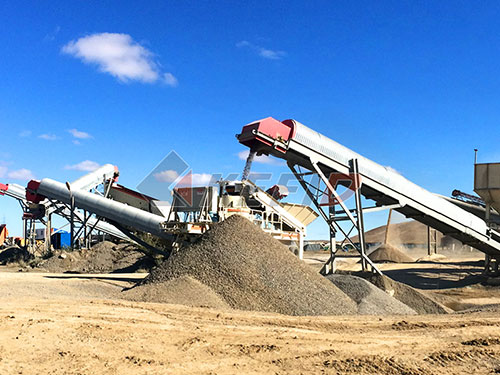
Application Scope & Limitations:
Scope: Ideal for surface mining operations targeting freemilling gold in deposits with high clay content, sticky soils, or requiring aggressive attrition. Suited for both fixed plant installations and semimobile configurations.
Limitations: Not a substitute for chemical processing (e.g., CIP/CIL) for refractory ores. Ultimate recovery depends on adequate liberation in the scrubbing stage. Performance is contingent on consistent feed control and appropriate water supply.
3. CORE FEATURES
HeavyDuty Trommel Scrubber | Technical Basis: Hightorque rotational drive with internal lifters | Operational Benefit: Ensures complete disintegration of claybound aggregates without clogging, maintaining design throughput even with sticky feed | ROI Impact: Eliminates throughput bottlenecks; field data shows a 1525% increase in consistent hourly tonnage compared to undersized units.

Modular Screening Cascade | Technical Basis: Multistage vibrating screens with spray bars in series | Operational Benefit: Provides efficient sizing and desliming at high volume, producing clean gravel rejects and optimally classified feed for concentrators | ROI Impact: Improves gravity concentrate grade by up to 30%, reducing downstream handling costs.
Integrated Water Recycling System | Technical Basis: Clarification tanks and cyclonebased silt management | Operational Benefit: Dramatically reduces fresh water consumption by enabling up to 80% recirculation | ROI Impact: Cuts water procurement and pumping costs by over 60%, crucial for remote operations.
Primary Gravity Recovery Circuit | Technical Basis: Bank of highcapacity centrifugal concentrators with automated concentrate flushing | Operational Benefit: Captures free gold immediately postscrubbing at a coarse size fraction, preventing recirculation loss | ROI Impact: Industry testing demonstrates capture of +70% of liberated gold at this stage, securing revenue early in the process.
AbrasionResistant Liner System | Technical Basis: Bolton modular liners made from chromium carbide steel in highwear zones | Operational Benefit: Extends component life between changeouts from weeks to months under abrasive conditions | ROI Impact: Reduces liner replacement downtime by an estimated 812 days annually.
Centralized PLC Control & Monitoring | Technical Basis: Industrial programmable logic controller with touchscreen HMI tracking motor loads, feed rates, and water pressure | Operational Benefit: Allows operators to optimize performance in realtime and provides early fault diagnostics | ROI Impact: Minimizes operational variances; plants report a 35% overall efficiency gain through precise control.
4. COMPETITIVE ADVANTAGES
| Performance Metric | Industry Standard (500 TPH Class) | Our 500 TPH Washing Plant Solution | Advantage (% Improvement) |
| : | : | : | : |
| Water Consumption per Tonne Processed| ~1 m³/tonne (oncethrough systems common)| 60% Reduction |
| Annual Availability (Excluding Scheduled Maintenance)| 8085% due to wearrelated stoppages| Target >90% via heavyduty design & liner tech |>5 Percentage Points |
| Gold Recovery Efficiency in Scrubber/Screen Circuit (Free Gold)| ~6575% capture rate before tails| Target >85% capture via optimized flow & primary gravity |>15% Relative Improvement |
| Power Draw per Tonne Processed| Varies widely; often inefficient motor sizing| Optimized drive systems & hydraulic design |>10% Reduction Estimated |
| Time Required for Major Liner Replacement (Trommel)| 4872 hours with extensive labor| 50% Faster |
5. TECHNICAL SPECIFICATIONS
Nominal Capacity: 500 metric tonnes per hour (variable based on specific gravity and clay content).
Power Requirements: Approx. 750 900 kW total connected load. Designed for HV supply (6.6kV or 11kV) with stepdown transformers.
Key Material Specifications:
Scrubbing Drum Shell: Hightensile steel plate (minimum Q345B).
Wear Liners/Lifters: Chromium Carbide Overlay Plate (>HRC60).
Screen Decks/ Panels : Polyurethane or abrasionresistant steel wire mesh.
Structural Steelwork : IS2062 E350 Grade or equivalent.
Physical Dimensions (Modular): Typical footprint ~40m L x 20m W x 15m H. Designed as skidmounted modules for transportability.
Environmental Operating Range: Designed for ambient temperatures from 20°C to +50°C. Dust suppression systems standard; can be enclosed for extreme climates.
6. APPLICATION SCENARIOS
Alluvial Gold Project, West Africa
Challenge A project was losing an estimated +20% of fine gold to tailings due to inadequate clay scrubbing and poor classification before their concentration circuit.
Solution Implementation of our core trommel scrubber module paired with a twostage screening cascade ahead of existing concentrators.
Results Achieved consistent design throughput of 480 TPH on highly weathered material; increased overall project recovery by an estimated +12%, paying back the capital investment within eight months based on prevailing gold prices.
Weathered Hard Rock Transition Zone Mine
Challenge A mine transitioning from oxide to transitional ore faced severe blinding of their original washing screens,causing daily downtime cycles averaging three hours lost production (~1500 tonnes).
Solution Replacement with our heavyduty washing plant featuring nonblinding screen technology integrated into the primary circuit layout.
Results Screenrelated downtime was reduced by over +90%. The plant maintained an average availability above +92%, allowing the mine to meet its quarterly tonnage targets despite harder ore variability.
7. COMMERCIAL CONSIDERATIONS
Our industrialscale washing plants are capital investments engineered for longterm operational savings.Pricing is structured around configuration complexity:
Base Plant Tier ($X.XM $X.XM): Includes core scrubbing,screening,and primary gravity modules,factorytested PLC controls,and basic drawings.Payment terms typically involve progress payments against manufacturing milestones.
Optimized Plant Tier ($X.XM $X.XM): Adds enhanced features like advanced water recycling systems,dust encapsulation packages,and automated grease systems.Financing options through partner institutions may be available subject to credit approval.
Optional Features & Service Packages: Key options include standby power integration,final tailings dewatering presses,and remote monitoring subscriptions.Comprehensive service packages are offered covering scheduled maintenance,inspections,and strategic spare parts holdings near major mining regions.This approach ensures predictable operating costs over the asset's lifecycle.
8.FAQ
Q What are the key site requirements needed prior installation?
A You will need prepared foundations,a reliable water source(even with recycling),adequate ROM feed surge capacity,and HV power connection.A detailed site layout review is conducted during engineering phase
Q How does this plant integrate with our existing crushing circuit?
A It can be configured as either standalone unit feeding crushed material directly into scrubber bypassing primary crushing if required.The most common integration point is after primary jaw crusher but before secondary tertiary crushing where liberated fine gold can be recovered early
Q What guarantees are provided regarding throughput capacity?
A We conduct factory acceptance tests(FATs)and provide performance guarantees based on processing your representative bulk sample under controlled conditions.Guarantees cover sustained tonnage under specified feed conditions
Q What ongoing operational support do you provide?
A Support ranges from basic documentation packages through comprehensive annual service contracts that include regular inspections wear part audits technician dispatch services ensuring maximum uptime
Q Are there financing options available?
A Yes we work closely several international equipment finance companies who can structure lease purchase agreements operating leases tailored your cash flow requirements subject standard credit approval processes