
Impact Crushers Sourcing Agent Prices
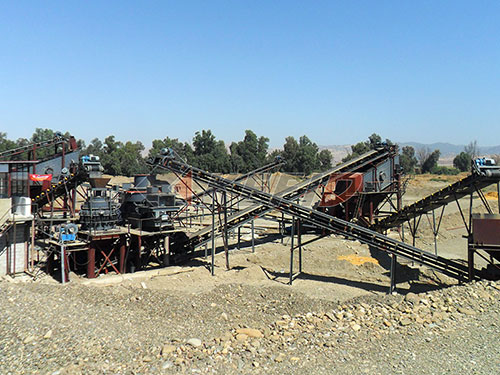

Optimizing Your Crushing Circuit: Addressing the High Cost of Size Reduction
Are you facing escalating operational costs in your aggregate, mining, or recycling plant? The primary crushing stage often hides significant inefficiencies that directly impact your bottom line. Key challenges include:
Excessive Wear Part Costs: Frequent replacement of hammers, liners, and impact blocks due to abrasive or highsilica feed material can cost tens of thousands annually in parts and labor downtime.
Unpredictable Product Gradation: Inconsistent output with excessive fines or oversized material leads to product rejection, recrushing cycles, and lost revenue from premium product specifications.
High Energy Consumption per Ton: Older or poorly configured impact crushers operate inefficiently, with energy costs representing a dominant portion of your processing expense.
Unscheduled Downtime for Maintenance: Difficult access for routine inspection and part changeouts turns a 4hour job into an 8hour production halt.
Limited Feed Flexibility: Struggling to process a blend of materials—from recycled concrete to hard limestone—without constant adjustments and flow bottlenecks.
How do you reduce costperton while maintaining product quality and plant uptime? The solution lies in selecting a modern Impact Crusher engineered for durability, efficiency, and control.
Product Overview: Tertiary & Secondary Impact Crushers for Precise Size Reduction
An Impact Crusher is a dynamic fragmentation machine that utilizes highspeed rotors and durable impact surfaces to fracture material. Its operational workflow is straightforward yet highly effective: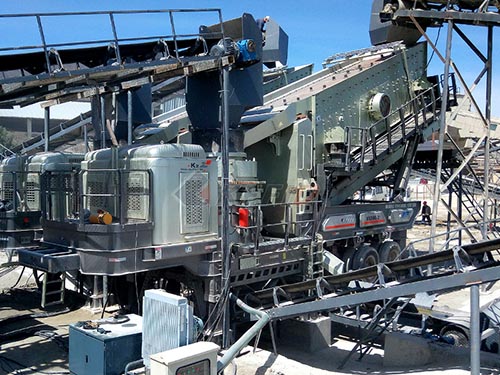
1. Feed Entry: Material is introduced into the crushing chamber, typically via a regulated feed system.
2. Acceleration & Impact: The highvelocity rotor hurls material against stationary anvils or curtains, inducing fracture along natural cleavage lines.
3. Attrition & Interparticle Crushing: A controlled cascade of material within the chamber creates secondary collisions between particles, optimizing reduction efficiency.
4. Gradation Control: Adjustable aprons or grinding paths allow operators to finetune the clearance between rotor and impact surfaces, directly controlling the output size.
5. Product Discharge: Properly sized material exits the chamber, ready for downstream screening.
Application Scope: Ideal for mediumhard to hard, nonabrasive materials (limestone, recycled concrete/asphalt) and where a cubical product shape is critical. Best suited for secondary, tertiary, or quaternary crushing stages.
Key Limitation: Not recommended for highly abrasive materials (e.g., certain granite, gravels with high quartz content) without accepting higher wear costs; compression crushers like cones may be more economical in such primarystage applications.
Core Features: Engineered for Performance & Profitability
Our sourced Impact Crushers are designed with features that translate engineering into measurable operational gains.
Hydraulic Adjustment System | Technical Basis: Mechanically synchronized hydraulic cylinders | Operational Benefit: Allows operators to adjust crusher setting and clear jams remotely in under 60 seconds without entering the crusher | ROI Impact: Reduces downtime by up to 50% during routine adjustments and clearing events.
MultiFunctional Rotor Design | Technical Basis: Solid monobloc or welded steel rotor with multiple mounting positions for hammers/blow bars | Operational Benefit: Provides superior inertia for crushing large feed and allows rotation/repositioning of wear parts for extended service life | ROI Impact: Maximizes wear material utilization by up to 30%, lowering costperton on consumables.
Patented Wedge Wear Part Retention | Technical Basis: Mechanical wedge locking system for blow bars and wear plates | Operational Benefit: Secures parts without backing resin; enables faster changeouts with standard tools | ROI Impact: Cuts liner replacement time by an average of 35%, directly increasing annual available production hours.
Cascading Flow Chamber Geometry | Technical Basis: Optimized internal contours derived from particle trajectory modeling | Operational Benefit: Guides material flow to maximize interparticle collision and minimize direct wear on metal components | ROI Impact: Improves reduction efficiency (lower kWh/ton) by 1015% while extending intervals between wear part maintenance.
HeavyDuty Bearing Cartridge Assembly | Technical Basis: Oversized spherical roller bearings housed in a removable cartridge | Operational Benefit: Isolates bearings from vibration and contaminants; allows preassembled replacement | ROI Impact: Eliminates catastrophic bearing failure risks; scheduled swaps can be completed in one shift versus multiple days for rebuilds.
Competitive Advantages: Quantifiable Performance Metrics
Field data from comparable installations demonstrates clear advantages over previousgeneration impactor designs.
| Performance Metric | Industry Standard (Legacy Designs) | Our Sourced Impact Crusher Solution | Advantage (% Improvement) |
| : | : | : | : |
| Wear Life (Abrasive Limestone) | ~60,000 tons per set of blow bars | ~85,000 tons per set of blow bars | +41% Extended Life |
| Energy Efficiency (kWh/Ton) | 0.8 1.2 kWh/Ton at 25mm CSS
Closed Side Setting| 0.65 0.9 kWh/Ton at 25mm CSS
Closed Side Setting| Up to 23% Energy Consumption |
| Average Liner ChangeOut Time
(Secondary Position)
(Secondary Position)
(Secondary Position)
(Secondary Position)
(Secondary Position)
(Secondary Position)
(Secondary Position)
(Secondary Position)
(Secondary Position)
(Secondary Position)
(Secondary Position)
(Secondary Position)
(Secondary Position)
(Secondary Position)
(Secondary Position)
(% of Cubical Particles)
Technical Specifications Overview
Specifications vary by model series designed for specific duty classes.
- Capacity Range: Secondary models from 150 – 600 TPH; Tertiary models from 100 – 350 TPH (based on limestone @ ~1.6 t/m³).
- Power Requirements: Drive motors from 200 kW up to
800 kW
(275 HP –
1075 HP),
standard
50 Hz /
60 Hz
configurable. - Rotor Specifications: Diameters:
1,
2 m –
1,
6 m;
widths up
to
2,
5 m;
peripheral speeds
optimized
for
material type. - Feed Opening & Dimensions:
Rectangular openings up
to
1,
04 m x
1,
16 m;
overall machine weight
from
16,
000 kg
to
over
55,
000 kg. - Construction Materials:
Highchrome martensitic steel blow bars (
27%
Cr),
manganese steel aprons,
heavyduty steel plate housing (
minimum
40 mm
at stress points). - Environmental Operating Range:
Designed
for ambient temperatures from
20°C
to +
45°C;
dusttight sealing standard;
foundation design accommodates standard dynamic loads.
Application Scenarios & Documented Results
Aggregate Producer – Western U.S. |
Challenge:
Meeting strict state DOT specs
for cubical chip seal aggregate while processing variable hardness limestone with occasional clay contamination |
Solution:
Installation
of a heavyduty tertiary impact crusher with hydraulic adjustment
and cascading chamber design |
Results:
Achieved consistent product cubicity above
80%,
reducing plant recirculation load by
22%.
Wear part life increased by
35%
despite variable feed conditions.
C&D Recycling Operator – EU |
Challenge:
High maintenance costs
and excessive downtime due
to uncrushable metals (
rebar)
in feed causing catastrophic damage |
Solution:
Implementation
of an impact crusher equipped with oversized hydraulic cylinders
for automatic clearing,
alongside a programmable logic controller (
PLC)
with overload protection |
Results:
Automatic reversal cleared
95%
of tramp events without operator intervention.
Annual saved downtime estimated at
120 hours,
protecting rotor integrity.
Commercial Considerations
Investing in an impact crusher involves evaluating total lifecycle cost against capital outlay.
-
""="" "Pricing Tiers:""
""Entrylevel"" ""secondary units start in the midrange capital bracket."" ""Heavyduty,"" ""highcapacity tertiary models with full hydraulics"" ""and automation interfaces represent"" ""a premium investment,"" ""justified by their application"" ""in continuous,"" ""highvolume operations.""
""Optional Features:""
""Upgrades include:""
""advanced PLC automation packages,""
""ceramic wear liners"" ""for highly abrasive zones,""
""secondary apron relief systems,""
""and specialized rotor configurations""" "
(""e.g.,""" "
4high vs""" "
2high)."""
"""Service Packages:""
"""Comprehensive plans range from basic commissioning""" "
and spare parts kits""" "
to full annual inspection,"" ""
remote monitoring,"" ""
and guaranteed exchange components""" "
for critical items.""""
"""Financing Options:""
"""Flexible commercial structures are available,"" ""
including equipment leasing through partners,"" ""
operational leasetoown agreements,"" ""
and projectbased financing.""""
"""
Frequently Asked QuestionsQ1: Can an impact crusher handle our primary crushing duties?
A: A primary impact crusher (often called a horizontal shaft impactor or HSI) is designed for soft > > > >& nbsp ;& gt ;& lt ;/ span >& gt ;& lt ;/ p >& lt ;/ li >& lt ;/ ul >