
Impact Crushers Importer Quality Control


1. PAINPOINT DRIVEN OPENING
Are you managing unpredictable production bottlenecks and escalating maintenance costs in your aggregate or mineral processing line? The secondary reduction stage is often where profitability is crushed, not the material. Common operational challenges with impact crushing include:
Excessive Wear Part Costs & Downtime: Frequent, unplanned shutdowns to replace hammers, liners, and blow bars directly cut into your operating budget and throughput targets.
Inconsistent Product Gradation: Fluctuations in feed size or hardness can lead to offspec product, resulting in pile contamination, recrushing, and dissatisfied customers.
High Operational Vibration & Structural Stress: Poorly balanced rotors or suboptimal chamber designs transmit damaging forces to the crusher foundation and structure, risking major longterm damage.
Limited Flexibility for Diverse Materials: A crusher optimized for soft limestone may choke on abrasive river gravel or recycled concrete, forcing compromises in product mix or requiring a separate machine.
Is your current solution delivering the consistent tonnage, predictable operating costs, and product shape required for today's competitive markets? A strategic evaluation of your impact crushing technology is not just about equipment replacement—it's about securing plant reliability and margin protection.
2. PRODUCT OVERVIEW: HORIZONTAL SHAFT IMPACT (HSI) CRUSHERS
A Horizontal Shaft Impact (HSI) crusher is a dynamic compression system that utilizes highspeed rotors fitted with hammers or blow bars to fracture material through impact forces. The operational workflow is a continuous cycle:
1. Feed Intake: Material is directed into the crushing chamber via a feed chute.
2. Acceleration & Impact: The spinning rotor accelerates material, hurling it against stationary anvils or curtains (primary impact) and creating interparticle collision (secondary breakage).
3. Size Reduction & Recirculation: Fractured material falls onto the rotor for repeated impacts or passes through adjustable aprons/grates for final sizing.
4. Product Discharge: Sized material exits the chamber, while oversize is recirculated for further reduction.
Application Scope: Ideal for primary, secondary, or tertiary crushing of low to mediumabrasive materials such as limestone, recycled concrete/asphalt, and softer industrial minerals. HSI crushers are favored for producing a wellshaped, cubical product.
Key Limitations: Less suitable for highly abrasive materials (e.g., granite, trap rock) compared to cone crushers; efficiency can decrease with very high moisture content without proper configuration.
3. CORE FEATURES
Hydraulic Adjustment System | Technical Basis: Integrated hydraulic cylinders controlling apron/cradle position | Operational Benefit: Allows operators to adjust product size setting quickly under load or clear blockages safely from ground level | ROI Impact: Reduces downtime for adjustments by up to 80% versus manual systems; improves safety
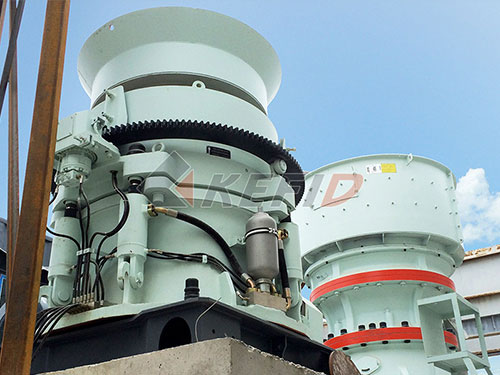
Solid Rotor / Modular Rotor Design | Technical Basis: Highinertia forged steel rotor with reversible/wedgelock hammer systems | Operational Benefit: Delivers higher reduction ratios per pass and extends wear part service life through multiple indexing positions | ROI Impact: Increases throughput capacity by 1525% over lighter rotors; lowers costperton on wear metals
MultiFunctional Crushing Chamber | Technical Basis: Engineered cavity profiles with 23 adjustable curtains/grates | Operational Benefit: Provides precise control over residence time and impact intensity for optimal shaping and sizing across varied feeds | ROI Impact: Enables singlemachine flexibility for multiple product specs; reduces need for downstream reprocessing
Advanced Wear Part Metallurgy | Technical Basis: Martensitic/alloy steel castings with ceramic composites in critical zones | Operational Benefit: Withstands sustained impact abrasion in demanding applications like reinforced concrete recycling | ROI Impact: Documented field data shows 3050% longer service intervals compared to standard manganese steel
Vibration Monitoring System Integration | Technical Basis: Triaxial sensors mounted directly on bearing housings connected to PLC | Operational Benefit: Provides realtime alerts on imbalance or mechanical issues before catastrophic failure occurs | ROI Impact: Enables predictive maintenance scheduling; prevents unplanned stoppages and secondary damage worth tens of thousands
4. COMPETITIVE ADVANTAGES
| Performance Metric | Industry Standard Baseline | Advanced HSI Crusher Solution | Documented Advantage |
| : | : | : | : |
| Wear Part Cost per Tonne (Limestone) | $0.45 $0.60 USD/tonne | $0.28 $0.38 USD/tonne| Up to 30% Improvement |
| Average Time Between Major Service Intervals| 800 1,200 Operating Hours| 1,500 2,000 Operating Hours| Up to 66% Improvement |
| Product Shape (% Cubical) at 20mm Setting| ~65% 75% Cubical Particles| Consistently >85% Cubical Particles| ~15% Improvement |
| Power Consumption per Tonne Output| Baseline Reference (100%)| Optimized chamber/rotor reduces draw by ~812%| Up to 12% Improvement |
5. TECHNICAL SPECIFICATIONS
Capacity Range: Modeldependent from 150 TPH to over 800 TPH of minus40mm finished product in standard configurations.
Power Requirements: Main drive motors from 200 kW up to 600 kW (275 HP – 800 HP), typically electric with softstart systems; hydraulic system requirements additional.
Material Specifications: Highstrength welded mainframe (S355J2+ steel); Rotor forged from EN10083 steel; Wear parts available in multiple chromium steel alloys (18%, 22%,26%) and ceramic composites.
Physical Dimensions (Example Model): Feed opening up to ~1.6m x ~2m; Machine weight between ~25 – ~55 metric tonnes depending on configuration.
Environmental Operating Range: Designed for ambient temperatures from 20°C to +45°C; dustsealed bearings; options available for highhumidity or coastal environments.
6. APPLICATION SCENARIOS
Recycled Concrete Aggregate (RCA) Production Plant
Challenge: A metropolitan recycling yard faced rapid wear from rebarcontaminated concrete and inconsistent output gradation needed for road base specifications.
Solution: Implementation of a heavyduty HSI crusher featuring a solid rotor design with highchrome composite blow bars and hydraulic apron adjustment.
Results: Wear part life increased by over 40%; achieved consistent minus50mm product with >90% cubicity without prescreening of rebar; plant availability rose from an average of 82% to over 93%.
Limestone Quarry Secondary Crushing Circuit
Challenge: The existing secondary crusher created excessive fines (5mm), reducing yield of valuable chip products and causing frequent vibrationrelated maintenance stops.
Solution: Installation of a multicurtain HSI crusher configured specifically for shaping control over fines generation.
Results: Fines production reduced by approximately 18%; improved chip yield increased revenue per tonne processed by an estimated 12%; integrated vibration sensors eliminated unplanned bearing failures.
7. COMMERCIAL CONSIDERATIONS
Equipment pricing tiers are primarily defined by capacity rating and robustness of construction:
Standard Duty Tier: For consistent feed of nonabrasive materials (<0.8 Ai). Focus on core reliability at competitive CAPEX.
Heavy Duty Tier: For mixed/recycled materials or moderate abrasives (<1.2 Ai). Includes solid rotors, heavier bearings, advanced wear options as standard.
Modular/Portable Plant Tier: Fully integrated HSI crusher on tracked/wheeled chassis with prescreener—priced as a complete system solution.
Optional features include automated gap control systems, advanced condition monitoring packages (beyond basic vibration), special wear part alloys, custom discharge conveyor configurations.
Service packages typically range from basic commissioning/warranty support through comprehensive multiyear planned maintenance agreements including parts discounts and guaranteed response times.
Financing options commonly offered through manufactureraffiliated partners include capital leases operating leases conditional sales agreements tailored project financing structures designed match cash flow generation equipment’s operational life cycle
8.FAQ
Q1 Are these HSI crushers compatible with our existing primary jaw crusher feed conveyor system?
A Yes provided feed size distribution falls within specified maximum dimensions Typically require minimal interface modifications Standard models designed integrate common industry transfer points belt widths
Q2 What typical operational noise levels should we expect plan mitigation around?
A Sound power levels range approximately 115 dBA measured one meter machine enclosure Proper installation acoustic enclosures strategic placement can reduce perceived levels meet site regulations
Q3 How does implementation affect our overall plant electrical load demand starting current?
A Modern units utilize softstart drives significantly reduce inrush current compared acrossline starters Specific motor data provided sizing transformers cabling Electrical engineers should review full load amp ratings design documents
Q4 What key operator training requirements ensure optimal performance longevity?
A Comprehensive training covers daily inspection checkpoints proper hydraulic adjustment procedures wear part rotation changeout protocols recognizing early warning signs mechanical issues Training conducted during commissioning ongoing basis
Q5 Can we process wet sticky material effectively without risk chronic clogging?
A While not ideal certain configurations large open discharge areas specific grate designs minimize bridging risk For consistently highmoisture feeds prescreening heating elements may recommended discuss application detail
Q6 What standard warranty terms apply major components like rotor mainframe bearings?
A Industrystandard warranties typically cover defects materials workmanship periods two years main structural components one year mechanical electrical parts Extended warranty options available purchase
Q7 Is turnkey installation supervision included equipment purchase price?
A Commissioning supervision typically offered separate fee covers mechanical alignment electrical connection initial startup performance verification Full turnkey installation civil works managed separately often coordinated through partner contractors