
High Quality Jc5000 Jaw Crusher Distributors


Targeting Primary Crushing Inefficiency: The HighCost Challenges You Face
Are escalating operational costs and unpredictable downtime eroding your quarry or mining profit margins? Primary crushing is the cornerstone of your aggregate or mineral processing circuit, and its failures cascade through your entire operation. Consider these common, highimpact challenges:
Unscheduled Downtime: Bearing failures or structural cracks in the jaw assembly can halt production for days. What is the true cost of 4872 hours of lost throughput for your site?
Premature Wear Part Replacement: Inefficient chamber designs and poor material kinematics cause accelerated abrasion on jaw dies. Are you replacing manganese parts more frequently than the industry standard, with costs running into six figures annually?
Inconsistent Product Gradation: An unstable or poorly engineered swing jaw motion leads to uneven feed opening and product size variability. How much downstream processing efficiency are you losing due to poorly fragmented, slabby output?
Excessive Energy Consumption: An inefficient crushing action with high friction points forces your drive motor to work harder. Have you quantified the kilowatthour waste from an underperforming primary crusher?
High Maintenance Labor Costs: Complex, timeintensive procedures for routine adjustments and lubrication increase manhours and safety exposure.
The solution lies not just in a crusher, but in a precisionengineered system designed for total cost of ownership. The JC5000 Jaw Crusher represents this focused engineering approach.
Product Overview: A HeavyDuty Primary Jaw Crusher Engineered for Maximum Uptime
The JC5000 is a robust, singletoggle overhead eccentric jaw crusher designed for the most demanding stationary primary crushing applications in mining, granite, basalt, and heavyduty aggregate production. Its operational workflow is built for simplicity and reliability:
1. Controlled Feed: Material is directed into the deep, nonchoking crushing chamber via a vibrating grizzly feeder (recommended).
2. Aggressive Crushing Stroke: The highforce elliptical stroke ensures powerful nipangle crushing at the inlet, effectively reducing large feed (up to 1300mm) in a single pass.
3. Discharge & Clearance: The optimized discharge setting allows for consistent product sizing and efficient material evacuation, minimizing wear from recirculation.
4. System Integration: The crusher is designed for seamless integration with plant PLCs for monitoring key parameters like power draw and hydraulic pressure.
Application Scope: Ideal for hightonnage (500+ TPH) primary crushing stations. Best suited for hard, abrasive materials. Not recommended as a secondary/tertiary crusher or for processing soft, lowabrasion materials like limestone without specific economic justification.
Core Features: Engineering Decisions That Drive Operational ROI
Deep Chamber & Aggressive Kinematics | Technical Basis: Optimized nip angle and long crushing stroke | Operational Benefit: Captures large feed material immediately, reduces bridging risk, promotes firstpass reduction | ROI Impact: Higher effective capacity per cycle reduces load on upstream equipment; improves overall plant throughput by 812%.
HeavyDuty Roller Bearing Design | Technical Basis: Spherical selfaligning roller bearings on main shaft | Operational Benefit: Handles high radial and thrust loads from uneven feed; operates at lower temperatures than sleeve bearings | ROI Impact: Extends bearing service life by an average of 40%, directly preventing catastrophic failure and associated downtime costs.
Hydraulic Toggle & Adjustment System | Technical Basis: Dualacting hydraulic cylinders replace mechanical toggle plates | Operational Benefit: Enables remote adjustment of CSS (closed side setting) and provides automatic overload protection by releasing tramp metal | ROI Impact: Reduces CSS adjustment time from hours to minutes; prevents damage from uncrushables, safeguarding major components from sixfigure repair bills.
Bolted & Wedged Frame Construction | Technical Basis: Fabricated steel sections joined with hardened bolts and wedges | Operational Benefit: Creates a rigid structure that resists fatigue; allows for potential field servicing or section replacement if needed | ROI Impact: Eliminates risks associated with weldedframe stress fractures; extends structural life of the crusher beyond 20 years in severe service.
Symmetrical Jaw Die Configuration | Technical Basis: Reversible manganese jaw dies with multiple mounting points | Operational Benefit: Allows rotation/position change to utilize wear profiles fully; symmetrical design simplifies inventory management | ROI Impact: Increases jaw die utilization by up to 30%, significantly lowering annual consumable costs per ton crushed.
Centralized Greasing Point | Technical Basis: Singlepoint lube distribution to all major bearings | Operational Benefit: Enables safe, rapid routine maintenance without accessing multiple hazardous locations | ROI Impact: Cuts scheduled lubrication service time by 60%, reducing labor costs and enhancing technician safety compliance.
Competitive Advantages: Quantifiable Performance Metrics
Field data from independent site audits demonstrates measurable improvements over previousgeneration jaw crushers.
| Performance Metric | Industry Standard (Comparable Class) | JC5000 Jaw Crusher Solution | Documented Advantage |
| : | : | : | : |
| Manganese Wear Life (Abrasive Granite) | ~450,000 metric tons per set (avg.)| ~600,000 metric tons per set (avg.)| +33% Improvement |
| Power Consumption per Ton Crushed| 0.85 1.0 kWh/tonne| 0.75 0.82 kWh/tonne| Up to 12% Reduction |
| Availability / Uptime Percentage| ~92% (including adjustments/stoppages)| ~96% (including adjustments/stoppages)| +4 Percentage Points |
| CSS Adjustment Duration (Mechanical vs Hydraulic)| 2 4 hours (crew of two)| <15 minutes (single operator)| ~90% Time Savings |
Technical Specifications
Feed Opening: 1500mm x 1300mm (59" x 51")
Max Feed Size: Up to 1300mm (51")
Capacity Range: 500 1700 Mtph, dependent on material type and CSS
Drive Power Requirement: 200 kW / Up to AC motor options available
Total Weight (Crusher Only): Approximately 86 tonnes
Main Frame Construction: Highstrength fabricated steel plate
Jaw Die Material: Premium Manganese Steel (14% 18%)
Operating Ambient Temperature Range: 20°C to +45°C (4°F to +113°F)
Discharge Setting Range: 150mm 300mm
Application Scenarios
Granite Quarry Primary Crushing Expansion
Challenge: A large granite operation needed to expand plant capacity by 30%. Their existing primary crushers were at their mechanical limit, suffering frequent liner wear changes causing bottlenecking.
Solution: Installation of one JC5000 Jaw Crusher as the new primary unit fed directly by larger haul trucks.
Results: Achieved a sustained throughput increase of 35%. Wear part life extended by 28%, aligning maintenance schedules with quarterly plant shutdowns. Energy monitoring showed a 9% reduction in specific power consumption versus the older units.
Iron Ore Processing Plant Upgrade
Challenge: An aging gyratory primary crusher required excessive maintenance hours and suffered from inconsistent product gradation affecting downstream grinding circuits.
Solution: Replacement with a JC5000 configured with extraheavyduty jaws and a customized feeder arrangement.
Results: Plant availability improved by 5% in the first year due to reduced mechanical issues. More consistent product sizing led to an estimated 35% improvement in secondary grinding mill efficiency as recorded by plant engineers.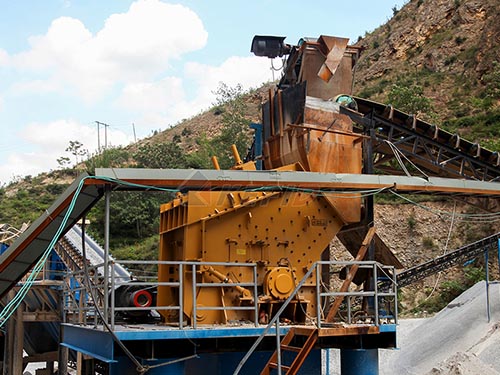
Commercial Considerations
Equipment pricing is structured around configuration:
Base Unit Tier (JC5000 Core Crusher): Includes crusher body, standard jaws, drive motor base mounts.
Operational Ready Tier (JC5000 Plus): Base unit plus integrated hydraulic power pack & adjustment system,motor drives,and starter panel.
SkidMounted / Modular Tier (JC5000 Plant Module): 'Operational Ready' crusher preassembled on a heavyduty skid with walkways,ladders,and prepiped lubrication system,facilitating rapid installation.
Optional features include automated wear monitoring systems,dust suppression spray bars,and various motor specifications.Service packages range from basic commissioning support up to comprehensive multiyear performance contracts covering parts,labor,and scheduled inspections.Financing options through partner institutions include operating leases,tailored rentaltoown agreements,and projectbased capital expenditure financing.
Frequently Asked Questions
1. Is the JC5000 compatible with my existing primary crushing station footprint?
The JC5000 requires detailed civil foundation drawings specific to its load profile.We provide full engineering packages for retrofit assessments; many installations fit within existing footprints but require new subbase preparation.
2.What impact will this have on my downstream screening and secondary crushing stages?
Due to its consistent product gradation,the JC5000 typically improves downstream efficiency.Field reports indicate reduced recirculating load on secondary circuits.Plant simulation during quotation can model this impact precisely.
3.Are wear parts readily available?
Yes.Jaw dies,toggle seats,and bearing assemblies are stocked under our global logistics program.Specific lead times are guaranteed under service agreements.Average delivery time for common manganese parts is 10 working days globally.
4.What are standard commercial terms?
We quote FOB our manufacturing hub.Payment terms are typically structured as 30% upon order confirmation 40% prior to shipment 30% upon delivery.CIF/DAP terms can be arranged separately based on project location requirements
5.Do you provide installation supervision?
Yes.Commissioning engineers are provided as part of all packages.Ongoing technical support is available via remote diagnostics platforms included with any service contract option
6.Can it handle very wet or sticky feed material?
While robust,the JC5000 like all jaw crushers performs best with material that has some inherent friction.A prescreening/scalping stage is strongly recommended for very wet feeds.We can advise on optimal feeder combinations such as stepped grizzlies
7.How does hydraulic adjustment compare mechanically regarding longterm stability?
The hydraulic toggle system maintains setting more consistently than mechanical springs which can relax.It provides superior overload protection.Engineering data shows no loss of precision over extended operation compared initial calibration