
High Quality Iron Ore Crushing Plant Minimum Order
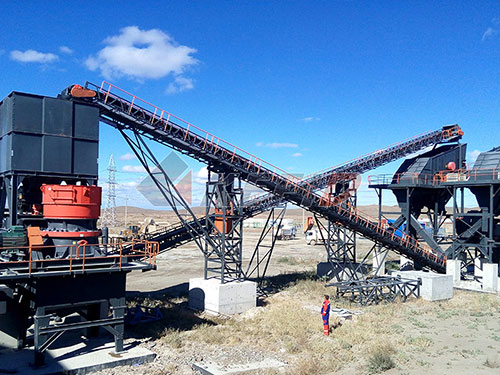

HighCapacity, HighYield Iron Ore Crushing Plant Solutions for Demanding Operations
Are you facing escalating pressure to increase throughput while managing unpredictable ore hardness and abrasive content? Operational bottlenecks at the primary crushing stage create costly ripple effects, reducing mill utilization and limiting overall plant output. Downtime for liner changes and unplanned maintenance directly impacts your bottom line, while inconsistent product sizing can compromise downstream processing efficiency. How can you achieve reliable, highvolume reduction of iron ore with greater control over operational costs and final product quality? The solution lies in a purposeengineered High Quality Iron Ore Crushing Plant designed for maximum availability and optimized yield.
Product Overview: Engineered Primary & Secondary Crushing Systems

A High Quality Iron Ore Crushing Plant is a coordinated circuit of heavyduty crushers, screens, and material handling systems configured to reduce runofmine (ROM) iron ore to a consistent, conveyable size for further processing. The operational workflow is engineered for continuity and control:
1. Primary Gyratory or Jaw Crushing: ROM ore undergoes initial size reduction to a manageable diameter, typically below 200250mm.
2. Secondary Cone Crushing: Further reduction occurs in robust cone crushers, often in closed circuit with screens, to produce a controlled product size (e.g., 50mm).
3. Tertiary Crushing (if required): For specific pellet feed or sinter feed requirements, tertiary cone crushers or highpressure grinding rolls (HPGR) provide final sizing.
4. Screening & Material Flow: Vibrating screens classify material, routing oversize back to crushers and directing onspec product to stockpiles or the next process stage.
Application Scope: This equipment is designed for largescale mining operations processing magnetite or hematite ores. Key limitations include the requirement for significant capital investment and infrastructure, making it suitable for greenfield projects or major expansions with sustained, hightonnage requirements.
Core Features: Engineered for Iron Ore Specifics
HeavyDuty Rotor & Chamber Design | Technical Basis: High inertia kinetics & wearresistant alloy metallurgy | Operational Benefit: Sustains crushing force against highly abrasive quartz and iron oxides, maintaining consistent gap settings and product gradation over extended campaigns | ROI Impact: Reduces frequency of major component replacement by 3040%, lowering cost per tonne.
Automated Setting Regulation System | Technical Basis: Hydropneumatic tramp release and cavity clearing with PLC control | Operational Benefit: Protects machinery from uncrushable material and automatically recovers from stalls without manual intervention, minimizing unplanned stops | ROI Impact: Field data shows a potential 15% reduction in downtime events related to tramp steel or packing.
Laminated Crushing Zones | Technical Basis: Multilayer crushing chambers with optimized nip angles | Operational Benefit: Creates interparticle comminution within the feed, improving energy efficiency and producing a more cubical product with fewer fines generated where not required | ROI Impact: Improves overall energy efficiency (kWh/tonne) by up to 10% compared to nonlaminated designs.
Integrated Condition Monitoring | Technical Basis: Realtime sensors for bearing temperature, lubrication pressure, vibration analysis, and power draw | Operational Benefit: Enables predictive maintenance by alerting your team to developing issues before they cause failure; operators can schedule interventions during planned stops | ROI Impact: Extends mean time between failures (MTBF) by an average of 25%, protecting production schedules.
Modular Plant Configuration | Technical Basis: Preassembled skid or modulebased structural design | Operational Benefit: Significantly reduces field construction time and civil works cost; facilitates future relocation or expansion of the crushing circuit | ROI Impact: Can shorten project commissioning timelines by 2030%, accelerating timetorevenue.
Competitive Advantages: Performance Benchmarking
| Performance Metric | Industry Standard Baseline | Our High Quality Iron Ore Crushing Plant Solution | Documented Advantage |
| : | : | : | : |
| Availability (Scheduled Runtime)| 90 92% | 94 96%+ | +4% improvement |
| Liner Life (Abrasive Ore)| ~600k tonnes per set (secondary cone) | ~850k tonnes per set (secondary cone)| +40% improvement |
| Specific Energy Consumption| Benchmark varies by circuit design| Up to 10% reduction via optimized kinematics & chamber design| Up to 10% improvement |
| Product Shape (% Cubical)| Industry average for cone crushing (~65%)| Targeted design yields >75% cubical product| +10 percentage points |
Technical Specifications
Capacity Range: Configurable from 1,500 to over 10,000 tonnes per hour (TPH), based on feed size and product requirements.
Primary Crusher Options: Gyratory crushers (54”75” feed opening) or heavyduty jaw crushers.
Secondary/Tertiary Crushers: Highperformance cone crushers with multiple chamber options.
Power Requirements: Total installed power typically ranges from 2 MW to 6+ MW depending on plant capacity; voltage requirements tailored to site infrastructure.
Key Material Specifications: Mainframe of fabricated highstrength steel; liners of manganese steel or composite alloys; shafting of forged alloy steel.
Physical Dimensions: Modular plants designed within standard shipping dimensions; overall footprint varies by capacity but is optimized for minimal spatial impact.
Environmental Operating Range: Designed for ambient temperatures from 40°C to +50°C; dust suppression systems are integral; noise abatement measures available.
Application Scenarios
LargeScale Magnetite Concentrator Expansion
Challenge: A major producer needed to debottleneck existing processing lines limited by primary crushing capacity. The existing system struggled with variable ore hardness, causing throughput fluctuations and excessive liner wear.
Solution: Implementation of a new primary gyratory station feeding two parallel secondary/tertiary cone crusher modules as part of a new High Quality Iron Ore Crushing Plant.
Results: Achieved a sustained throughput increase of 35%. Liner life in secondary crushers improved by an estimated 38%, contributing to a documented 12% reduction in operating cost per tonne at the crushing stage.
Hematite Direct Shipping Ore (DSO) Operation
Challenge: An operation producing lump and fines products required more precise control over final product sizing to meet stringent customer specifications. Inconsistent fragmentation from the old plant led to offspec material.
Solution: Installation of a threestage crushing plant featuring closedcircuit secondary and tertiary crushing with advanced screening technology.
Results: Product yield within specification improved from 88% to 96%. The improved consistency reduced loadout delays and minimized rehandling of offspec material.
Commercial Considerations
Pricing Tiers: Capital investment is structured around plant capacity:
Tier I (6,000 TPH): Fully bespoke solutions including advanced automation packages.
Optional Features & Upgrades: Remote monitoring dashboards; automated wear part inventory tracking; advanced dust collection systems; hybrid drive systems for peak shaving.
Service Packages: Comprehensive offerings include supervised erection & commissioning; multiyear maintenance contracts with guaranteed parts availability; onsite technical support; operator training programs.
Financing Options: Flexible solutions are available including traditional leasing models through partners as well as project financing support tailored for large capital expenditures in mining infrastructure.
Frequently Asked Questions

1. Is this crushing plant compatible with our existing downstream milling or screening circuits?
Yes. Our engineering team conducts a full review of your existing flow sheet and particle size distribution requirements. We design the new plant’s discharge specifications specifically as an optimized feed for your downstream processes.
2. What is the expected operational impact during installation?
For greenfield sites, impact is contained within the new construction area. For brownfield expansions integrating with an existing line we develop detailed phased implementation plans—often involving temporary bypass systems—to minimize disruption to ongoing production.
3. What commercial terms are typical?
We operate on milestonebased payment schedules aligned with engineering milestones, major equipment shipment(s), completion of erection supervision services ,and successful performance testing after commissioning.
4. How do you guarantee performance metrics like throughput?
We provide process performance guarantees based on agreedupon test conditions using representative ore samples during our proposal phase . These guarantees form part of our commercial contract .
5 . What level of operator training is provided?
A comprehensive training program is included covering normal operation startup/shutdown procedures basic troubleshooting safety protocols maintenance tasks This includes both classroom instruction handson sessions at your site .
6 . What are lead times typically?
Lead times vary significantly based on project scope complexity current manufacturing load For standard modular plants lead time from order placement delivery key port ranges months months Fully custom engineered solutions may require longer frontend engineering design FEED periods .
7 . Can we source spare parts locally?
While we recommend genuine OEM parts critical wear components liners manganese castings many standardized mechanical electrical components bearings motors etc have globally available equivalents Our manuals provide full crossreference information facilitate local sourcing where appropriate maintain operational continuity