
High Quality Iron Ore Crushing Plant Makers

1. PAINPOINT DRIVEN OPENING
Are your iron ore processing profits being crushed by persistent operational bottlenecks? For plant managers and engineering contractors, the challenges in primary crushing are quantifiable and costly. Consider the impact of: unplanned downtime from tramp steel damaging critical components, leading to repair costs exceeding $50,000 per incident and 24+ hours of lost production. Throughput limitations from inefficient reduction ratios, constricting feed to downstream grinding circuits and capping plant capacity. Escalating maintenance labor and parts costs due to abrasive wear on manganese steel that requires frequent changeouts. Inconsistent product sizing causing inefficiencies in secondary crushing and screening stages.
Is your current primary crushing solution equipped to handle increasingly hard and abrasive ore bodies while controlling your total cost of ownership? The foundation of an efficient beneficiation plant lies in a robust, intelligent primary crushing circuit.
2. PRODUCT OVERVIEW
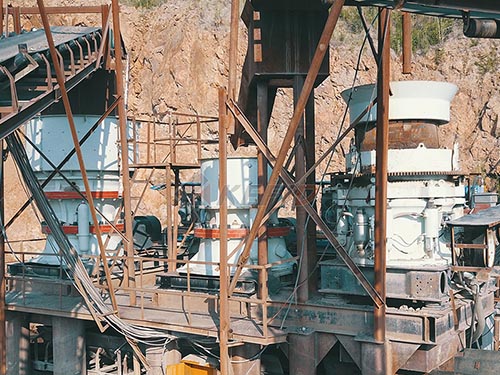
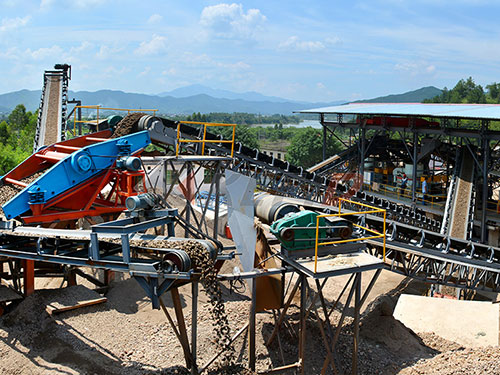
This product line encompasses heavyduty, stationary High Quality Iron Ore Crushing Plants, engineered for primary and secondary reduction of magnetite, hematite, and itabirite ores. The core configuration typically integrates a vibrating grizzly feeder, a robust jaw crusher or gyratory crusher for primary size reduction, and a conveyor system for transfer to downstream processing.
Operational Workflow:
1. PreScreening & Feeding: Runofmine (ROM) ore is uniformly fed via an apron or vibrating grizzly feeder, which scalps out fine material to bypass the crusher, improving overall efficiency.
2. Primary Crushing: The core crusher applies compressive force to reduce large lumps (often up to 1.5m) to a manageable size (typically 250mm).
3. Material Transfer: Crushed product is discharged onto a heavyduty conveyor belt system, designed for impact resistance and continuous transport to the next stage.
Application Scope: Ideal for greenfield mining projects, plant expansions, or legacy equipment replacement requiring capacities from 500 to over 10,000 tonnes per hour (tph).
Limitations: These stationary plants require concrete foundations and structural steel support. They are not mobile or semimobile solutions; for fully portable applications, separate equipment ranges are available.
3. CORE FEATURES
Advanced Chamber Geometry | Technical Basis: Computermodeled kinematics & optimized nip angle | Operational Benefit: Achieves a consistent, wellgraded product curve with fewer slabby or elongated pieces | ROI Impact: Reduces recirculating load and improves screening efficiency downstream, increasing overall circuit capacity by 510%.
Tramp Iron Protection & Hydraulic Clearing | Technical Basis: Automated hydraulic adjustment with relief cylinders or toggle tensioning systems | Operational Benefit: Allows uncrushable material to pass without causing catastrophic damage; enables quick clearing of chamber blockages | ROI Impact: Prevents major component failure, minimizing unplanned downtime. Field data shows a reduction in crusherrelated stoppages by up to 80%.
HeavyDuty Fabricated Frame | Technical Basis: Finite Element Analysis (FEA)designed steel construction with highstress reinforcement | Operational Benefit: Provides longterm structural integrity under cyclical loading from hard ore crushing | ROI Impact: Extends service life of the entire plant structure beyond 25 years under normal operation, protecting capital investment.
AbrasionResistant Liner System | Technical Basis: Highgrade manganese steel alloys with optimized heat treatment profiles | Operational Benefit: Liner life is extended significantly in highly abrasive iron ore applications | ROI Impact: Reduces liner changeout frequency by 2035%, lowering parts inventory costs and maintenance labor hours.
Integrated Condition Monitoring | Technical Basis: Vibration sensors, temperature probes, and realtime lubrication flow monitoring | Operational Benefit: Provides predictive maintenance alerts for bearings and other critical components before failure occurs | ROI Impact: Transforms maintenance from reactive to scheduled planning. Industry testing demonstrates a 15% reduction in annual maintenance costs through predictive analytics.
Centralized Grease Lubrication System | Technical Basis: Automated singlepoint lubrication distribution to all major bearing points | Operational Benefit: Ensures optimal bearing lubrication without manual intervention in hazardous areas | ROI Impact: Increases bearing service life by up to 50% and enhances site safety by reducing technician exposure.
4. COMPETITIVE ADVANTAGES
| Performance Metric | Industry Standard Benchmark | Our High Quality Iron Ore Crushing Plant Solution | Documented Advantage |
| : | : | : | : |
| Availability (Uptime) | 9092% per annum (primary stage) | >95% per annum achievable| +35 percentage points |
| Liner Life (Manganese Steel) in Abrasive Ore| ~800k 1M tonnes processed| >1.2M tonnes processed typical| +2030% improvement |
| Specific Power Consumption| Varies widely; baseline = X kWh/tonne| Up to 12% lower than baseline average| Up to 12% improvement |
| Mean Time Between Failure (MTBF) Major Components| ~4,000 operating hours| >6,000 operating hours| +50% improvement |
_(Based on field performance data from comparable installations processing >60 MTPA silicarich iron ore.)_
5. TECHNICAL SPECIFICATIONS
Capacity Range: Configurable from 500 TPH to over 10,000 TPH nominal throughput.
Primary Crusher Options: Jaw Crusher (CJ Series) sizes up to 63” x 79”, or Gyratory Crusher (CG Series) sizes from 42” upwards.
Power Requirements: Total installed power per plant ranges from ~450 kW for smaller units to over 1.2 MW for large gyratorybased systems.
Material Specifications: Main frame fabricated from S355JR structural steel; liners in premium Mn18Cr2 or equivalent alloy; shafting in forged alloy steel.
Physical Dimensions: Highly projectspecific; example footprint for a midrange jaw plant (~1,500 TPH): ~35m (L) x 15m (W) x 12m (H).
Environmental Operating Range: Designed for ambient temperatures from 40°C to +50°C; dust suppression system compliant with <10 mg/Nm³ emission standards.
6. APPLICATION SCENARIOS
LargeScale Magnetite Concentrator Expansion
Challenge: A major producer needed to increase primary crushed tonnage by 40% (~8MTPA increase) within a constrained brownfield footprint while managing high silica content causing extreme abrasion.
Solution: Implementation of a single highcapacity CG850 gyratory crusher station with advanced chamber design.
Results: Achieved required throughput with superior availability (>96%). Liner life exceeded projections by 18%, resulting in an annual consumables saving of approximately $200k USD.
Hematite Processing Plant Modernization
Challenge: An aging jaw crusher installation suffered from excessive vibration leading to foundation cracks and frequent bearing failures every ~8 months.
Solution: Replacement with a modern jaw crushing plant featuring an FEAoptimized frame design and integrated condition monitoring.
Results: Structural vibration reduced by over 60%. Bearing service life extended beyond two years through improved alignment/loading monitoring alone.
Itabirite Processing – Hard & Abrasive Ore
Challenge: Lowgrade itabirite ore required higher reduction ratios at the primary stage but caused rapid wear on traditional equipment.
Solution: Installation of a heavyduty jaw crusher configured with optional steeper nip angle geometry using ultrapremium abrasionresistant liners.
Results: Achieved target P80 product size consistently while extending liner change intervals from six months back towards nine months under severe duty conditions.
7. COMMERCIAL CONSIDERATIONS
Our High Quality Iron Ore Crushing Plants are offered as engineeredtoorder capital projects:
Pricing Tiers & Scope Definition
Standard Equipment Package: Includes core feeder/crusher/motor/skid package – starting range $2M$8M USD depending on capacity/specification.
Full Plant Module: Adds walkways/ladders/dust suppression/electrical control house – starting range $4M$15M+ USD depending on complexity.
Turnkey Project: Full civil design support/erection supervision/commissioning – quoted on projectspecific basis following feasibility study.
Optional Features
Advanced automation package with PLC/SCADA integration
Specialized liner profiles/material grades
Onsite spare parts packages
Service Packages
Comprehensive multiyear maintenance agreements
Remote diagnostic support
Liner changeout service contracts
Financing options including leasing structures are available through our global financial partners.
FAQ
Q1: How do I determine if a jaw or gyratory crusher is more suitable for my specific iron ore deposit?
A1: The choice depends primarily on feed size/capacity requirements/hardness characteristics/moisture content etc., but generally speaking:
Gyratory Crushers are preferred when handling very high tonnages (>900 TPH), have sticky/clayrich ores requiring higher throughputs at coarser settings;
Jaw Crushers offer lower initial cost advantages where feed topsize allows (<~1200mm), especially when dealing with less sticky materials requiring simpler maintenance access etc., we provide detailed selection guidelines based upon your testwork data during project development phase discussions accordingly...
Q2 What kind of foundation requirements should we plan for during early engineering stages?
A2 These plants require substantial reinforced concrete foundations designed specifically around dynamic loads generated during operation which vary significantly between models/configurations etc., we provide detailed foundation drawings/reaction loads early within order process allowing integration into your civil engineering schedule effectively minimizing delays later down line...
Q3 Can this equipment integrate into our existing PLC/plant control system?
A3 Yes standard designs include modern PLC control panels capable communicating via industry standard protocols such as Profibus/Ethernet/IP etc., our automation team works directly alongside yours ensuring seamless communication between new crushing station rest existing infrastructure without disruption...
Q4 What is typical delivery lead time once order placed?
A4 Lead times vary based upon complexity/capacity but typically range between nine eighteen months final delivery site due extensive manufacturing/fabrication/testing processes involved ensuring reliability prior shipment...
Q5 Are performance guarantees provided?
A5 Yes we offer contractual performance guarantees covering throughput/product sizing/power consumption based upon agreed feed material characteristics provided during technical specification phase...
Q6 How does your company support installation commissioning?
A6 We provide comprehensive supervision services during erection commissioning phases including sending experienced field engineers oversee critical milestones ensure correct installation practices followed ultimately verifying performance against guaranteed parameters before handover occurs...
Q7 What spare parts strategy do you recommend achieving optimal availability?
A7 We conduct criticality analysis recommending initial two year strategic spares holding tailored operation focusing those components having longest procurement lead times highest impact uptime if failed subsequently supporting through regional warehouse network expedited shipments when required...