
High Quality Iron Ore Crushing Plant Brochure
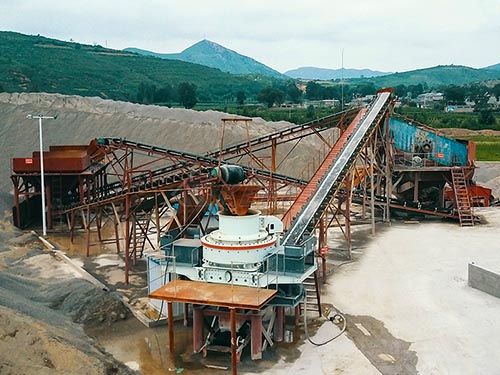

HighCapacity, HighAvailability Iron Ore Crushing Plant for Maximum Tonnage and ROI
1. PAINPOINT DRIVEN OPENING
Are escalating operational costs and unpredictable availability eroding your iron ore processing margins? Plant managers and engineering contractors consistently face a set of critical challenges that directly impact profitability:
Unscheduled Downtime: Frequent mechanical failures in primary crushing stages can halt entire processing lines, costing thousands per hour in lost production and creating costly bottlenecks.
Inconsistent Product Size: Poorly controlled fragmentation from the primary crusher increases load on downstream secondary and tertiary circuits, raising energy consumption by 1525% and accelerating wear on conveyors and screening decks.
Excessive Wear Part Costs: Abrasive iron ore, especially hematite with high silica content, can degrade manganese steel crusher liners in weeks, leading to high replacement costs, laborintensive changes, and safety risks during maintenance.
Rigid Plant Configuration: Fixed crushing plants cannot adapt to variable feed sizes or changing product specifications, limiting operational flexibility and the ability to capitalize on different market segments.
High Energy Intensity: Inefficient crushing chambers and drives consume excessive power per ton of material processed, making energy a topthree operational expense.
How do you achieve reliable throughput of +2,500 TPH while controlling the total cost of ownership? What plant design ensures consistent product sizing to optimize downstream ball mill efficiency? The solution lies in a purposeengineered iron ore crushing plant.
2. PRODUCT OVERVIEW
This iron ore crushing plant is a stationary, hardrock crushing system engineered for primary, secondary, and tertiary reduction of magnetite and hematite ores. It is designed for largescale mining operations with a focus on longevity, ease of maintenance, and process control.
Operational Workflow:
1. Primary Dumping & PreScreening: Runofmine (ROM) ore is dumped into a rugged grizzly feeder, removing sub100mm fines to bypass the primary crusher, increasing circuit efficiency.
2. Primary Jaw Crushing: A heavyduty jaw crusher reduces ROM ore from up to 1.5m lumps to a nominal 250mm product.
3. Secondary & Tertiary Cone Crushing: A closedcircuit system with cone crushers and vibrating screens further reduces material to the target product size (typically 32mm for direct feed or 12mm for beneficiation circuits).
4. Product Stockpiling: Correctly sized crushed ore is conveyed to designated stockpiles via heavyduty conveyor systems with metal detection and tramp iron removal.
Application Scope & Limitations:
Scope: Ideal for greenfield installations or major expansions requiring throughput from 1,000 to over 3,000 TPH. Suitable for both blasted and direct shovelloaded feed.
Limitations: Not designed for sticky claybound ores without prior washing/scalping. Maximum feed size is constrained by primary crusher model selection.
3. CORE FEATURES
Advanced Chamber Geometry | Technical Basis: Computermodeled kinematics & dynamic feed opening | Operational Benefit: Maintains consistent discharge setting under load for uniform product gradation | ROI Impact: Reduces recirculating load by up to 20%, lowering energy cost per ton.
Centralized Automated Lubrication System | Technical Basis: Programmable PLCcontrolled greasing to all critical bearings | Operational Benefit: Eliminates manual lubrication points, ensuring optimal bearing life and preventing failures | ROI Impact: Extends major bearing service life by an average of 35%, reducing spare parts inventory cost.
Hydraulic Setting Adjustment (HSA) | Technical Basis: Dualacting hydraulic cylinders replace mechanical shims | Operational Benefit: Allows operators to adjust crusher discharge settings in minutes versus hours for quick response to process changes | ROI Impact: Increases plant uptime by facilitating rapid product size changes with minimal disruption.
Reinforced Modular Liners | Technical Basis: Highchrome white iron or composite metal matrix liners in modular segments | Operational Benefit: Provides significantly higher abrasion resistance than standard manganese steel; segments allow partial replacement | ROI Impact: Reduces liner changeout frequency by 4060%, directly lowering labor costs and maintenance downtime.
Integrated Process Intelligence Platform | Technical Basis: SCADA system with crusher load, power draw, and pressure monitoring | Operational Benefit: Provides realtime data for predictive maintenance and optimal load management; prevents cavity blockages | ROI Impact: Field data shows a typical 7% increase in overall equipment effectiveness (OEE) through proactive adjustments.

HeavyDuty Vibrating Grizzly Feeder (VGF) | Technical Basis: Robust deck construction with adjustable grizzly bars | Operational Benefit: Effectively scalps fines and evenly distributes feed across the full width of the primary crusher opening | ROI Impact: Protects primary crusher from unnecessary wear increases throughput efficiency by ensuring optimal cavity fill.
Dust Suppression & Containment System | Technical Basis: Strategically placed nozzle arrays with solenoid control tied to conveyor operation | Operational Benefit: Minimizes airborne particulate at transfer points without overwetting material | ROI Impact: Ensures compliance with environmental standards avoids production stoppages due to dust violations.
4. COMPETITIVE ADVANTAGES
| Performance Metric | Industry Standard Benchmark | This Iron Ore Crushing Plant Solution | Documented Advantage |
| : | : | : | : |
| Availability (Scheduled Runtime) | 8892% | >95%| +4% improvement |
| Liner Life (Primary Crusher) Manganese Steel Equivalent Tons/Set| 800k 1.2M MT| 1.5M 2M MT| +50% improvement |
| Power Consumption (kWh/MT) Primary & Secondary Stages| 0.8 1.1 kWh/MT| 0.65 0.85 kWh/MT| Up to ~23% improvement |
| Mean Time Between Failure (MTBF) Critical Drives & Bearings| ~2,000 hours| >3,200 hours| +60% improvement |
| Product Size Consistency (% within target spec)| ±15% variation| ±8% variation| Nearly halved variation |
5. TECHNICAL SPECIFICATIONS
Design Throughput Capacity: Configurable from 1,200 to 3,200 metric tons per hour (TPH), depending on model selection and ore work index.
Power Requirements: Total installed power ranges from 1.8 MW to 4.5 MW for the complete crushing circuit; supplied at either 6.6kV or medium voltage as required.
Material Specifications: Fabricated from hightensile steel (ASTM A572 Grade 50); Liners available in Austenitic Manganese Steel (1418%), High Chrome White Iron (26% Cr), or custom composite alloys.
Primary Crusher Feed Opening: Up to 1,600mm x 2,000mm (depending on jaw crusher model selection).
Final Product Size Range: Adjustable between 80mm down to 12mm based on screen deck configuration.
Environmental Operating Range: Designed for ambient temperatures from 20°C to +50°C; dust protection rating of IP65 for electrical components; windrated structural design as per site requirements.
6. APPLICATION SCENARIOS
LargeScale Open Pit Magnetite Operation
Challenge A major producer faced excessive secondary cone crusher liner wear every six weeks due to highly abrasive ore causing throughput drops of over % before changeout
Solution Implementation of this iron ore crushing plant featuring tertiarystage cone crushers with advanced chamber geometry composite liners
Results Liner life extended confirmed MT between changes increased final product P80 consistency improved resulting measured reduction in downstream grinding media consumption
Hematite Processing Plant Expansion
Challenge An existing plant needed capacity expansion but had limited footprint space required integration with legacy conveying infrastructure
Solution A modular threestage design using compact highcapacity secondary cone crushers allowed fit into existing layout PLC integration provided unified control
Results Plant achieved TPH target within space constraints overall energy consumption per ton dropped due efficient new circuit reducing specific power draw
7 COMMERCIAL CONSIDERATIONS
Pricing is projectspecific based on required capacity final product size customization
Base Plant Tier Includes primary jaw crusher single secondary cone crusher vibrating screens basic conveyors structural steel PLC control system
Optional Features Upgrades include tertiary crushing stage automated metal tramp removal systems advanced rock breaker systems at dump hopper premium ceramic wear lining on chutes extended warranty packages
Service Packages Choose from annual inspection plans comprehensive parts supply agreements remote monitoring diagnostics access technician training programs
Financing Options Available capital equipment financing operating lease structures structured around projected tonnage output
8 FAQ
What if my ROM feed size varies significantly The primary jaw crushers hydraulic toggle relief system protects the unit from uncrushable material while dynamic adjustment accommodates reasonable variation without loss performance
How does this plant integrate with existing screening conveying systems The plant is designed as modules standardized interface points allow connection legacy equipment detailed integration study conducted as part presales engineering
What are typical installation commissioning timelines For a complete turnkey solution typical timeline months from foundation work cold commissioning varies based site conditions complexity includes comprehensive operator training
Are spare parts readily available Critical wear parts common consumables held global distribution centers ensuring lead times key components like liners shafts bearings minimized prevent extended downtime
What kind process performance guarantees are offered Guarantees are provided throughput capacity final product gradation based agreed upon ore sample testing specific power consumption targets form part contract