
High Quality 250 300tph Stone Crushing Plant Cost

1. PAINPOINT DRIVEN OPENING
Are you managing a highvolume aggregate operation and facing persistent bottlenecks that cap your profitability? For plant managers and engineering contractors, a 250300tph stone crushing plant represents a critical production tier, yet common operational challenges can significantly erode its return on investment.
Inconsistent Throughput: Unplanned downtime from equipment failure or blockages can cost thousands per hour in lost production, preventing you from reliably meeting demanding project schedules or supply contracts.
Unscheduled Maintenance Costs: Premature wear on crusher liners, screens, and conveyors due to improper equipment selection or flow design leads to frequent stoppages and high spare part expenditures.
Poor Product Shape & Gradation: Inability to precisely control final product cubicity and size distribution results in material rejection, reduced market value, and wasted processing energy.
High Operational Complexity: Plants that require excessive manual intervention for adjustment or material handling increase labor costs and elevate the risk of human error.
The central question is: how do you achieve a consistent 250300 tons per hour output with predictable operating costs and maximum asset uptime? The solution lies not just in individual machines, but in a fully engineered 250300tph stone crushing plant designed as an integrated system.
2. PRODUCT OVERVIEW
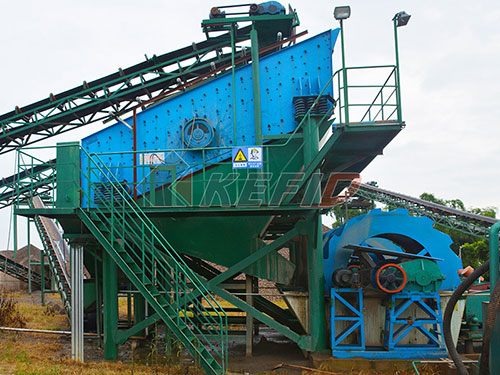
This solution is a stationary, hardrock crushing and screening plant engineered for continuous, highvolume production of aggregates (05mm, 510mm, 1020mm, 2031.5mm, etc.). It is designed for primary contractors and largescale aggregate suppliers requiring reliable output for road base, concrete aggregate, or railway ballast.
Operational Workflow:
1. Primary Crushing: Large feed material (≤750mm) is reduced to ≤200mm by a robust primary jaw crusher or gyratory crusher.
2. Secondary & Tertiary Crushing: Material is conveyed to a cone crusher(s) for further reduction, ensuring proper particle shape. A dedicated tertiary stage may be included for precise shaping.
3. Screening & Classification: Multipledeck vibrating screens accurately separate crushed material into specified product sizes.
4. Material Handling & Stockpiling: A network of belt conveyors transfers both finished products and oversize material back to crushers (closedcircuit design).
5. Dust Suppression: Integrated spray systems at transfer points control dust emissions to meet environmental standards.
Application Scope & Limitations:
Scope: Ideal for processing granite, basalt, limestone, and other abrasive aggregates. Suitable for large quarry operations or major infrastructure project support.
Limitations: Not designed for portable applications. Feed material hardness must be within the specified compressive strength range of the selected crushers. Requires stable foundation and gridbased power supply.
3. CORE FEATURES
Modular Plant Design | Technical Basis: Preengineered, bolttogether substructures | Operational Benefit: Reduces site installation time by up to 40% compared to traditional weldedonsite designs | ROI Impact: Faster commissioning accelerates revenue generation; simplifies future reconfiguration or relocation.
Intelligent Process Control System | Technical Basis: Centralized PLC with touchscreen HMI and motor management | Operational Benefit: Enables singleoperator monitoring of the entire flow, provides realtime alerts for deviations (e.g., feed blockage, high bearing temp) | ROI Impact: Optimizes power consumption per ton; prevents catastrophic failures through early warning diagnostics.
HeavyDuty Vibrating Screens with Polyurethane Decks | Technical Basis: High Gforce screening action combined with wearresistant polyurethane panels | Operational Benefit: Achieves higher screening efficiency (>95%) with less blinding; significantly longer deck life than wire mesh | ROI Impact: Reduces replacement part frequency by an average of 60% over wire cloth; ensures consistent product gradation.
Hydraulic Adjustment & Clearing on Crushers | Technical Basis: Integrated hydraulic systems for CSS adjustment and chamber clearing | Operational Benefit: Allows quick product size changes without downtime tools; automates clearing of stallcausing blockages in minutes | ROI Impact: Maximizes plant availability; increases operational flexibility to switch between product specs rapidly.
Centralized Greasing & Lube Systems | Technical Basis: Automated lubrication pumps feeding critical bearing points across multiple machines | Operational Benefit: Ensures optimal lubrication intervals are maintained without manual intervention across hardtoreach points | ROI Impact: Extends bearing service life by up to 30%, directly reducing maintenance labor hours and component replacement costs.
Reinforced Belt Conveyor System | Technical Basis: Hightensile EP belting with impact beds at loading zones and heavyduty idlers rated for CEMA E4 duty | Operational Benefit: Eliminates premature belt damage from heavy loads; reduces spillage along the line | ROI Impact: Lowers longterm conveyor maintenance costs by minimizing belt replacements and idler failures.
4. COMPETITIVE ADVANTAGES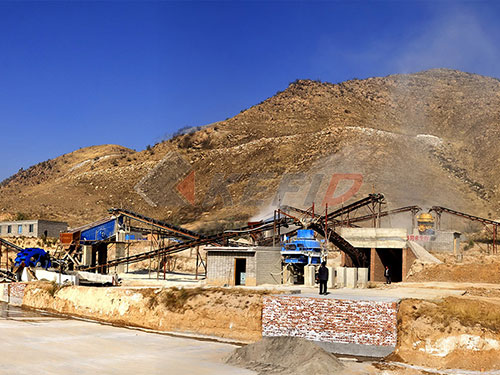
| Performance Metric | Industry Standard (Typical Plant) | This 250300tph Stone Crushing Plant Solution | Advantage (% Improvement) |
| : | : | : | : |
| Overall Availability (Scheduled Runtime) | ~85% 90% (Downtime for adjustments/clearing) |>92% 95% (Via hydraulic systems & robust design) |>5% Increase |
| Power Consumption per Ton Processed| Baseline (100%) |8% 12% (Optimized drives & efficient crushing chambers)| Up to 12% Reduction |
| Liner Wear Life in Secondary Crusher| Varies by rock type |15% 25% (Advanced chamber design & metallurgy)| Up to 25% Extension |
| Screening Efficiency (Final Product)| ~90%92% |>95%97% (HighG screens & antiblinding decks)| ~5 Point Increase |
| Installation & Commissioning Time| Full project timeline |30%40% (Modular preassembly)| Up to 40% Reduction |
5. TECHNICAL SPECIFICATIONS
Designed Capacity Range: 250 300 metric tons per hour (varies based on feed material hardness and final product size).
Primary Crusher Options: Jaw Crusher (900x1200mm) or Gyratory Crusher with feed opening suited for ≤750mm rock.
Secondary/Tertiary Stage: One or two Cone Crushers with heavyduty design (~250kW motor each).
Screening Stage: Two to three units of TripleDeck Inclined Vibrating Screens (~22kW each).
Power Requirement: Total installed power approximately 800kW 1000kW. Requires stable industrial grid connection.
Key Material Specifications: Primary frame constructed from heavyduty steel profiles; Wear plates in hoppers from AR400 steel; Conveyor belts rated for minimum PIW=1000.
Physical Footprint (Approximate): Length ~80m –100m x Width ~25m –35m (layout dependent). Total weight ~350 –450 tons.
Environmental Operating Range: Designed for ambient temperatures from 20°C to +45°C with appropriate lubrication options. Dust emission control meets standard regulatory limits via spray systems.
6. APPLICATION SCENARIOS
LargeScale Quarry Expansion
Challenge:
A regional quarry needed to increase annual output by over one million tons but was constrained by an aging twostage plant prone to breakdowns causing over two weeks of unplanned downtime annually.
Solution:
Implementation of a turnkey threestage stationary stone crushing plant designed for reliable operation at an average throughput of approximately280tph.
Results:
Plant availability increased consistently above93%. Annual production target was met within eleven months postinstallation while reducing maintenance labor costs by an estimated18%.
Major Highway Construction Project
Challenge:
A contractor required onsite production of over500,000 tons of various specification aggregates within a tight24month schedule,with strict control over particle shape(flakiness index)for asphalt layers。
Solution:
Deployment of this modular stone crushing plant featuring primary jaw,secondary cone,and tertiary cone crushers configured specifically for shaping。
Results:
The project achieved consistent daily output exceeding270tph。Final aggregate cubicity exceeded local DOT specifications,eliminating material rejection。The modular nature allowed rapid demobilization upon project completion。
7.COMMERCIAL CONSIDERATIONS
Pricing tiers are structured around core configuration complexity:
• Base Configuration Tier:Includes primary jaw,secondary cone,basic screening,and essential conveyors。Designed as the most costeffective entry point。
• HighEfficiency Tier:Adds dedicated tertiary shaping stage,polyurethane screen decks,and basic PLC control system。Recommended balance between performance investment。
• Premium Automation Tier:Includes fullfeatured process automation(PLC/HMI),centralized lube/grease systems,and premium wear component packages。Targets operations prioritizing maximum uptime minimal manpower。
Optional Features:Dust suppression bag filter systems(beyond basic sprays),onboard power generation packages,extended warranty coverage on major components。
Service Packages:Available as annual preventative maintenance contracts providing scheduled inspections priority spare parts access fixedcost coverage on key wear items。
Financing Options:Flexible commercial leasing structures are available typically spanning36to60months allowing preservation capital expenditure budgets。
8.FAQ
Q1:Can this stone crushing plant configuration handle very wet or sticky feed material?
A1:While capable processing moderately damp rock significant clay content can reduce screening efficiency throughput。For such applications we recommend specifying additional screen deck heating systems或scalping prescreens part optional package。
Q2:What level operator training required?
A2:The intelligent control system simplifies operation;however comprehensive training provided covering daily startup/shutdown procedures basic troubleshooting interface navigation ensure your team confident managing system。
Q3:How does solution address longterm spare parts availability?
A3:We utilize industrystandard components bearings motors etc。from globally recognized suppliers ensuring parts procurement remains straightforward throughout equipment lifespan detailed bill materials recommended spares list provided commissioning。
Q4:What typical delivery lead time turnkey installation?
A4:For standard configurations lead time ranges from20to28weeks order placement depending current manufacturing load site readiness factors modular design reduces subsequent onsite installation period approximately8to10weeks experienced crew。
Q5:Are these plants suitable producing railway ballast?
A5:Yes specifically when configured tertiary shaping stage proper screen media produce controlled topsize product excellent particle integrity meets most stringent rail ballast specifications field data confirms consistent production highquality ballast materials。
Q6 :What key factors determine final choice between jaw gyratory primary crusher?
A6 :Selection depends primarily feed material characteristics required capacity Gyratory generally offers higher throughput similar size handles more abrasive rock slightly higher initial cost Jaw crusher often selected lower capital cost simpler maintenance profile smaller footprint Detailed analysis your specific rock type recommended during planning phase 。
Q7 :Does commercial proposal include civil works foundation design?
A7 :Our scope supply typically includes detailed foundation layout drawings anchor bolt plans necessary facilitate local civil contractor construction works full turnkey projects including civil works can be arranged under separate contract 。