
Gold Ore Crushing Equipment Supplier Prices
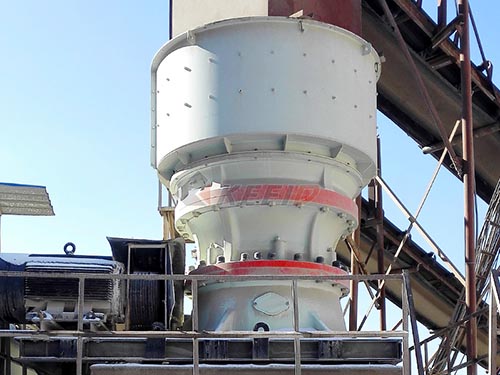

Content Title: Optimizing Your Comminution Circuit: A Buyer’s Guide to Gold Ore Crushing Equipment Supplier Prices
1. The Crushing Cost Dilemma
Every ton of ore you process carries a fixed cost for size reduction. For gold operations, the crushing stage is often the first bottleneck. Are you facing these common challenges?
- Escalating Wear Costs: Processing abrasive gold ore (often with high quartz content) can consume manganese liners at rates exceeding $0.15 per ton, directly eroding your margin.
- Unplanned Downtime: A single crusher failure in a primary circuit can halt downstream grinding and leaching, costing a midtier operation $10,000 to $50,000 per hour in lost production.
- Inconsistent Product P80: Fluctuating feed sizes or worn chambers cause a variable product size, forcing your SAG or ball mill to operate inefficiently, increasing specific energy consumption (kWh/t) by 1015%.
- Capital Budget Overruns: Navigating the wide variance in gold ore crushing equipment supplier prices—from lowcost Asian imports to premium European brands—makes accurate budgeting difficult without understanding total cost of ownership (TCO).
- Capacity Rating: 200350 metric tons per hour (tph) @ 25mm CSS
- Power Requirements: 250 kW (335 HP) motor, 480V / 60Hz or 400V / 50Hz
- Material Specifications: Main frame: ASTM A36 steel; Shaft: 4340 alloy steel; Liners: 18% Mn steel
- Physical Dimensions: Length: 4.5m; Width: 2.8m; Height: 3.2m; Weight: 28,000 kg
- Environmental Operating Range: Ambient temperature: 10°C to +45°C; Altitude: up to 4,000m (with derating); Dust: IP54 rated electrical enclosures
- Automation Package (PLC + SCADA): +$35,000 $80,000
- Remote Monitoring System: +$15,000
- Liner Wear Sensor Kit: +$8,000
- Standard: 12month warranty, remote technical support.
- Extended: 24month warranty, annual onsite inspection, priority parts dispatch (+812% of equipment cost).
- FullService: Includes all scheduled maintenance labor and parts for 3 years (+1825% of equipment cost).
How do you select a crushing solution that balances upfront gold ore crushing equipment supplier prices with longterm operational reliability?
2. Product Overview: Primary & Secondary Gold Ore Crushing Systems
This equipment category covers the machinery used to reduce runofmine (ROM) gold ore (typically 6001200mm) to a finer product (typically 25150mm) for conveyor transport or further grinding.
Operational Workflow:
1. Primary Crushing: ROM ore is fed via a grizzly feeder into a jaw crusher or gyratory crusher. This stage handles the largest rocks and highest tonnage.
2. Surge & Conveying: Crushed material is stockpiled or conveyed to a secondary screening station.
3. Secondary Crushing: Oversize material enters a cone crusher or impact crusher for further reduction.
4. ClosedCircuit Screening: Material is screened; oversize is recirculated to the secondary crusher until it passes the target screen aperture.
5. Final Product Stockpile: The crushed ore is stored for feed to the grinding circuit.
Application Scope: Hard rock gold mines (open pit and underground), tailings retreatment plants, and heap leach operations.
Limitations: Not suitable for highclay, sticky ores without prescreening; impact crushers have higher wear rates on highly abrasive quartzgold ores.
3. Core Features
When evaluating gold ore crushing equipment supplier prices, prioritize these engineering features that directly impact your bottom line.
HeavyDuty Frame Construction | Technical Basis: Finite Element Analysis (FEA) optimized stress points | Operational Benefit: Absorbs highimpact loads from ROM feed, reducing structural fatigue | ROI Impact: Extends equipment lifespan by 35 years, lowering annualized capital cost
Hydraulic Chamber Clearing | Technical Basis: Accumulatorassisted hydraulic cylinders | Operational Benefit: Clears a stalled chamber (due to tramp iron or oversize) in under 10 minutes vs. 48 hours for manual clearing | ROI Impact: Recovers 4060 hours of annual production time
Automated CSS (Closed Side Setting) Adjustment | Technical Basis: PLCcontrolled hydraulic rams with position sensors | Operational Benefit: Allows remote adjustment of product size while the crusher is running, optimizing for feed hardness changes | ROI Impact: Improves circuit throughput by 58% by maintaining target P80 consistently
HighStrength Manganese Liners (1822% Mn) | Technical Basis: Workhardening austenitic manganese steel | Operational Benefit: Provides a wear surface that hardens under impact, resisting abrasion from silica in gold ore | ROI Impact: Reduces liner change frequency, lowering cost per ton by 1218% vs. standard 14% Mn liners
Modular SkidMounted Design | Technical Basis: Prewired, prepiped modular base frame | Operational Benefit: Reduces site civil works and installation time by up to 40% | ROI Impact: Accelerates project commissioning, reducing timetorevenue
Advanced Lubrication System | Technical Basis: Dualpump recirculating oil system with temperature and flow sensors | Operational Benefit: Ensures consistent bearing lubrication and cooling, preventing catastrophic bearing failure | ROI Impact: Eliminates unplanned bearing replacements, saving $20,000$50,000 per incident
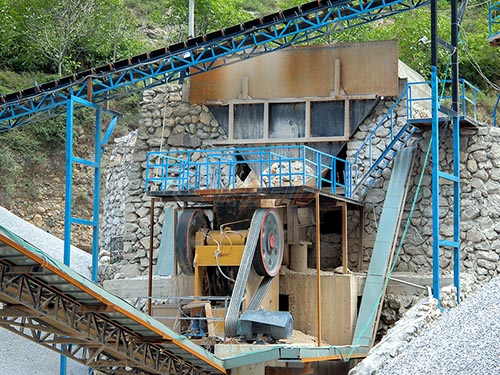
4. Competitive Advantages
The following table compares a standard industry offering against a highefficiency gold ore crushing equipment solution.
| Performance Metric | Industry Standard (LowCost Import) | HighEfficiency Solution | Advantage (% Improvement) |
| : | : | : | : |
| Throughput (tph) | 250 | 300 | +20% |
| Specific Energy (kWh/t) | 0.45 | 0.38 | 15.5% |
| Liner Life (hours) | 1,200 | 1,800 | +50% |
| Mean Time Between Failures (MTBF) | 2,500 hours | 4,500 hours | +80% |
| Installation Time (days) | 14 | 8 | 43% |
| Warranty Period | 12 months | 24 months | +100% |
Note: The "HighEfficiency Solution" typically commands a 1525% premium in gold ore crushing equipment supplier prices, but field data shows a TCO reduction of 1822% over 5 years.
5. Technical Specifications
Specifications for a typical midrange secondary cone crusher for gold ore.
6. Application Scenarios
Case Study 1: Greenfield Heap Leach Operation (Nevada, USA)
Challenge: A new gold project required a lowcapital crushing solution to process 1.5 million tons per year of oxide ore. The budget for gold ore crushing equipment supplier prices was constrained.
Solution: Implemented a singlestage closedcircuit impact crusher with a vibrating screen on a modular skid.
Results: Achieved target P80 of 19mm. Capital cost was 30% lower than a twostage cone circuit. Liner life was 1,400 hours, acceptable for the lowerabrasion oxide ore.
Case Study 2: Underground Mine Expansion (Western Australia)
Challenge: An existing mine needed to increase primary crushing capacity from 400 tph to 600 tph to match a new shaft hoisting rate. Downtime for installation was limited to 4 weeks.
Solution: Replaced an older jaw crusher with a largercapacity, hydraulicadjust jaw crusher. The new unit was preassembled on a concrete pad.
Results: Installation completed in 22 days. Throughput increased to 620 tph. The hydraulic CSS adjustment reduced product size variability by 40%, improving downstream mill feed consistency.
7. Commercial Considerations

Gold ore crushing equipment supplier prices vary significantly based on configuration, brand, and service inclusions.
| Pricing Tier | Typical Equipment | Price Range (USD) | Typical Lead Time |
| : | : | : | : |
| EntryLevel | Small jaw crusher (30x42"), single cone (4.25ft) | $150,000 $400,000 | 1216 weeks |
| MidRange | Large jaw (48x60"), hydraulic cone (HP400 class) | $500,000 $1,200,000 | 1624 weeks |
| Premium | Gyratory crusher, multistage complete plant | $1,500,000 $5,000,000+ | 2440 weeks |
Optional Features:
Service Packages:
Financing Options: Many suppliers offer leasetoown or equipment financing with terms of 1260 months, requiring a 1020% down payment.
8. FAQ
Q1: How do I compare gold ore crushing equipment supplier prices accurately?
A: Request a Total Cost of Ownership (TCO) analysis. This includes the purchase price, estimated annual liner cost, power consumption (kWh/t), and projected maintenance labor. A supplier offering a 20% lower price may have 40% higher wear costs.
Q2: What is the typical lead time for a customconfigured crusher?
A: For standard models, 1216 weeks. For custom configurations (e.g., special motor voltage, highaltitude package), expect 2030 weeks. Always confirm lead times in writing before placing a purchase order.
Q3: Can I use a secondary cone crusher for primary crushing of gold ore?
A: No. Cone crushers are designed for a controlled, cubical feed. Using them as a primary crusher with large, irregular ROM feed will cause severe damage to the head and bowl. A jaw or gyratory crusher is required for primary duty.
Q4: What is the best liner material for highsilica gold ore?
A: For ores with >80% silica, consider 22% manganese steel with chromium carbide overlay inserts. While the initial gold ore crushing equipment supplier prices for these liners are 25% higher, they typically provide 5070% longer life in abrasive conditions.
Q5: How does altitude affect crusher performance and pricing?
A: At altitudes above 2,000m, air density decreases, reducing motor cooling efficiency. You will require a derated motor or a forced ventilation system. This adds 510% to the equipment cost. Confirm the supplier's altitude rating.
Q6: What is the standard warranty on a major crusher component (main shaft, frame)?
A: Most reputable suppliers offer a 12month warranty on structural components against manufacturing defects. Some premium suppliers offer up to 24 months. Wear parts (liners, belts) are typically excluded.
Q7: Do you offer a buyback or tradein program for old equipment?
A: Some suppliers do, particularly for their own brand. This can reduce your net gold ore crushing equipment supplier prices by 1020%. This is a negotiable point often not listed in standard price lists.