
Gold Ore Crushing Equipment Assembly Plant Datasheet
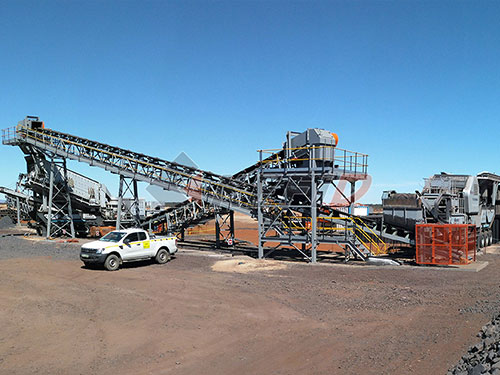

Gold Ore Crushing Equipment Assembly Plant
Operational Challenges in Gold Ore Processing
Gold processing operations face persistent bottlenecks that directly impact recovery rates and profitability. Industry data indicates that unplanned downtime in crushing circuits averages 812% of total operating hours, translating to substantial lost throughput annually for midtolargescale operations.
Key challenges your operation likely encounters:
- Inconsistent feed size distribution — Variations in ROM ore grading cause downstream mill overload, reducing gold liberation efficiency by 1525% in poorly controlled circuits.
- Excessive wear costs — Abrasive goldbearing quartz and sulfide ores accelerate liner and blow bar consumption, with some operations reporting wear part expenditures exceeding 20% of total crushing OPEX.
- Energy inefficiency — Crushing accounts for 4060% of a gold plant's total power draw. Poorly matched equipment trains consume 1018% more kWh per tonne than optimally configured systems.
- Assembly and commissioning delays — Modular plant delivery with incomplete preassembly can extend site installation by 48 weeks, delaying first gold pour and revenue generation.
- Throughput bottlenecks — Nameplate capacity is rarely achieved when equipment is sourced from multiple vendors without integrated engineering.
- Hard rock gold ores (quartz vein, sulfidehosted, oxide)
- Capacity range: 50 TPH to 500 TPH
- Feed size: ≤1,000 mm
- Product size: 1015 mm (adjustable)
- Not designed for clayrich or highmoisture ores (>8% moisture) without predrying or scrubbing circuit modification
- Alluvial/placer deposits require different configuration
- Baghouse dust filtration system
- Acoustic enclosures for noisesensitive sites
- Remote monitoring and telemetry package
- Spare parts kit (12month recommended inventory)
- Extended wear liner package (highchrome or ceramic)
- Mobile/trackmounted configuration
- Standard: 12month warranty, remote technical support, operator training (2 days)
- Premium: 24month warranty, onsite commissioning support, quarterly maintenance visits, priority parts supply
- Comprehensive: 36month warranty, dedicated service engineer, predictive maintenance analytics, guaranteed parts availability within 48 hours
- Equipment leasing (3660 months)
- Purchase with 30% down payment, balance over 12 months
- Export credit agencybacked financing for international buyers
- Renttoown structures for pilot projects
These issues raise critical questions: Is your crushing circuit achieving design throughput? Are your maintenance intervals predictable? Does your equipment supplier understand the full gold recovery workflow?
Product Overview: Gold Ore Crushing Equipment Assembly Plant
This Gold Ore Crushing Equipment Assembly Plant is a preengineered, modular processing facility designed for primary, secondary, and tertiary reduction of goldbearing ore. The plant integrates jaw crushing, cone crushing, screening, and conveyor systems into a coordinated assembly, delivered as prefitted modules for rapid site erection.
Operational Workflow:
1. Primary Crushing — Runofmine gold ore is fed via vibrating grizzly feeder into a primary jaw crusher, reducing ore from up to 1,000 mm to below 150 mm.
2. Secondary Crushing — Material passes to a cone crusher (standard head) for reduction to 4060 mm, with tramp metal protection and hydraulic adjustment.
3. Screening & Classification — Multideck vibrating screens separate fines, directing oversize back to the tertiary crusher.
4. Tertiary Crushing — Shorthead cone or impact crusher reduces ore to 1015 mm for optimal ball mill feed.
5. Conveying & Stockpiling — Integrated belt conveyors transport crushed product to stockpile or directly to the grinding circuit.
Application Scope:
Limitations:
Core Features
Modular PreAssembled Structure | Technical Basis: Bolted and pinned structural steel frame with factoryaligned mounting points | Operational Benefit: Reduces site erection time by 4060% compared to stickbuilt plants | ROI Impact: Earlier production start generates revenue 46 weeks sooner; labor cost reduction of 2535% on installation
HighChrome Wear Components | Technical Basis: CrMo alloy liners and blow bars with hardness ≥58 HRC | Operational Benefit: Extends liner life by 3050% in abrasive gold ore applications | ROI Impact: Reduces wear part expenditure by $15,000$40,000 annually per crusher station
Hydraulic Adjustment & Overload Protection | Technical Basis: Hydraulic cylinder with accumulator circuit for CSS adjustment and tramp release | Operational Benefit: Operators can adjust closedside setting in minutes without manual shimming | ROI Impact: Cuts unplanned downtime from tramp metal by 70%; saves 812 hours per incident
Integrated Dust Suppression System | Technical Basis: Water spray nozzles at transfer points with optional baghouse filtration | Operational Benefit: Meets MSHA/OSHA silica dust exposure limits (≤50 µg/m³) | ROI Impact: Avoids regulatory fines; reduces operator health risk and associated liability
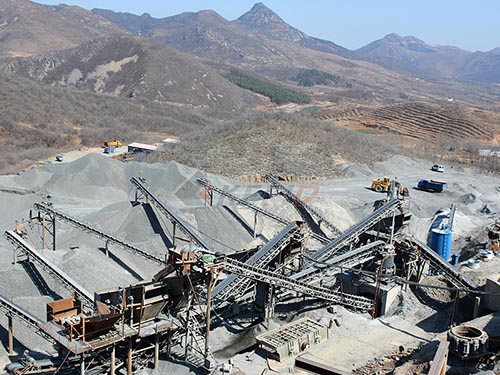
Variable Frequency Drive (VFD) on Feeders | Technical Basis: AC drive with PLCcontrolled feed rate modulation | Operational Benefit: Maintains chokefed condition for maximum crushing chamber utilization | ROI Impact: Increases throughput by 1015%; reduces power spikes and demand charges
Centralized Lubrication System | Technical Basis: Automatic progressive lubrication with fault alarms | Operational Benefit: Eliminates manual greasing errors; ensures consistent bearing lubrication | ROI Impact: Extends bearing life by 2030%; reduces maintenance labor by 58 hours weekly
PLCBased Control & Monitoring | Technical Basis: Siemens/AllenBradley PLC with HMI touchscreen and remote telemetry | Operational Benefit: Realtime visibility of crusher load, temperature, and throughput | ROI Impact: Enables predictive maintenance; reduces reactive repair costs by 1825%
Competitive Advantages
| Performance Metric | Industry Standard | Gold Ore Crushing Equipment Assembly Plant | Advantage (% Improvement) |
|||||
| Site Erection Time | 1014 weeks | 46 weeks | 5060% faster |
| Throughput (TPH, 250 kW cone) | 180220 TPH | 230260 TPH | 1520% higher |
| Wear Liner Life (abrasive ore) | 8001,000 hrs | 1,2001,500 hrs | 4050% longer |
| Energy Consumption (kWh/t) | 1.82.2 | 1.51.8 | 1520% lower |
| Unplanned Downtime | 812% | 35% | 5560% reduction |
| Dust Emission (mg/m³) | 5080 | <20 | 6075% lower |
| Commissioning Time | 68 weeks | 23 weeks | 6070% faster |
Technical Specifications
| Parameter | Specification |
|||
| Capacity Range | 50500 TPH (dependent on ore hardness and product size) |
| Maximum Feed Size | 1,000 mm (primary jaw) |
| Product Size | 1015 mm (adjustable via CSS) |
| Total Installed Power | 2501,200 kW (configurationdependent) |
| Voltage | 380V/440V/6.6kV, 50/60 Hz, 3phase |
| Primary Crusher | Jaw crusher, 600×900 mm to 1,200×1,500 mm feed opening |
| Secondary Crusher | Standard cone, 200500 kW |
| Tertiary Crusher | Shorthead cone or VSI, 160400 kW |
| Screen Size | 1.8×6.0 m to 2.4×7.2 m, double/triple deck |
| Conveyor Belt Width | 6501,200 mm |
| Operating Temperature | 20°C to +45°C |
| Altitude Rating | Up to 3,000 m ASL (derated above 2,000 m) |
| Ore Moisture Limit | ≤8% (higher requires modification) |
| Ore Bond Work Index | 822 kWh/t |
| Noise Level | ≤85 dB(A) at 1 m (with acoustic enclosure) |
| Dust Emission | <20 mg/m³ at transfer points |
| Foundation Type | Reinforced concrete or steel skidmounted |
Application Scenarios

OpenPit Gold Mine, West Africa | Challenge: 200 TPH oxide ore with variable hardness (BWi 1218 kWh/t) causing frequent cone crusher overload and 15% monthly downtime | Solution: Installed modular Gold Ore Crushing Equipment Assembly Plant with VFDcontrolled feeder and hydraulic tramp release; PLC automation adjusted feed rate based on crusher load | Results: Throughput stabilized at 215 TPH; unplanned downtime reduced to 4%; annual production increase of 18,000 oz gold equivalent
Underground Gold Mine, Australia | Challenge: Limited surface footprint (40m × 60m) and strict dust regulations near residential area | Solution: Compact modular plant with enclosed transfer points, baghouse filtration, and acoustic enclosures; preassembled modules lowered by crane in 3 weeks | Results: Commissioned in 5 weeks; dust emissions measured at 12 mg/m³; community complaints eliminated; 22% reduction in energy cost per tonne
Refractory Sulfide Gold Project, South America | Challenge: Highabrasion sulfide ore (BWi 20+) causing liner replacement every 6 weeks and $180,000 annual wear part cost | Solution: Plant configured with highchrome alloy liners, increased crusher chamber volume, and automated lubrication; tertiary circuit optimized for 12 mm product | Results: Liner life extended to 14 weeks; wear part cost reduced to $95,000 annually; gold recovery improved 3.2% due to finer mill feed
Commercial Considerations
Equipment Pricing Tiers:
| Tier | Capacity | Configuration | Estimated Investment Range |
|||||
| Compact | 50100 TPH | Jaw + cone + screen + conveyors | $350,000 $550,000 |
| Standard | 150250 TPH | Jaw + standard cone + shorthead cone + screens + conveyors + PLC | $750,000 $1,200,000 |
| HighCapacity | 300500 TPH | Primary jaw + secondary cone + tertiary cone + multideck screens + automated control + dust system | $1,500,000 $2,800,000 |
Optional Features:
Service Packages:
Financing Options:
FAQ
Q1: Can this Gold Ore Crushing Equipment Assembly Plant handle both oxide and sulfide ores?
Yes. The plant is configured with wear components and crushing parameters suitable for both ore types. For sulfide ores with Bond Work Index above 18 kWh/t, we recommend the highcapacity tier with increased crusher chamber volume and highchrome liners. Oxide ores typically require less aggressive configuration.
Q2: What is the minimum site preparation required for installation?
The plant requires a leveled reinforced concrete foundation or compacted gravel pad with drainage. For skidmounted configurations, a flat hardstand is sufficient. We provide foundation drawings and load calculations within 10 business days of order confirmation. Typical site preparation takes 23 weeks.
Q3: How does the modular design reduce installation cost?
Modules are prewired, prepiped, and factoryaligned before shipment. This eliminates onsite fabrication, reduces skilled labor requirements by 40%, and minimizes rework. Field data from recent installations shows total installation cost reduction of 2535% compared to conventional stickbuilt plants.
Q4: What maintenance intervals are recommended?
Daily: visual inspection, lubrication check, belt tension. Weekly: liner wear measurement, screen media inspection. Monthly: bearing temperature analysis, hydraulic system check. Quarterly: full wear component assessment, PLC calibration. Annual: complete overhaul inspection. The PLC system provides automated alerts for critical parameters.
Q5: What is the lead time from order to commissioning?
Standard configuration: 1620 weeks manufacturing + 46 weeks shipping + 46 weeks installation and commissioning. Total: approximately 2432 weeks. Expedited options are available for urgent projects at additional cost.
Q6: Can the plant be integrated with existing grinding and leaching circuits?
Yes. The plant is designed with flexible discharge conveyor configurations to interface with existing ball mills, SAG mills, or heap leach stacking systems. We provide interface engineering and coordinate with your existing equipment suppliers to ensure seamless material flow.
Q7: What training and documentation are provided?
All plants include: operation manuals (English, with translation options), maintenance schedules, spare parts catalogs, electrical and hydraulic schematics, and 25 days of onsite operator training. Premium service packages include additional classroom and handson training sessions.