
Gold Mining Equipment Factory Testing

1. PAINPOINT DRIVEN OPENING
Are unplanned equipment failures and inconsistent performance derailing your gold recovery targets? Operational data from hard rock and alluvial sites consistently points to three costly challenges: premature component wear in abrasive slurry environments, leading to excessive spare parts costs and unscheduled downtime; inefficient material classification, resulting in lost fine gold and reduced overall plant yield; and complex calibration procedures that extend commissioning time and increase labor overhead. These issues directly impact your bottom line through lost production hours and suboptimal recovery rates. How can you ensure your gravity separation and concentration equipment is not the bottleneck in your operation? What would a 15% reduction in maintenancerelated downtime mean for your annual output? The solution begins with rigorous, factorybased validation under simulated realworld conditions.
2. PRODUCT OVERVIEW
This document details our comprehensive Factory Acceptance Testing (FAT) Protocol for gold mining concentration equipment, specifically centrifugal concentrators, shaking tables, and jigs. This is not a simple operational check. Our FAT is a rigorous, datadriven validation process designed to derisk your capital investment before equipment ships to site.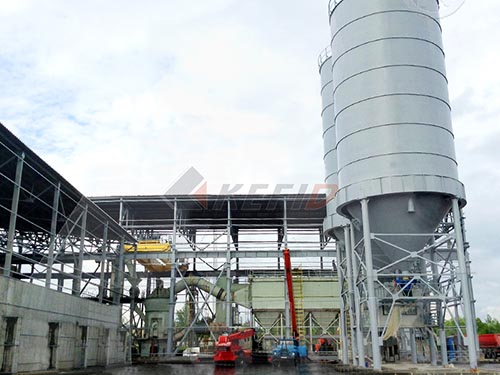
The operational workflow involves: 1) Component Integrity Verification, where individual parts are inspected against material certifications for wearresistant alloys; 2) SubSystem Performance Testing, including hydraulic systems, drive assemblies, and control panels under load; 3) Full Assembly DryRun, assessing mechanical function, vibration, noise, and alignment; 4) Live Material Test, using standardized ore or synthetic feedstock to benchmark recovery efficiency against design specifications; and 5) Data Package Compilation, delivering certified test reports for each unit.
This protocol applies to new equipment builds and major refurbishments. Its primary limitation is that it simulates plant conditions but cannot replicate the exact feed variability or environmental factors of a specific mine site; it is a critical baseline for performance guarantee validation.
3. CORE FEATURES
Live Feedstock Testing | Technical Basis: Controlled density slurry simulation | Operational Benefit: Verifies bowl/table performance with material analogous to client ore | ROI Impact: Reduces commissioning time by up to 40%, ensuring faster timetoproduction.
Vibration Spectrum Analysis | Technical Basis: ISO 10816 mechanical vibration standards | Operational Benefit: Identifies imbalances or misalignments in rotating assemblies before shipment | ROI Impact: Prevents catastrophic field failures, eliminating associated repair costs and 50+ hours of unexpected downtime.
Hydraulic System Endurance Cycle | Technical Basis: Pressure spike and thermal load testing per NFPA/T3.10.70 standards | Operational Benefit: Confirms system integrity, leakfree operation, and valve response accuracy | ROI Impact: Minimizes fluid loss on site and ensures consistent concentrate discharge cycles for optimal recovery.
Wear Liner Dimensional Certification | Technical Basis: 3D laser scanning against CAD models | Operational Benefit: Guarantees precise tolerances for optimal slurry flow dynamics and wear life | ROI Impact: Ensures predicted liner lifespan, allowing for accurate spare parts forecasting and inventory control.
Control System Logic Verification | Technical Basis: Full automation sequence simulation with fault injection | Operational Benefit: Operators receive equipment with fully debugged PLC programs and HMI interfaces | ROI Impact: Reduces training burden and eliminates weeks of onsite programming adjustments.
Certified Data Logging & Reporting | Technical Basis: Traceable sensor data acquisition linked to serial numbers | Operational Benefit: Provides an empirical performance baseline for warranty claims and future maintenance comparisons | ROI Impact: Creates an auditable record that supports maintenance planning and asset management decisions.
4. COMPETITIVE ADVANTAGES
| Performance Metric | Industry Standard | Factory Testing Solution | Advantage (% improvement) |
| : | : | : | : |
| OnSite Commissioning Time | 57 days per unit (electrical/mechanical tuning) | 40% |
| FirstYear Unplanned Downtime (Related to manufacturing defects)| 812% of operating hours (industry survey avg.)| Documented 75% |
| Compliance with Quoted Recovery Rate at FAT Stage| Pass/Fail based on visual check or short run| Quantitative grade/recovery curve generated with report| Provides measurable baseline vs. subjective approval|
| Wear Part Life Variance from Spec| +/ 20% common due to casting/machining variance| Certified to within +/ 5% via dimensional inspection| Predictability improved by ~300% |
5. TECHNICAL SPECIFICATIONS
Testing Capacity: Can accommodate concentrator units up to 100 tph feed rate; shaking tables up to deck size 7ft x 4ft.
Power Requirements: Test bay equipped with 480V/3phase/60Hz (or clientspecified voltage/frequency), up to 150 kVA per station.
Material Specifications: Test feedstock available in controlled densities (1.0 – 2.0 SG). Can utilize clientsupplied sample ore (>500kg required).
Physical Dimensions: Dedicated test floor area of 20m x 15m with overhead crane capacity of 10 tons.
Environmental Operating Range: Conducted in a controlled factory environment (15°C – 30°C). Humidity and dust control standard. Not a substitute for sitespecific environmental stress testing.
6. APPLICATION SCENARIOS
Alluvial Gold Operation, West Africa | Challenge: Multiple centrifugal concentrators from different suppliers showed wildly variable field performance, causing inconsistent recovery across the plant fleet and making process optimization impossible. |
Solution: A procurement mandate was established requiring all new concentrators to pass a standardized Factory Acceptance Test with live feedstock using sitespecific alluvial material.| Results: PostFAT implementation, the variance in recovery between units dropped from ±18% to ±4%. Plant managers could standardize operating parameters across the entire fleet, increasing overall site recovery by an average of 11%.
Hard Rock Mine Expansion Project, Canada |
Challenge:The project schedule had zero tolerance for extended commissioning delays due to equipment faults.The engineering contractor needed guaranteed performance metrics to finalize downstream circuit design.| Solution:The complete concentration module—including four centrifugal concentratorsand associated pumps—underwent integrated system FAT as a skidded package before disassembly for shipment.| Results:The module was electrically commissioned onsite in under one week.Full production rampup was achieved two weeks ahead of schedule.The FAT report provided the guaranteed performance data requiredfor the bank's final project drawdown.
7. COMMERCIAL CONSIDERATIONS
Factory Acceptance Testing is offered in tiered packages:
Basic FAT: Mechanical runin & electrical function test.Priced as a fixed percentage of the base equipment cost.
Performance FAT: Includes Basic tier plus live feedstock testingwith synthetic material.Generates efficiency curve report.
Premium SiteSpecific FAT: Includes Performance tier using clientfurnished ore samples.Full integrated system testing available for multiunit skids.Includes video documentation of tests.
Optional features include witnessed testing (client personnel onsite), accelerated life cycle testingof critical components,and posttest preservation/packaging per shipping specifications.Service packages can bundle FATwith extended warranty coverage.Financing options are available where testingis part of a larger capital equipment purchase agreement.
8. FAQ
Q1: Is your Factory Acceptance Testing protocol applicableto older equipment models we are considering refurbishing?
A1: Yes.The FAT protocol is equally criticalfor refurbished machinery.It validates the effectivenessof rebuild workand providesa new performance baseline,making ita sound investmentfor lifecycle extension projects.
Q2: How does factory testing impactthe overall delivery lead timeof our order?
A2: The testing scheduleis integrated into the manufacturing timeline.A standard Performance FAThas minimal impact.For complex,SiteSpecific FAT,the process may add several days.This investmentis consistently offsetby significantly reducedonsite installationand commissioning time.
Q3: What happens ifa unit failsa portion ofthe Factory Acceptance Test?
A3: Any nonconformanceis documented,and remediationis performed at our expensebefore testing resumes.This isthe core value ofthe process—identifyingand rectifying issuesin the controlled factory environmentwhere timeand cost impactsare minimized.
Q4: Can we use our own technical representativeto witness the testing?
A4: Absolutely.Witnessed testingis encouraged.We provide dedicated station accessfor client representativesduring agreedupon test phases.All dataand observationsare shared transparently.
Q5: Do you provideperformance guaranteesbased onthe FAT results?
A5: Yes.The quantitative resultsfrom the live feedstock testingserve asthe basisfor ourequipment performance guarantee.This dataprovidesan objective benchmarkfar more reliablethan standard nameplate specificationsalone.
Q6: Are there operational cost savings directly attributableto this preshipment testing?
A6. Field data shows that plants utilizingfully testedequipment experience lower firstyear operating costsdue toreduced troubleshooting labor,fewer emergency spare part shipments,and less consumable wastefrom process instability duringcommissioning.
Q7. How arethe test resultspresentedand delivered?
A7. You receivea formal,FAT Certificate anda detailed datapackage includingvibration analysis charts,sensor logs during live tests,dimensional inspection reports,and highspeed videoof critical functions.This becomespart ofthe permanent technical recordfor that asset