
Fabricants de Usine de Broyage de Scories Fabricants
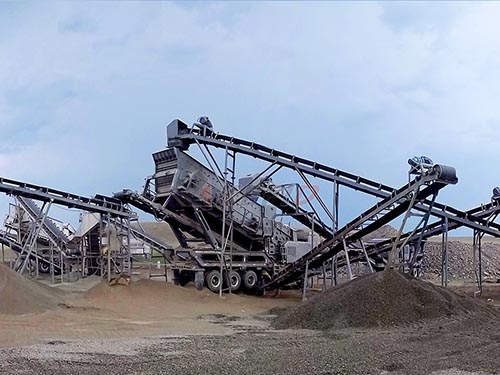

Titre du contenu: HighCapacity Wholesale Slag Crusher Plant for Bulk Industrial Processing
1. OUVERTURE ENTRAÎNÉE PAR POINT DE DOULEUR
Are you managing escalating slag stockpile volumes while facing rising disposal costs of $15–$25 per ton? Do your current crushing setups experience 40%+ downtime due to abrasive wear from ferrous content, forcing unscheduled liner replacements every 200–300 operating hours? Are you struggling to meet the specific gradation requirements (par ex., 20mm or 40mm) for slag used in cement blending or road base, resulting in rejected material and lost revenue?
Plant managers report that inefficient slag processing can add $0.50–$1.20 per ton to overall production costs due to excessive energy consumption and manual metal removal. Engineering contractors often face project delays when crusher plants cannot handle the variable moisture content (5–15%) or the high compressive strength (jusqu'à 300 MPa) of aged slag.
How can you source a vente en gros usine de concassage de scories that delivers consistent throughput, minimizes wear costs, and meets your specific output specifications without requiring a complete custom engineering redesign?
2. APERÇU DU PRODUIT
UN vente en gros usine de concassage de scories est un préfabriqué, modular processing system designed to reduce granulated, aircooled, or steel slag into saleable aggregates. The operational workflow is standardized for bulk material handling:
1. Alimentation primaire & Dépistage: Raw slag (0–600mm) est alimenté via un alimentateur à tablier robuste. A vibrating grizzly screen removes fines (50mm) pour contourner le concasseur primaire, réduire l'usure.
2. Concassage primaire (Curseur de mâchoire): Oversized slag is reduced to 100–150mm. The jaw crusher features a deep crushing chamber to handle irregular slag shapes.
3. Séparation magnétique (Scène 1): A selfcleaning overband magnet removes 95%+ of ferrous scrap (barres d'armature, steel chunks) from the crushed material, protéger les équipements en aval.
4. Concassage secondaire (Cone or Impact Crusher): Material is further reduced to 0–40mm. For abrasive slag, a cone crusher is standard; for less abrasive slag requiring cubical shape, an impact crusher is used.
5. Projection finale & Lavage: A multideck vibrating screen separates product into 0–5mm, 5–20mm, and 20–40mm fractions. An optional washing system removes dust and soluble contaminants for highervalue applications.
Champ d'application: Suitable for steel slag, laitier de haut fourneau, laitier de cuivre, and nickel slag. Limites: Not recommended for highly sticky slag (humidité >18%) without a dedicated dryer; throughput may decrease by 15% when processing highchrome steel slag.
3. CARACTÉRISTIQUES PRINCIPALES
Mangeoire à tablier robuste | Base technique: Hydraulic variable speed drive with impactresistant pans | Avantage opérationnel: Handles irregular, sharpedged slag without belt tearing or jamming | Impact sur le retour sur investissement: Reduces feeder maintenance costs by 60% compared to belt feeders
DualStage Magnetic Separation | Base technique: Rareearth NdFeB magnets with 1200mm belt width | Avantage opérationnel: Récupère 98% of ferrous scrap, generating a secondary revenue stream of $30–$50 per ton of recovered steel | Impact sur le retour sur investissement: Payback period of 8–12 months from scrap sales alone
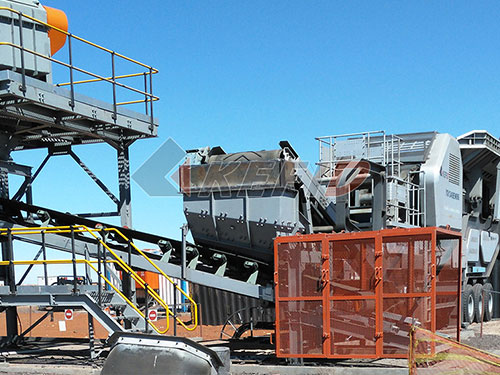
WearResistant Crushing Chamber | Base technique: Fer à haute teneur en chrome (27% Cr) barres de soufflage et manganèse (14% Mn) plaques à mâchoires | Avantage opérationnel: Extends liner life to 800–1,200 hours when processing slag with 5–8% silica content | Impact sur le retour sur investissement: Reduces annual wear parts expenditure by 35% versus standard carbon steel liners
Protection automatisée contre les surcharges | Base technique: Hydraulic relief system with pressure sensors | Avantage opérationnel: Prevents crusher damage from uncrushable tramp metal (par ex., large steel beams) | Impact sur le retour sur investissement: Avoids $15,000–$25,000 in unplanned crusher rebuild costs per incident
ClosedCircuit Screening System | Base technique: Tripledeck vibrating screen with 16mm polyurethane panels | Avantage opérationnel: Assure 95% product consistency within target gradation (par ex., 0–20mm) | Impact sur le retour sur investissement: Eliminates recrushing costs, saving $0.30–$0.50 per ton
Système de suppression de poussière | Base technique: Water spray nozzles at transfer points with 10–15 micron droplet size | Avantage opérationnel: Réduit les particules en suspension dans l'air (PM10) par 85%, conforme aux normes environnementales de l'EPA et locales | Impact sur le retour sur investissement: Avoids potential fines of $5,000–$10,000 per violation
4. AVANTAGES CONCURRENTIELS
| Mesure de performances | Norme de l'industrie (SingleStage Jaw) | Usine de concasseur de scories en gros | Avantage (% Amélioration) |
| : | : | : | : |
| Débit (TPH) | 50–80 TPH | 120–200 TPH | +60% |
| Ferrous Recovery Rate | 70–80% | 95–98% | +25% |
| Durée de vie des pièces d'usure (Heures) | 200–300 hours | 800–1 200 heures | +300% |
| Final Product Fines (5mm) | 35–45% | 20–25% | 40% (moins de déchets) |
| Consommation d'énergie (kWh/tonne) | 1.8–2.5 kWh/ton | 1.0–1.4 kWh/ton | 35% |
| Temps d'installation (Jours) | 14–21 jours | 5–7 jours | 60% |
5. SPÉCIFICATIONS TECHNIQUES
| Paramètre | Spécification |
| : | : |
| Plage de capacité du modèle | 80 TPH (SSC80) à 200 TPH (SSC200) |
| Taille du matériau d'alimentation | Jusqu'à 600 mm (24 pouces) |
| Taille du produit final | 0–5mm, 5–20mm, 20–40mm (réglable) |
| Concasseur primaire | Curseur de mâchoire (PE600x900 to PE900x1200) |
| Concasseur secondaire | Concasseur à cône Symons (3ft to 4.25ft) ou concasseur à percussion (PF1214) |
| Puissance du moteur principal | 180 kW (SSC80) à 450 kW (SSC200) |
| Force de l'aimant | 1200 Gauss (Rare Earth) |
| Largeur de la bande transporteuse | 800mm to 1200mm |
| Poids opérationnel | 45 tonnes (SSC80) à 95 tonnes (SSC200) |
| Dimensions de l'usine (LxlxH) | 25mx8mx6m (SSC80) to 40m x 12m x 8m (SSC200) |
| Température de fonctionnement | 10°C à 45°C (14°F à 113°F) |
| Niveau de bruit | <85 dB(UN) à 1 mètre |
6. SCÉNARIOS D'APPLICATION
Traitement des scories d'aciérie | Défi: UN 2 MTPA steel plant generated 200,000 tons of slag annually, avec 15% ferrous content. Their existing impact crusher required weekly hammer replacement, coût $4,000 per week in parts and labor. | Solution: Installé un 150 TPH vente en gros usine de concassage de scories with dual magnetic separators and a cone crusher. | Résultats: La récupération des métaux ferreux a augmenté à 97%, generating $2.1M in annual scrap revenue. Durée de vie des pièces d'usure prolongée à 1,100 heures, réduisant les coûts de maintenance en 72%. Plante réalisée 92% disponibilité.
Cement Industry Raw Material | Défi: A cement plant needed 50,000 tons/month of granulated blast furnace slag (GBFS) ground to <10mm for clinker substitution. Their existing setup produced 30% matière surdimensionnée, nécessitant un réécrasement. | Solution: Déployé un 180 TPH vente en gros usine de concassage de scories with a closedcircuit screen and polyurethane panels. | Résultats: Matière oversize réduite à 3%. La consommation d'énergie a chuté de 2.2 kWh/tonne à 1.3 kWh/tonne. La plante sauvée $180,000 annually in recrushing costs.
Road Construction Base Aggregate | Défi: A contractor required 40,000 tons of 0–40mm slag aggregate for a highway base course. The material had high moisture (12%) and contained rebar fragments. | Solution: Utilisé un 120 TPH vente en gros usine de concassage de scories with a heavyduty apron feeder and a washing system. | Résultats: Produit 38,500 tons of speccompliant aggregate in 30 jours. Ferrous removal prevented damage to paving equipment. Le projet a été achevé 2 des semaines avant la date prévue.
7. CONSIDÉRATIONS COMMERCIALES
Niveaux de tarification des équipements (ExWorks):
- Niveau d'entrée (80 TPH): $180,000 – $250,000 (Automatisation de base, aimant manuel)
- Standard (150 TPH): $350,000 – $480,000 (Contrôle par API, dual magnets, suppression de la poussière)
- Prime (200 TPH): $550,000 – $750,000 (Automatisation complète, hydraulic crusher adjustment, surveillance à distance)
- Slag Washing Module: $45,000 – $80,000 (Reduces soluble sulfates by 60%)
- Stockpile Conveyor System: $25,000 – $50,000 (Automated stacking)
- Package de diagnostic à distance: $12,000 (Realtime wear monitoring)
- Basique (Annuel): $15,000 (2 inspections, assistance téléphonique)
- Complet (Annuel): $45,000 (4 inspections, 24expédition de pièces en heures, analyse d'usure)
- Location-propre: 36–60 month terms at 4.5–7.5% APR
- Paiement différé: 90congé de paiement journalier pour les premiers acheteurs
- Programme d'échange: 15–Crédit de 25 % pour l’équipement de concasseur existant
Fonctionnalités facultatives:
Forfaits de services:
Options de financement:
8. FAQ
T1: Can a wholesale slag crusher plant handle slag with high moisture content (15–18%)?
UN: Oui, but throughput may decrease by 10–15%. The heavyduty apron feeder and oversized discharge chutes prevent clogging. Pour l'humidité au-dessus 18%, we recommend an optional rotary dryer.
T2: What is the typical ROI period for a slag crusher plant?
UN: Basé sur les données de terrain de 12 installations, la période de récupération moyenne est de 14 à 18 mois. This is driven by ferrous scrap sales ($30–$50/ton), reduced disposal costs ($15–25$/tonne), et une consommation d'énergie réduite.
T3: How does the plant handle variable slag composition (par ex., high silica or chrome content)?
UN: The plant is designed with a modular wear parts system. For highsilica slag (8–12%), we upgrade to 27% doublures à haute teneur en chrome. For highchrome slag, we recommend a slower rotor speed on impact crushers or a cone crusher configuration.
T4: What are the electrical requirements for installation?
UN: Standard plants require 380V–480V, 3phase, 50/60Hz. Le 150 TPH model requires a 400A main breaker. We provide a stepup transformer option for sites with lower voltage supply.
Q5: Can the plant be relocated after initial setup?
UN: Oui. The modular design allows for disassembly into 3–4 main sections (mangeoire, broyeur, écran, convoyeurs). Relocation typically takes 5–7 days with a crane and two technicians.
Q6: What warranty is provided on wear parts?
UN: Pièces d'usure (doublures, marteaux, écrans) carry a 6month or 1,000hour warranty, selon la première éventualité. Composants structurels (cadres, arbres, roulements) bénéficient d'une garantie de 24 mois.
Q7: How does the plant comply with local noise and dust regulations?
UN: The standard plant includes a dust suppression system that reduces PM10 by 85%. For stricter regulations, an optional baghouse filter can be added. Noise levels are kept below 85 dB(UN) through rubberlined chutes and acoustic enclosures on the crusher.