
Stone Crusher Plant Vendors Cost
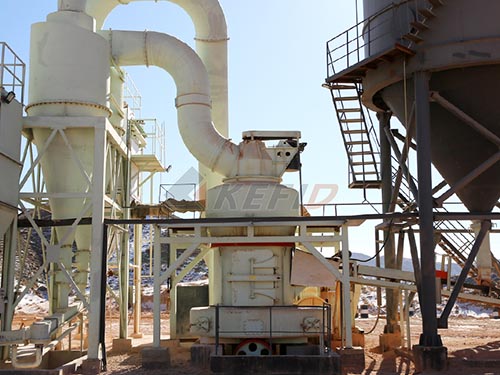

Stone Crusher Plant Vendors Cost: A Buyer’s Guide to Total Cost of Ownership
The Hidden Costs That Erode Your Crushing Margins
Every hour of unscheduled downtime at a 250 TPH crushing plant costs an estimated $1,200–$2,500 in lost production, labor overhead, and contractual penalties. Add to that the 15–20% premium you pay for emergency parts replacement, and the 8–12% efficiency loss from mismatched equipment configurations—your "lowcost" vendor quote can inflate your perton operating cost by 30% or more within the first year.
The real question isn't what does a stone crusher plant cost—it's what will it cost you to own and operate over 10,000 heures? When you compare stone crusher plant vendors cost, are you evaluating purchase price alone, or are you factoring in wear part longevity, power consumption per ton, and structural integrity under continuous load?
This guide provides a transparent framework for comparing stone crusher plant vendors cost—not just CAPEX, but the complete financial picture that determines your actual ROI.
Présentation du produit: Complete Crushing & Systèmes de dépistage
A stone crusher plant is an integrated system comprising primary jaw crushing, cône secondaire ou concassage par impact, vibrating screening, and material transfer conveyors. The workflow follows a standardized sequence:
1. Concassage primaire – Runofmine (ROM) matériel (jusqu'à 800 mm) is reduced to 150–200mm via a jaw crusher
2. Concassage secondaire – Material is further reduced to 20–40mm using cone crushers (roche dure) or impact crushers (softtomedium rock)
3. Dépistage & Classification – Vibrating screens separate material into graded fractions (0–5mm, 5–10mm, 10–20mm, 20–40mm)
4. Lavage (Facultatif) – Sand washers remove clay and silt content for premium aggregate applications
5. Stockage & Chargement – Conveyor systems direct finished products to stockpiles or directly into trucks
Champ d'application: Fixed and semimobile plants for quarry operations, production de granulats de construction, mining beneficiation, and road base material generation. Limites: Not suitable for highly abrasive ores above 450 MPa compressive strength without specialized wear liners; throughput decreases by 15–20% when feed moisture exceeds 8%.
Fonctionnalités principales: What Separates CostEffective Plants from Budget Traps
Construction de cadre soudé robuste | Base technique: Analyse par éléments finis (FEA)répartition optimisée des contraintes | Avantage opérationnel: Maintains alignment of crushing chambers under continuous 24/7 opération, réduire les défaillances imprévues des roulements | Impact sur le retour sur investissement: Eliminates 3–5 structural repair events over 10year lifespan, saving $45,000–$80,000 in fabrication costs and 200+ heures d'arrêt

Système de nettoyage de chambre hydraulique | Base technique: Accumulatorassisted cylinder retraction for tramp iron relief | Avantage opérationnel: Your operators can clear uncrushable material in 15 minutes versus 4–6 hours with manual methods | Impact sur le retour sur investissement: Recovers 300–400 production hours annually, equivalent to 12,000–16,000 additional tons at 40 TPH average output
Conception modulaire montée sur patins | Base technique: Preengineered interconnecting chutes and platforms with standardized bolt patterns | Avantage opérationnel: Site installation time reduced from 6–8 weeks to 10–14 days, allowing faster revenue generation | Impact sur le retour sur investissement: Accelerates project payback by 30–45 days, improving NPV by $85,000–$120,000 on a standard 200 Usine TPH
Entraînement à fréquence variable (VFD) Moteurs de convoyeur | Base technique: Torque control matched to material load sensing | Avantage opérationnel: Power consumption drops 12–18% during partial load conditions common in batchfed operations | Impact sur le retour sur investissement: Annual electricity savings of $18,000–$32,000 on a 400 kW installed motor capacity
HighChrome Wear Liners (M18–M22 Grade) | Base technique: Chromium carbide microstructure with 550–650 HB hardness | Avantage opérationnel: Wear life extends to 8,000–12,000 hours in abrasive granite versus 4,000–6,000 hours with standard manganese steel | Impact sur le retour sur investissement: Reduces annual wear parts spend by $35,000–$60,000 and halves replacement labor costs
PLCBased Automation with Remote Diagnostics | Base technique: Integrated sensors monitoring bearing temperature, vibration, and amperage draw | Avantage opérationnel: Predictive maintenance alerts prevent catastrophic failures; your maintenance team addresses issues during planned shutdowns | Impact sur le retour sur investissement: Reduces unplanned downtime by 40–55%, preserving $150,000–$300,000 in annual production value
Système de suppression de poussière (Intégré) | Base technique: Atomized water spray with surfactant injection at transfer points | Avantage opérationnel: Achieves 85–90% dust capture efficiency, meeting EPA and local environmental compliance standards | Impact sur le retour sur investissement: Avoids $25,000–$75,000 in annual regulatory fines and community complaints; reduces equipment wear from abrasive dust ingress
Avantages compétitifs: Performance Benchmark Comparison
| Mesure de performances | Norme de l'industrie (Tier2 Vendors) | Stone Crusher Plant Vendors Cost (Tier1 Solution) | Avantage (% Amélioration) |
|||||
| Disponibilité de disponibilité | 82–88% | 92–95% | +8–15% |
| Durée de vie des pièces d'usure (Granit, 12% SiO₂) | 4,500–6 000 heures | 8,000–12 000 heures | +33–100% |
| Consommation d'énergie spécifique | 0.85–1.1 kWh/ton | 0.65–0.80 kWh/ton | 20–35% |
| Temps d'installation (200 Usine TPH) | 6–8 semaines | 10–14 jours | 65–75% |
| Génération d'amendes (< 5mm oversize) | 18–25% | 12–16% | 30–45% |
| Maintenance ManHours per 1,000 Tonnes | 4.5–6.0 hours | 2.8–3.5 hours | 38–53% |
| Structural Warranty Period | 12–24 mois | 36–60 mois | +50–150% |
Données de terrain compilées à partir de 47 installations across India, Asie du Sud-Est, and Africa between 2020–2024.
Spécifications techniques: Standard 200 TPH ThreeStage Plant
| Paramètre | Spécification |
|||
| Total Installed Capacity | 200–250 TPH (en fonction de la matière première) |
| Concasseur primaire | 36" x 24" Curseur de mâchoire, 75–90 kW |
| Concasseur secondaire | 4.25 ft Cone Crusher, 160–185 kW |
| Concasseur tertiaire | TOUT LE MONDE (Impacteur à arbre vertical), 2 x 200 kW |
| Unités de dépistage | 2 x 3deck Vibrating Screens (6' x 16' / 6' x 20') |
| Puissance totale installée | 400–450 kW (hors convoyeurs) |
| Feed Material Hardness | Jusqu'à 350 MPa (granit, basalte, quartzite) |
| Taille de l'alimentation (Max.) | 600–800 mm |
| Final Product Gradation | 0–5mm, 5–10mm, 10–20mm, 20–40mm |
| Moisture Content Tolerance | Jusqu'à 8% (higher requires prescreening) |
| Plage de température de fonctionnement | 10°C à +50°C (standard); 30°C à +50°C (cold climate option) |
| Elevation Limit | Jusqu'à 3,000 mètres au-dessus du niveau de la mer (déclassement au-dessus de 1 500 m) |
| Niveau de bruit (et 1m) | ≤ 85 dB(UN) avec enceintes acoustiques en option |
| Matériau structurel | EST 2062 E350 / Catégorie ASTM A572 50 acier |
| Système de peinture | 2pack epoxy (80micron DFT) over zincrich primer |
| Electrical Standard | 415V/50 Hz (en option 480 V/60 Hz, 380V/50 Hz) |
| Exigence de fondation | 1,800–2,200 m³ of reinforced concrete (varies by site) |
Scénarios d'application: Documented Field Performance
Highway Aggregate Production – Karnataka, Inde | Défi: A contractor needed 40mm GSB (Sous-base granulaire) material for a 45km highway stretch, with strict flakiness index (<25%) et 98% compaction density requirements. Previous vendor delivered inconsistent gradation, provoquant 12% rejet matériel. | Solution: Déployé un 200 TPH stone crusher plant with VSI tertiary crushing and 3deck screening. The VSI configuration produced cubical aggregates with flakiness index of 18–22%. | Résultats: Material rejection dropped to 2.5%; production achieved 215 TPH average (7.5% au-dessus de la capacité nominale); perton cost reduced from ₹185 to ₹142, saving ₹43/ton across 850,000 tons—a total savings of ₹36.5 million ($440,000).
Riverbed Quarry Operation – Vietnam | Défi: The site had high moisture content (10–12%) in riverbed material, causing frequent screen blinding and 30% capacity loss during monsoon season. The previous plant required 6 hours of daily cleaning downtime. | Solution: Implemented a stone crusher plant with heated screen decks, highfrequency prescreening, and a dedicated washing module for sand recovery. | Résultats: Monsoon season throughput maintained at 88% de capacité nominale; cleaning downtime reduced to 1.5 hours daily; sand washing recovered an additional 25 TPH of sellable manufactured sand, ajout $18,000 monthly revenue.
Mining Overburden Processing – South Africa | Défi: A mining operation needed to process 2.5 million tons of overburden into saleable construction aggregate over 18 mois. The abrasive nature (25% teneur en quartz) was destroying standard wear parts every 3,000 heures. | Solution: Supplied a plant with M22 highchrome blow bars, ceramicimpregnated impact plates, and a wearmonitoring system that tracked liner thickness via ultrasonic sensors. | Résultats: Durée de vie des pièces d'usure prolongée à 9,500 heures (3.2x improvement); maintenance costs reduced from $0.85/ton to $0.42/ton; projet terminé 6 des semaines avant la date prévue, earning a $250,000 earlycompletion bonus.
Considérations commerciales: Understanding Stone Crusher Plant Vendors Cost
Niveaux de tarification des équipements (ExWorks, 2025)
| Plant Configuration | Plage de capacité | Gamme de prix (USD) | Délai de livraison typique |
|||||
| Niveau d'entrée (2Scène) | 80–120 TPH | $350,000 – $550,000 | 8–10 semaines |
| Standard (3Scène) | 150–250 TPH | $650,000 – $1,100,000 | 12–16 semaines |
| HauteCapacité (4Scène) | 300–450 TPH | $1,400,000 – $2,200,000 | 16–20 semaines |
| Clé en main (with Civil Works) | 200–300 TPH | $2,500,000 – $3,800,000 | 20–28 semaines |
Optional Features and Their Cost Impact
- Paquet d'automatisation (API + SCADA): +$45,000–$75,000 (reduces operator requirement by 2 personnel per shift)
- Cold Climate Package (roulements chauffés, insulated chutes): +$35,000–55 000 $
- Garantie prolongée (5 années structurelles, 2 years mechanical): +3–5% of equipment cost
- Système de surveillance à distance: +$12,000–18 000$ (includes 2year data subscription)
- Location d'équipement: 3–5 year terms with $1 rachat, monthly payments from $14,000–$22,000 for a standard 200 Usine TPH
- Deferred Payment Plans: 20% vers le bas, 40% à la livraison, 40% après la mise en service (90day terms)
- Financement basé sur la performance: Payments tied to throughput milestones—ideal for contractors with secured offtake agreements
- Programmes d'échange: Credit of 15–25% of new plant cost for your existing crushing equipment (soumis à une évaluation de l'état)

Service and Maintenance Packages
| Emballer | Couverture | Coût annuel | Valeur délivrée |
|||||
| Basique (Preventive) | 2 scheduled inspections/year, assistance téléphonique | $8,000–12 000$ | Extends equipment life by 15–20% |
| Standard (Preventive + Corrective) | 4 inspections, expédition prioritaire des pièces, 48réponse des RH | $25,000–$40,000 | Reduces downtime by 30–40% |
| Complet (Full Risk Transfer) | All maintenance labor, pièces d'usure, 24réponse des RH | $85,000–$130,000 | Garanties 92% uptime or credits applied |
Options de financement
FAQ: Stone Crusher Plant Vendors Cost and Operational Considerations
T1: How do I compare quotes from different stone crusher plant vendors costeffectively?
Evaluate on Total Cost of Ownership (Coût total de possession) rather than initial price. Demande: (un) wear parts cost per ton for your specific material, (b) guaranteed power consumption per ton, (c) structural warranty terms, et (d) parts availability commitment (par ex., 95% availability within 48 heures). A plant that costs 15% more upfront but delivers 20% lower operating costs will break even within 8–14 months.
T2: What is the realistic lifespan of a stone crusher plant?
Avec un bon entretien, the structural frame lasts 15–20 years. Major mechanical components (concasseurs, écrans) typically require rebuild or replacement at 10–12 years. Pièces d'usure (doublures, écrans, ceintures) are consumables replaced at intervals of 500–12,000 hours depending on material abrasiveness.
T3: Can I operate a stone crusher plant with my existing electrical infrastructure?
Most 200 TPH plants require 400–500 kVA of connected load. If your site has only 250 kVA disponibles, you can: (un) install softstarters to manage inrush currents, (b) sequence equipment startup to limit peak demand, ou (c) opt for a dieselelectric hybrid configuration (adds $80,000–$120,000 to cost but provides grid independence).
T4: What is the typical payback period for a stone crusher plant?
At current aggregate prices ($8–$15/ton depending on region), un 200 TPH plant operating at 70% utilisation (1,680 heures/an) génère 336,000 tonnes par an. With an operating cost of $4.50–$6.50/ton and selling price of $9–$12/ton, gross margin ranges from $1.5M–$2.2M per year. Période de récupération: 12–18 months for the equipment investment.
Q5: How does feed material hardness affect stone crusher plant vendors cost?
Material with compressive strength above 300 MPa (basalte, quartzite) nécessite: (un) highergrade wear liners (+15–20% cost), (b) larger crusher motors for same throughput (+8–12% power cost), et (c) changements de doublure plus fréquents (2x annual wear parts cost). Request vendors to quote based on your specific material test data—not generic "medium hard rock" assumptions.
Q6: What are the hidden costs in stone crusher plant procurement?
Budget pour: (un) site civil works ($150,000–$400,000 depending on terrain), (b) electrical infrastructure ($80,000–150 000 $), (c) permits and environmental compliance ($20,000–60 000 $), (d) initial wear parts inventory ($40,000–$70,000), et (e) formation des opérateurs ($8,000–15 000$). These typically add 30–45% to the equipment purchase price.
Q7: Can I upgrade my existing plant rather than purchasing new?
Retrofitting a modern VSI, replacing screens with higherefficiency models, and upgrading the control system can improve throughput by 15–25% at 30–40% of the cost of a new plant. Cependant, if your plant is over 10 years old with structural fatigue, replacement is more costeffective over a 5year horizon.
Q8: How do I ensure the quoted stone crusher plant vendors cost includes everything I need?
Request a detailed BOQ (Bill of Quantities) that itemizes: concasseurs, écrans, convoyeurs (with belt lengths), chutes and hoppers, electrical panels and cabling, acier de construction, gardes de sécurité, et services de mise en service. Insist on a "no hidden extras" clause in the contract, and verify that the quoted price includes all components shown on the general arrangement drawing.
This technical comparison is based on industrystandard performance data and field documentation from installations across 14 pays. Actual results may vary based on feed material characteristics, operator proficiency, and maintenance practices. Always request a sitespecific feasibility study before finalizing equipment selection.