
Spécification de la pierre concassée
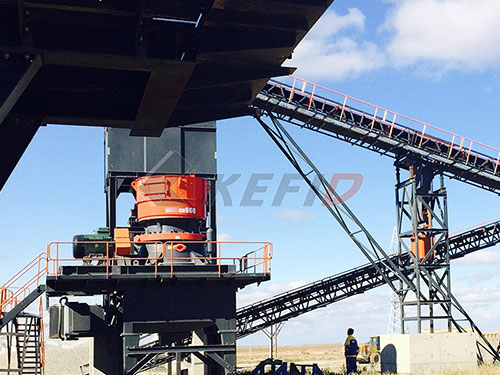

Understanding Crushed Stone Specifications: to Quality Construction
Crushed stone is a fundamental building block of modern infrastructure, forming the backbone of roads, fondations, systèmes de drainage, et du béton. Its performance and longevity are critically dependent on meeting precise specifications. Understanding these specifications – often detailed in documents titled "Specification of Crushed Stone" or similar – is essential for engineers, entrepreneurs, and suppliers to ensure project success and durability.
Pourquoi les spécifications sont importantes
Unlike naturally occurring gravel, crushed stone is produced by mechanically breaking down larger rocks. This process allows for greater control over the final product's physical properties. Specifications define the exact requirements the crushed stone must meet for a particular application. Using stone that doesn't conform can lead to:
Défaillance structurelle: Weak aggregate in concrete or insufficiently compacted base layers can collapse.
Premature Deterioration: Poor resistance to wear (par ex., on road surfaces) or weathering leads to costly early repairs.
Drainage Problems: Incorrect gradation can cause water pooling or erosion.
Construction Difficulties: Stone that is too dusty hinders compaction; oversized stones are hard to place and finish.
Parameters Defined in Specifications
A comprehensive crushed stone specification will typically address the following critical characteristics:
1. Gradation (Distribution granulométrique):
This defines the range of particle sizes present and their relative proportions.
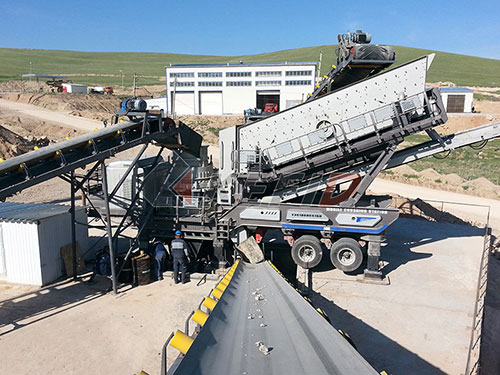
Specified by sieve analysis results (par ex., passing percentages through various mesh sizes like 1", 3/4", 3/8", No.4, No.200).
Different applications demand specific gradations: well-graded for base courses (providing interlock and stability), uniformly graded for drainage layers, or gap-graded for specialized applications like asphalt surface courses.
Common nominal sizes include 57, 67, 78, 8, etc., each with defined size ranges.
2. Propreté / Deleterious Materials:
Limits are set on harmful substances like clay lumps, friable particles (s'effrite facilement), schiste argileux, charbon, lightweight pieces (par ex., chert), et matière organique.
Amendes excessives (material passing the No.200 sieve - often clay or silt) are strictly controlled as they can weaken bonds in concrete/asphalt and impede drainage/compaction in bases.
3. Solidité / Durabilité:
Measures resistance to weathering cycles like freezing and