
Coût des concessionnaires miniers de gravier de sable


Optimiser votre sable & Opération de gravier: Un guide stratégique pour l’efficacité de la manutention des matériaux
Êtes-vous confronté à la pression incessante de la hausse des coûts d'exploitation dans votre entreprise d'extraction de sable et de gravier ou de production d'agrégats ?? Les défis sont quantifiables: les temps d'arrêt imprévus dus à des blocages d'alimentation peuvent coûter cher $15,000 par heure de production perdue. Une séparation inefficace des matériaux conduit à 515% dégradation du produit, érodant directement vos marges bénéficiaires. L'échantillonnage manuel et les taux d'alimentation incohérents créent des écarts de contrôle qualité qui entraînent des chargements rejetés et des pénalités contractuelles.. La question n'est pas de savoir si vous devez vous améliorer, mais comment mettre en œuvre une solution qui offre un retour sur investissement mesurable sans introduire de nouvelles complexités.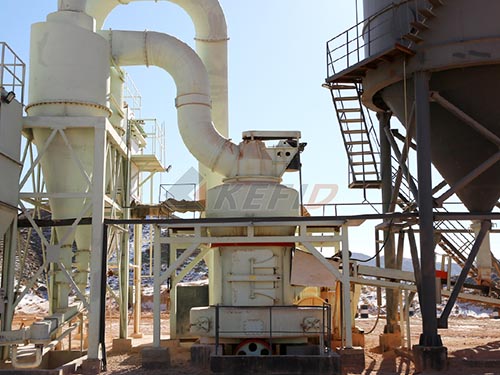
Présentation du produit: Alimentateurs à tablier haute capacité pour le traitement des granulats
Le Mangeoire à tablier robuste est un élément essentiel de l'équipement de manutention de matériaux en vrac conçu pour les applications sévères d'extraction et d'alimentation contrôlées du sable., gravier, tir de roche, et autres agrégats depuis une trémie ou un stock jusqu'aux concasseurs en aval, écrans, ou convoyeurs. Son flux de travail opérationnel est conçu pour la fiabilité:
1. Extraction: Casseroles en acier superposées robustes (aprons) former un lit continu pour retirer le matériau sous une trémie ou un tas.
2. Transport: Chaînes et rouleaux, entraîné par une boîte de vitesses à vitesse contrôlée, déplacer les plateaux du tablier le long d'un cadre robuste.
3. Décharge: Le matériel est livré à un prix cohérent, débit prédéfini sur le convoyeur de réception ou le concasseur primaire.
Champ d'application: Idéal pour l'alimentation primaire de ROM (RunofMine) matériel, y compris les agrégats abrasifs et les roches de grande taille. Limites: Non conçu comme convoyeur pour le transport longue distance; des performances optimales nécessitent une conception appropriée de la trémie pour garantir un chargement uniforme sur toute la largeur du bac.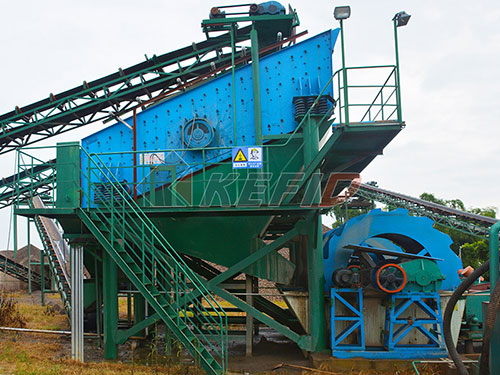
Fonctionnalités principales: Conçu pour le service d'agrégation SevereDuty
Casseroles robustes & Composants | Base technique: Pièces moulées en acier résistantes à l'abrasion | Avantage opérationnel: Résiste à l'impact des grosses roches et à l'abrasion constante du mélange sable/gravier, prolongeant la durée de vie jusqu'à 40% par rapport aux modèles standards. | Impact sur le retour sur investissement: Réduit les coûts de pièces de rechange et les temps d'arrêt associés pour les changements de casseroles.
Alimentation volumétrique contrôlée | Base technique: Entraînement à fréquence variable (VFD) couplé à un réducteur monté sur arbre | Avantage opérationnel: Fournit un contrôle précis du taux d’alimentation (tonnes/heure), permettant aux opérateurs d'adapter la capacité du concasseur et d'éviter l'étranglement ou la famine. | Impact sur le retour sur investissement: Optimise le débit du concasseur et la consommation d'énergie, améliorer l'efficacité globale de l'usine en 812%.
Conception sans fuite | Base technique: Conception de casserole superposée avec section arrière scellée | Avantage opérationnel: Minimise la perte d’amendes (sable) et déversement sous le chargeur, réduisant les coûts de nettoyage et les pertes de matériaux. | Impact sur le retour sur investissement: Préserve le produit précieux; réduit les heures de travail d'entretien du site dédiées au nettoyage.
Renforcement de la zone d'impact | Base technique: Revêtements en acier au manganèse Bolton dans la zone de chargement | Avantage opérationnel: Protège les composants structurels critiques contre les dommages par impact direct lorsque de grosses roches sont chargées. | Impact sur le retour sur investissement: Isole l'usure des doublures remplaçables, protéger la structure du cadre du tablier, plus coûteuse.
Chaîne de type tracteur & Système à rouleaux | Base technique: Chaînes d'entraînement cémentées fonctionnant sur des rouleaux scellés | Avantage opérationnel: Offre une résistance élevée à la traction avec un étirement minimal sous charge, garantissant un engagement fiable avec les pignons d'entraînement sous des charges de pointe. | Impact sur le retour sur investissement: Élimine les défaillances de glissement de chaîne; les données de terrain montrent un 25% amélioration du temps moyen entre pannes (MTBF) pour composants de transmission.
Avantages compétitifs
| Mesure de performances | Mangeoire à tablier standard de l'industrie | Notre solution d'alimentation en tablier robuste | Avantage (% Amélioration) |
| : | : | : | : |
| Durée de vie des casseroles dans le gravier abrasif | 1218 mois (Référence) | 2430 mois avec les casseroles AR360 & doublures | +67% augmenter |
| Consommation d'énergie par tonne| 0.15 kWh/tonne (Référence) | 0.12 kWh/tonne grâce à une efficacité optimisée de la transmission| 20% réduction |
| Cohérence du débit d'alimentation| +/ 10% écart commun avec les entraînements mécaniques| +/ 3% écart avec le système contrôlé par VFD| 70% amélioration de la cohérence |
| Temps d'arrêt annuel pour maintenance| 80120 heures/an (Référence) | 4060 heures/an via roulements étanches & système de doublure| 50% réduction |
Spécifications techniques
Plage de capacité: Configurable à partir de 500 à 4,500 STPH (Tonnes courtes par heure).
Exigences d'alimentation: Piloter des packages depuis 30 HP à 150 HP; moteur standard 460 V/3/60 Hz avec contrôleur VFD.
Spécifications matérielles: Casseroles fabriquées à partir d'acier AR400 d'au moins ¾" d'épaisseur; doublures AR500 en option. Les chaînes de transmission répondent aux normes ISO Classe C.
Dimensions physiques: Largeurs standards de 48” à 96”; longueurs conçues sur mesure de 10' à plus de 60'.
Plage de fonctionnement environnementale: Conçu pour des températures ambiantes de 20°F à +120°F. Norme de roulements protégés contre la poussière; systèmes de lavage en option disponibles.
Scénarios d'application
Alimentation primaire d'une carrière de granit à grande échelle
Défi: Une carrière était confrontée à des temps d'arrêt fréquents en raison de ponts dans la trémie ROM et d'une alimentation irrégulière provoquant des surcharges du concasseur à mâchoires primaire..
Solution: Installation d'un alimentateur à tablier grande largeur avec contrôle hydraulique de vitesse variable et parois de trémie inclinées.
Résultats: Pontage entièrement éliminé; le débit du concasseur s'est stabilisé à la capacité nominale de 950 TPH; la production trimestrielle a augmenté en moyenne d'environ 18 %.
Sable & Décharge de la pompe de dragage de gravier
Défi: Une opération de dragage humide nécessaire pour assécher le lisier et alimenter le gravier lavé sur un convoyeur incliné sans colmatage ni usure excessive..
Solution: Mise en place d'un distributeur à tablier avec bacs à fentes pour le drainage en premier étage après le puisard de refoulement de la pompe.
Résultats: Séparation efficace de l'eau libre obtenue avant le transfert par convoyeur; réduction des problèmes de glissement de la courroie; durée de vie prolongée de la courroie d'environ six mois par an.
Considérations commerciales
Niveaux de tarification: Les unités d'entrée de gamme commencent à environ 85 000 $ US pour les applications standard (<1,000 TPH). Modèles lourds de milieu de gamme ($150k 300 000 $ US) couvrent la plupart des opérations commerciales d’agrégats (3,000 TPH) sont cités sur les spécifications du projet.
Fonctionnalités facultatives / Mises à niveau: Entraînements hydrauliques à vitesse variable vs entraînements électriques VFD; plinthes pleine longueur; balances à bande intégrées; systèmes de lubrification automatisés; revêtements en alliage spécialisés (par ex., carbure de chrome).
Forfaits de services: Des plans de garantie prolongée couvrant les principaux composants structurels jusqu'à cinq ans sont disponibles ainsi que des contrats d'inspection annuels comprenant des rapports de mesure de l'usure..
Options de financement: Des structures de location d'équipements sont proposées par l'intermédiaire de partenaires qui permettent des paiements sur des durées de cinq à sept ans tout en préservant les budgets d'investissement..
Foire aux questions
1. Comment puis-je déterminer la largeur et la vitesse correctes du margeur à tablier pour mon opération?
La sélection est basée sur la densité du matériau, données d'analyse de la taille des morceaux requises en tonnes par heure Notre équipe d'ingénieurs fournit des calculs de dimensionnement détaillés basés sur votre rapport d'essai de matériau spécifique garantissant des performances optimales
2. Un alimentateur à tablier à entraînement mécanique existant peut-il être équipé d'un VFD?
Dans la plupart des cas oui. La mise à niveau implique le remplacement du démarreur de moteur, l'ajout du boîtier VFD, le recalibrage des commandes. Cette mise à niveau est généralement rentabilisée dans les deux ans grâce à des économies d'énergie, un contrôle amélioré du processus.
3. Quel est le calendrier d'installation typique?
Pour les unités standard, la livraison s'effectue généralement plusieurs semaines après la commande. Le pré-assemblage en usine réduit le temps d'installation sur site qui prend généralement des jours en fonction de la complexité de la préparation des fondations. Nos chefs de projet fournissent des calendriers détaillés à l'avance.
4.
5.Comment les coûts d'exploitation se comparent-ils entre une mangeoire à tablier et une mangeoire vibrante pour grizzlis?
Bien que le coût d'investissement initial puisse être plus élevé, nos alimentateurs à tablier robustes démontrent un coût total de possession inférieur dans les applications sévères, principalement en raison d'une durée de vie plus longue, d'une sensibilité moindre, de matériaux humides et collants, d'une fréquence de maintenance réduite, en particulier lors de la manipulation de grosses roches tranchantes.