
Brochure des entreprises d'équipement de concassage de ballast de carrière
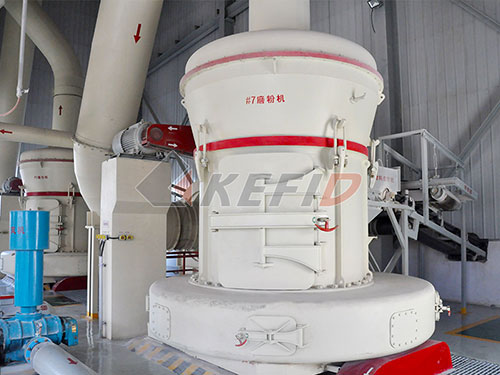

Targeted Quarry Ballast Crushing Solutions for Rail, Road, and Construction Projects
1. OUVERTURE ENTRAÎNÉE PAR POINT DE DOULEUR
Producing specificationcompliant quarry ballast consistently and profitably presents distinct operational challenges. Vivez-vous:
Coûts d'usure élevés & Temps d'arrêt imprévus: Granit abrasif, basalte, ou le calcaire dégrade rapidement les revêtements du concasseur et les pièces d'usure, leading to frequent maintenance stops and unpredictable operating expenses.
Mauvaise forme du produit & Génération d'amendes: Cubical particle shape is critical for ballast interlock and drainage. Inefficient crushing generates excessive fines (déchets) and flaky particles that fail rail or road specification tests.
Inflexible Production Scaling: Fixed crushing circuits struggle to adjust output between rail ballast (typically 2850mm), larger construction fill, and other aggregate products without significant reconfiguration or compromise on yield.
Intensité énergétique: Older crushing stages, particularly for hard rock, consume disproportionate power per tonne of inspec product, directly eroding margin.
LaborIntensive Oversize Management: Recirculating oversize material back through primary crushers creates bottlenecks, increases plant cycle time, and adds unnecessary load on equipment.
La question centrale pour les directeurs d'usine est la suivante: how can you increase the yield of highvalue, inspec quarry ballast while systematically reducing cost per tonne from wear, énergie, and downtime?
2. APERÇU DU PRODUIT: MODULAR QUARRY BALLAST CRUSHING PLANT
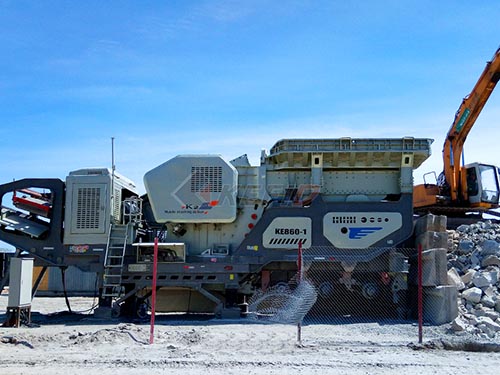
This solution is a purposeengineered, semimobile or stationary crushing circuit optimized for hard rock ballast production. It integrates primary and secondary crushing stages with precision screening to maximize the yield of cubical product meeting stringent rail (par ex., AREMA, DANS 13450) or road specifications.
Flux de travail opérationnel:
1. Réduction primaire: Scalped feed is initially reduced by a robust jaw crusher or primary impactor designed for high volume and irregular feed size.
2. Critical Secondary Crushing: The heart of the system—a highinertia cone crusher or vertical shaft impactor (TOUT LE MONDE)—is configured specifically for cubical shaping and size reduction into the target ballast range.
3. HighEfficiency Screening: Dedicated screening decks precisely separate the product into oversize (recirculé), multiple specification fractions (par ex., singlesize ballast), et des amendes (removed from circuit).
4. Recirculation & Yield Optimization: Oversize material is efficiently conveyed back to the secondary crusher in a closed circuit, ensuring all feedstock is converted to saleable product.
Champ d'application & Limites:
Portée: Ideal for dedicated ballast production from hard abrasive rock (SCU > 150 MPa). Effective for both largescale rail projects and highvolume road construction fill.
Limites: Not a universal solution for soft stone or sanddominated operations. La taille de l'alimentation doit être compatible avec l'ouverture du broyeur primaire. Requires stable power supply commensurate with plant rating.
3. CARACTÉRISTIQUES PRINCIPALES
Ajustement CSS Hydroset | Base technique: Support de vérin hydraulique de chambre de concassage | Avantage opérationnel: Réglage côté fermé (CSS) can be adjusted under load in under one minute to compensate for wear or change product sizing. | Impact sur le retour sur investissement: Eliminates production stops for mechanical shim adjustments; maintains consistent gradation, improving yield by up to 15%.
Criblage de précision multicouche | Base technique: Two or threedeck vibrating screen with wire mesh or polyurethane panels | Avantage opérationnel: Simultaneously removes undersize fines and directs oversize to recirculation conveyor with high accuracy. | Impact sur le retour sur investissement: Directly increases saleable product yield; reduces recrush load and associated wear/energy costs by 812%.
Système de surveillance des pièces d'usure | Base technique: RFIDtagged liners connected to plant control software | Avantage opérationnel: Provides realtime tracking of liner thickness across crusher chambers, enabling predictive changeouts. | Impact sur le retour sur investissement: Transitions from reactive to planned maintenance; reduces unplanned downtime by an average of 30 heures par an.
Transmission du concasseur à entraînement direct | Base technique: Crusher motor coupled directly via fluid coupling or clutch drive, éliminer les courroies trapézoïdales | Avantage opérationnel: Efficacité de transmission de puissance supérieure (>95%) and reduced maintenance points compared to traditional belt drives. | Impact sur le retour sur investissement: Réduit la consommation d’énergie d’environ 5%; reduces spare parts inventory and associated labor.
Centralized Plant Control & Télémétrie | Base technique: PLCbased system with remote monitoring capability | Avantage opérationnel: Operators can start/stop sequence, monitor key parameters (consommation d'énergie, CSS), and diagnose faults from a single location. | Impact sur le retour sur investissement: Optimizes throughput; reduces required walkaround labor; enables rapid response to alarms.
HeavyDuty Apron Feeder PreScalping | Base technique: Metallic apron feeder at hopper discharge | Avantage opérationnel: Provides even feed regulation to primary crusher while scalping out natural fines prior to crushing stages. | Impact sur le retour sur investissement: Reduces unnecessary work in primary chamber; improves liner life on primary crusher by an estimated 20%.
4. AVANTAGES CONCURRENTIELS
| Mesure de performances | Référence des normes de l'industrie | Cette solution de concassage de ballast de carrière | Avantage documenté |
| : | : | : | : |
| Indice de desquamation du produit (FI) Réduction| FI >20% common in twostage jaw/cone circuits| FI de manière cohérente 92% grâce à une conception robuste & predictive monitoring systems| +47 augmentation en points de pourcentage |
5.SPÉCIFICATIONS TECHNIQUES
Plage de capacité nominale: Configurable à partir de 150 tonnes par heure (tph) à plus 600 tph de produit de ballast fini.
Exigences d'alimentation: Puissance totale installée entre 350 kW – 800 kW selon configuration; requires stable threephase supply.
Feed Material Specifications: Accepts blasted quarry rock up to max lump size of ≤750mm edge length; optimal compressive strength range of 150 – 350 MPa.
Final Product Sizing Capability: Adjustable to produce standard railway ballast sizes (par ex., AREMA 4A/B/C), singlesize aggregates from 20mm – 63mm.
Dimensions physiques clés (Exemple d'usine de milieu de gamme): Approximate footprint of ~25m L x ~18m W x ~12m H; semimobile skid versions available.
Plage de fonctionnement environnementale: Conçu pour des températures ambiantes de 20°C à +45°C; système de suppression de poussière inclus en standard.
6. SCÉNARIOS D'APPLICATION
HighVolume Rail Ballast Production
Challenge A national rail contractor required a dedicated onsite plant to produce 250,000 tonnes of EN13450spec ballast within an aggressive twelvemonth project timeline from extremely abrasive granite.
Solution Implementation of a threestage modular plant featuring a primary jaw crusher, secondary cone crusher with shaping chamber design, and tertiary screen with recirculating conveyor.
Results The plant achieved consistent production exceeding design capacity at over €220 tph sustained output while maintaining flakiness index below €14%. The project was completed two weeks ahead of schedule due to high plant availability.
Diversified Aggregate Quarry
Challenge A longestablished quarry supplying both construction aggregates and rail networks struggled with poor yield when switching between products using an older fixed crushing circuit.
Solution Installation of a new secondary/tertiary crushing module featuring a versatile cone crusher with easily adjustable settings alongside a tripledeck screen configured for multiple product streams.
Results The quarry increased its yield of premiumpriced rail ballast by €22% while simultaneously reducing fines generation by €15%. Changeover time between different product specifications was reduced from four hours to under thirty minutes.
Considérations commerciales
Equipment is offered in three capabilitybased tiers:
1.Tier €1 Standard Duty Configuration For established quarries producing €500k tpa Upgraded wear components telemetry package extended structural warranties
3.Tier €3 Mobile/SemiMobile Configuration For multisite contractors Rapid deployment packages selfcontained power options
Optional Features Premium dust suppression systems automated lubrication systems remote diagnostic access advanced particle shape analysis cameras
Service Packages Comprehensive plans are available including scheduled maintenance inspections wear part supply agreements emergency breakdown support Onsite operator training is provided as standard
Financing Options Flexible capital expenditure solutions include outright purchase finance lease agreements operating lease structures tailored rental terms for projectbased work
FAQ
Q Quel niveau d'infrastructure électrique est requis sur le site
A A stable threephase industrial power supply is necessary Specific requirements vary by model but typically start at €400V Minimum amperage details are provided during presale site assessment
Q How does this system handle variations in feed material hardness
A The hydroset adjustment allows operators to compensate quickly Crushers are equipped with tramp release systems that protect components from uncrushables Field data shows consistent performance across typical geological variation within a single quarry face
Q What are the lead times on critical wear parts
A We maintain regional stockholding centers for common consumables like mantles concaves screen panels Standard delivery commitment is within five working days Guaranteed availability programs can be included in service contracts
Q Can existing conveyors feeders be integrated into the new system
A Yes integration audits are part of our predesign process Our control system can typically interface with existing compatible equipment minimizing unnecessary replacement costs
Q What training support do you provide
A We deliver comprehensive handson training covering operation daily checks basic troubleshooting safety procedures Training occurs during commissioning Documentation includes detailed manuals specific procedures