
Service de conception d'équipement de concassage de ballast de carrière de marque privée
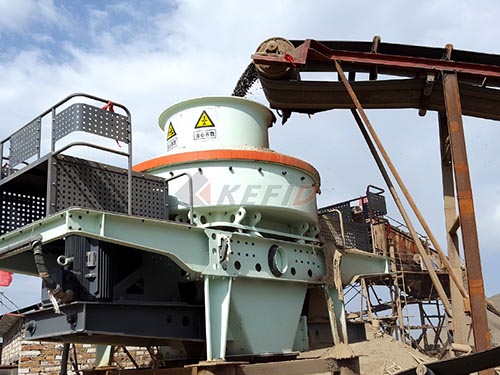

Beyond Off-the-Shelf: Unlocking Profitability & Performance with Private Label Quarry Ballast Crushing Equipment Design Services
The global demand for high-quality railway ballast remains robust, driven by infrastructure expansion, maintenance cycles, and urbanization projects worldwide. For quarries strategically positioned to supply this critical material, the crushing circuit is not merely a processing stage; it’s the beating heart of profitability and product acceptance. Standard crushing equipment often falls short when tasked with producing ballast meeting stringent geometric and mechanical specifications consistently and efficiently. This is where specialized Private Label Quarry Ballast Crushing Equipment Design Services emerge as a transformative solution – moving beyond generic machinery towards bespoke systems engineered explicitly for optimal ballast production.
Comprendre l'impératif du ballast
Railway ballast isn't just crushed rock; it's a highly engineered structural component performing vital functions:
1. Répartition de la charge: Transmitting immense train axle loads evenly to the subgrade.
2. Stabilité de la piste: Providing lateral and longitudinal resistance to maintain track alignment.
3. Drainage: Facilitating rapid water runoff to prevent track weakening.
4. Amortissement des vibrations: Absorbing dynamic forces from moving trains.
5. Vegetation Suppression: Creating an inhospitable environment for plant growth.
Par conséquent, specifications are exacting:
Distribution granulométrique: Tightly controlled gradation bands (par ex., 25mm - 50mm or 30mm - 60mm are common) ensuring interlock without excessive voids or fines.
Shape Properties: High percentage of cubical particles ("cubique") is paramount for stability; excessive flakiness or elongation leads to particle breakdown under load ("degradation") and reduced interlock.
Force & Durabilité: High resistance to fragmentation under impact (Abrasion à Los Angeles - LAA) and weathering (Micro-Deval). Low absorption values are often required.
Propreté: Minimal fines content ("amendes" typically defined as material passing a 0.063mm sieve).
Contaminant-Free: Absence of clay lumps, matière organique, or deleterious materials.
Producing aggregate that consistently meets these criteria requires far more than brute force crushing; it demands precise process engineering focused on particle shaping and minimizing unwanted fines generation.
The Pitfalls of Generic Crushing Solutions
Off-the-shelf crushing plants designed for general aggregate production frequently struggle with the unique demands of premium ballast: