
Prime 500 Usine de traitement d'usine de lavage d'exploitation minière d'or Tph


Prime 500 Usine de traitement d'usine de lavage d'exploitation minière d'or Tph
Your Gold Recovery Is Leaking Profit—Here’s Where
You’re processing highvolume alluvial or hardrock gold ore, but your current setup is bleeding value. Les défis opérationnels courants comprennent:
- Recovery rates below 85% due to inadequate scrubbing and classification, costing you $50–$150 per ounce in lost fines
- Temps d'arrêt excessif from clogged screens and slurry handling bottlenecks, reducing uptime to 70–75% during peak season
- High water consumption dépassement 1,200 m³ per day, driving operational costs up by 18–22% versus modern closedloop systems
- Inconsistent feed handling when clay content exceeds 15%, causing wash plant blockages and manual intervention every 2–3 hours
- Pression réglementaire on tailings management and water discharge, with noncompliance fines averaging $25,000 par incident
- Châssis mobile (wheeled or tracked): +$180,000
- Additional jig concentrator (2cellule): +$95,000
- Système de dosage automatisé de réactifs: +$45,000
- Système de suppression de poussière (fogging): +$28,000
- 12month extended warranty: +$65,000
- Basique: Mise en service (5 jours sur place), formation des opérateurs (3 jours), 1year remote support: $45,000
- Standard: Basique + inspections trimestrielles, 2year parts discount (15%), 24/7 ligne d'assistance: $85,000/année
- Complet: Standard + technicien sur place (6 mois), garantie de performance (92% récupération), 3year parts discount (25%): $150,000/année
- Location-propre: 36durée du mois, 8.5% AVR, 10% valeur résiduelle
- Prêt d'équipement: 60durée du mois, 7.2% AVR, 20% acompte
- Financement basé sur la performance: Monthly payments tied to gold production (par ex., $0.50 per gram recovered above 85% ligne de base)
Votre installation de lavage actuelle peut-elle maintenir 500 tph throughput while achieving >92% gold recovery in highclay conditions? Sinon, le Prime 500 Usine de traitement d'usine de lavage d'exploitation minière d'or Tph is engineered to close that gap.
Présentation du produit: HighCapacity Alluvial & HardRock Gold Processing
Le Prime 500 Usine de traitement d'usine de lavage d'exploitation minière d'or Tph est un modulaire, skidmounted system designed for continuous 500 metric tons per hour throughput of goldbearing material, including alluvial deposits, weathered hardrock ore, and saprolite. It integrates scrubbing, dépistage, classification, and gravity concentration into a single workflow.
Flux de travail opérationnel (5 Étapes clés):
1. Trémie d'alimentation & Mangeoire à grizzlis – Accepts ROM material up to 600 mm; vibrating grizzly removes oversize (>150 mm) for secondary crushing or rejection
2. Épurateur rotatif (Drum Trommel) – Jets d’eau haute pression (8–12 barres) and internal lifters break down clay agglomerates; retention time adjustable 2–4 minutes
3. Crible vibrant DoubleDeck – Primary classification at 6 mm et 20 mm; oversize routed to cone crusher or stockpile; undersize fed to concentrator
4. Circuit de concentration gravitationnelle – Multistage jigs (2–4 units) ou concentrateurs centrifuges (par ex., Knelson ou Faucon) recover free gold; tailings dewatered via hydrocyclone
5. Récupération d'eau & Gestion du lisier – Thickener and filter press recycle >90% d'eau de procédé; drystack tailings reduce environmental footprint
Champ d'application: Alluvial gold mining (river terraces, floodplains), weathered hardrock deposits, et retraitement des résidus. Limites: Not suitable for primary hardrock ores requiring full crushing/grinding circuits; maximum feed moisture content 18% for optimal scrubbing.
Fonctionnalités principales
Épurateur rotatif à couple élevé | Base technique: Counterrotating drum with variablespeed drive (0–12 tr/min) and replaceable polyurethane lifters | Avantage opérationnel: Breaks down clay balls and cemented material within 3 minutes, reducing screen blinding by 40% | Impact sur le retour sur investissement: Eliminates 2–3 manual cleaning stops per shift, saving 6–8 hours of downtime weekly ($4,500–$6,000/week in lost production)
DualFrequency Vibrating Screen | Base technique: Two independent vibrator motors (1,200/2,400 RPM) with adjustable amplitude (4–8mm) | Avantage opérationnel: Handles highmoisture feed without pegging; screen life extended to 4,000+ heures | Impact sur le retour sur investissement: Réduit les coûts de remplacement d’écran de 35% and improves classification efficiency to 95%+
Système de gestion de l'eau en boucle fermée | Base technique: Épaississant lamelle (20 m de diamètre) with polymer flocculant dosing and filter press (1.5 m³ cake capacity) | Avantage opérationnel: Recycles 92–95% of process water; tailings moisture <18% for dry stacking | Impact sur le retour sur investissement: Lowers water procurement costs by $80,000–$120,000 annually (basé sur 500 tph, 20hour operation)
Conception de patins modulaires | Base technique: Modules conteneurisés ISO (6 unités, chaque <40 tonnes) avec tuyauterie à connexion rapide et faisceaux électriques | Avantage opérationnel: Site setup in 5–7 days versus 3–4 weeks for fixed plants; relocation feasible within 2 semaines | Impact sur le retour sur investissement: Réduit les coûts de mobilisation de 60% and enables rapid deployment to multiple sites
Contrôle de processus basé sur un API | Base technique: AllenBradley CompactLogix with HMI touchscreen; sensors for feed rate, pression de l'eau, densité du lisier, et charge du moteur | Avantage opérationnel: Realtime adjustments to scrubber speed, débit d'eau, and jig stroke; alarm notifications for blockages or overload | Impact sur le retour sur investissement: Improves recovery consistency by 8–12% and reduces operator intervention by 50%
HeavyDuty Jig Concentrators | Base technique: Duplex jigs (2 x 4cell) with adjustable stroke (10–25 mm) et fréquence (60–120 strokes/min) | Avantage opérationnel: Récupère l'or gratuit jusqu'à 75 microns; concentrate grade 200–500 g/t Au | Impact sur le retour sur investissement: Increases overall recovery by 5–8% versus singlestage jigs, adding $200,000–$400,000 in annual gold value (at $2,000/oz)
Doublures résistantes à l'abrasion | Base technique: 12 mm thick AR400 steel in scrubber and screen; 20 mm ceramic tiles in slurry transfer points | Avantage opérationnel: Service life of 8,000–10,000 hours before major relining; reduced maintenance frequency | Impact sur le retour sur investissement: Lowers annual maintenance costs by $35,000–$50,000 versus standard mild steel
Avantages compétitifs
| Mesure de performances | Norme de l'industrie (500 Usines de tph) | Prime 500 Usine de lavage d'extraction d'or Tph | Avantage (% Amélioration) |
|||||
| Taux de récupération de l'or (alluvial, 15% argile) | 70–75% | 85–90% | +15–20% |
| Consommation d'eau (m³ par tonne traitée) | 2.5–3.0 | 1.2–1.5 | 50–52% |
| Fréquence d'aveuglement de l'écran (heures entre les nettoyages) | 2–4 | 12–16 | +300–400% |
| Temps d'installation (jours) | 21–28 | 5–7 | 75–80% |
| Tailings Moisture Content (%) | 25–30 | 15–18 | 40–50% |
| Coût d'entretien annuel (% of capital) | 8–12% | 5–7% | 37–42% |
Spécifications techniques
| Paramètre | Spécification |
|||
| Capacité | 500 tph (nominal), 550 tph (culminer) |
| Taille de l'alimentation | 0–600mm (ROM); oversize rejected via grizzly |
| Dimensions de l'épurateur | 3.0 m diameter x 12.0 m de longueur; 75 kW entraînement |
| Zone d'écran | 2 x 6.0 m² (à deux étages); 15 kW per vibrator |
| Capacité du gabarit | 4 x 50 tph per cell; total 200 tph concentrate feed |
| Besoin en eau | 600–750 m³/h (frais); 50–60 m³/h (se maquiller) |
| Consommation d'énergie | 450–520 kW (pleine charge); 380–420 kW (moyenne) |
| Poids opérationnel | 280 tonnes (all modules) |
| Dimensions (L x l x H) | 45 m x 18 m x 12 m (assemblé) |
| Température de fonctionnement | 10°C à 50°C; optional heating for subzero |
| Matériau de construction | Acier AR400 (scrubber, écran); 316L acier inoxydable (gabarits, tuyauterie) |
Scénarios d'application
Mine d’or alluviale – Afrique de l’Ouest (Teneur élevée en argile)
Défi: 35% clay content in feed caused scrubber bypass and screen pegging every 90 minutes; recovery averaged 68%. Approvisionnement en eau limité à 800 m³/jour.
Solution: Installed Premium 500 Tph plant with extended scrubber retention time (4 minutes) et écrans bi-fréquence. Closedloop water system reduced makeup demand to 60 m³/heure.
Résultats: La récupération a augmenté à 87% (19% amélioration). Intervalles de nettoyage des écrans étendus à 14 heures. La consommation d'eau est passée de 2,800 m³/day to 720 m³/jour. Annual gold production rose by 22%, equivalent to $1.8 million additional revenue at $2,000/oz.
Tailings Reprocessing – South America
Défi: Historic tailings with 0.8 g/t Au and 12% argile; existing plant achieved 72% recovery but required 3.5 m³ water per ton. Environmental permit limited discharge to 500 m³/jour.
Solution: Deployed Premium 500 tph plant with jig concentrators and thickener/filter press. Vitesse d'alimentation maintenue à 480 tph despite variable density.
Résultats: Recovery reached 91% (19% amélioration). Water recycling at 94% allowed 24hour operation within permit limits. Tailings moisture at 16% enabled drystack disposal, eliminating pond construction costs of $450,000.
Weathered HardRock – Southeast Asia
Défi: Saprolite ore with 8% l'humidité et 5% argile; primary crusher produced 0–200 mm feed. Existing wash plant had 78% recovery and 22% downtime due to conveyor belt wear.
Solution: Integrated Premium 500 tph plant with AR400lined scrubber and ceramiclined transfer points. PLC control optimized scrubber speed based on feed moisture.
Résultats: La récupération s'est améliorée à 94% (16% amélioration). Temps d'arrêt réduit à 8% (14% réduction). Belt replacement intervals extended from 6 mois à 18 mois. Économies annuelles de maintenance de $65,000.
Considérations commerciales
Niveaux de tarification des équipements (ExWorks, USD):
| Configuration | Gamme de prix | Délai de mise en œuvre |
||||
| Standard (base modules, commandes manuelles) | $1,200,000 – $1,500,000 | 12–14 semaines |
| Amélioré (Contrôle par API, closedloop water, concentrateurs de gabarit) | $1,800,000 – $2,200,000 | 16–20 semaines |
| Prime (all features + revêtements en céramique, kit de pièces de rechange, surveillance à distance) | $2,400,000 – $2,800,000 | 20–24 semaines |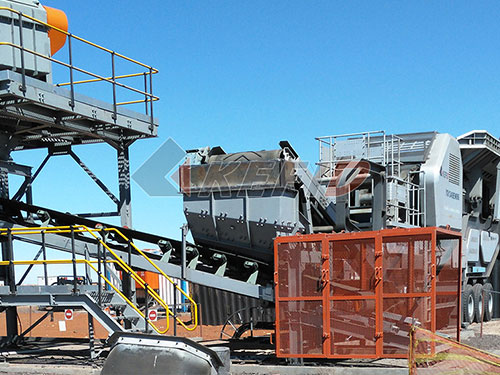
Fonctionnalités facultatives:
Forfaits de services:
Options de financement:
FAQ
Q: Can this plant handle feed with clay content above 30%?
UN: Oui. The rotary scrubber with 4minute retention time and highpressure water jets (12 bar) effectively breaks down clay agglomerates up to 40% teneur en argile. Field data from West Africa shows 87% récupération à 35% argile. Pour l'argile ci-dessus 40%, we recommend adding a prewetting conveyor or secondary scrubber.
Q: What is the expected lifespan of the scrubber and screen linings?
UN: AR400 steel linings in the scrubber typically last 8,000–10,000 hours under normal alluvial conditions (2–5% quartz content). Polyurethane screen panels last 3,000–4,000 hours. Ceramiclined transfer points exceed 15,000 heures. Replacement costs average $12,000–$18,000 per year.
Q: Comment la plante se comporte-t-elle dans les climats froids (en dessous de 10°C)?
UN: Standard operating range is 10°C to 50°C. For subzero conditions, we offer an optional heating package including trace heating on water lines, insulated scrubber drum, et ponts grillagés chauffants. This adds $85,000 to the base price and extends operating range to 25°C.
Q: Quelle est la superficie minimale du site requise pour l'installation?
UN: The assembled plant footprint is 45 m x 18 m. With access roads, stockpile areas, and tailings storage, we recommend a minimum site area of 100 m x 80 m (8,000 m²). The modular design allows for compact layouts on constrained sites.
Q: Can this plant be integrated with an existing crushing circuit?
UN: Oui. The feed hopper accepts material from conveyors or dump trucks. We provide interface kits (transfer conveyor, travail de goulotte) for connection to cone crushers, concasseurs à percussion, or secondary screens. Integration typically adds 2–3 days to commissioning.
Q: What is the typical payback period for this investment?
UN: Basé sur un 500 tph operation processing 0.5 g/t ore at $2,000/oz gold, avec 92% recovery and 20hour daily operation, the plant produces approximately 14.8 ounces per day. At $2,000/oz, daily revenue is $29,600. After operating costs ($8,500/day including power, eau, travail, et entretien), net daily profit is $21,100. Payback period for a $2.2 million plant is approximately 104 operating days (5–6 mois).
Q: What aftersales support is available for remote locations?
UN: We maintain a global network of 12 service centers with 48hour response time to most mining regions. Remote diagnostics via satellite link are included with the Enhanced and Premium configurations. Spare parts inventory is held at regional hubs in West Africa, Amérique du Sud, et Asie du Sud-Est, avec 95% disponibilité des composants critiques.