
ODM Crushing And Screening Equipment Wholesaler


ODM Crushing and Screening Equipment Wholesaler
Operational Challenges Your Crushing Circuit Faces Every Shift
Crushing and screening operations run on tight margins. When your primary jaw crusher goes down for an unplanned bearing replacement, you're not just losing the $800 part — you're losing 6 à 10 hours of production at 250 TPH, which translates to $12,000–$25,000 in lost output depending on your aggregate grade and regional pricing.
Plant managers and engineering contractors consistently report these pain points:
- Throughput bottlenecks at the secondary stage. A jaw crusher rated at 300 TPH feeding a cone that only processes 220 TPH creates a 27% capacity loss across the entire circuit. Your fuel, travail, and maintenance costs stay fixed while revenue drops.
- Screen blinding and pegging in wet or sticky material. Clayheavy feed or highmoisture aggregate causes mesh blockage that forces manual cleaning every 2–3 hours, cutting effective operating time by 15–20%.
- Génération d’amendes excessives. Improper crusher chamber configuration or wrong eccentric throw produces 8–12% more fines than spec, reducing your sellable product yield and increasing pond/stockpile management costs.
- Unplanned downtime from wear parts. Manganese liners that fail 200 hours early cost you $4,500 in parts plus 16 heures de production perdues par incident.
- Classement incohérent des produits. Outofspec output leads to rejected loads, reprocessing, and damaged relationships with asphalt and concrete customers who require tight ASTM C33 compliance.
- Concassage primaire: Concasseurs à mâchoires (PE/PEX series) or gyratory units for runofmine feed
- Concassage secondaire/tertiaire: Concasseurs à cône (hydraulic or spring type) and impact crushers (HSI for recycling, VSI for manufactured sand)
- Dépistage: Inclined or horizontal vibrating screens, 2–4 deck configurations
- Feed and transfer: Apron feeders, mangeoires vibrantes pour grizzlis, convoyeurs à bande
- Control and automation: PLCbased plant control with load monitoring and interlocking
- Remote monitoring and telematics package
- Systèmes de lubrification automatique
- Dust suppression and enclosure packages
- Wearliner upgrade (Mn22Cr2 or ceramicinsert)
- Extended conveyor and stockpile configurations
- Mise en service et formation des opérateurs (5–10 days onsite)
- Annual maintenance contract with guaranteed response time
- Spare parts kits (recommended 12month inventory)
- Wear parts supply agreement with volume pricing
- Location d'équipement (36–60 mois)
- Letter of credit and documentary collection for export orders
- Performance bond and retention terms for EPC contractors
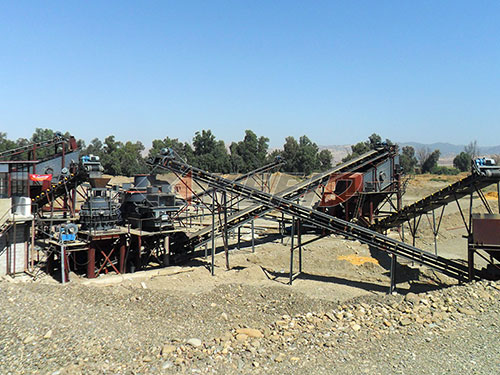
The question isn't whether your circuit can run — it's whether it can run at rated capacity, at spec, with predictable maintenance intervals. That's the engineering problem an experienced ODM crushing and screening equipment wholesaler is built to solve.
Présentation du produit: What ODM Crushing and Screening Equipment Covers
ODM (Fabricant de conception originale) crushing and screening equipment refers to complete processing plants and individual units designed, conçu, and manufactured to your specifications — not rebranded thirdparty machines. A full ODM solution typically includes: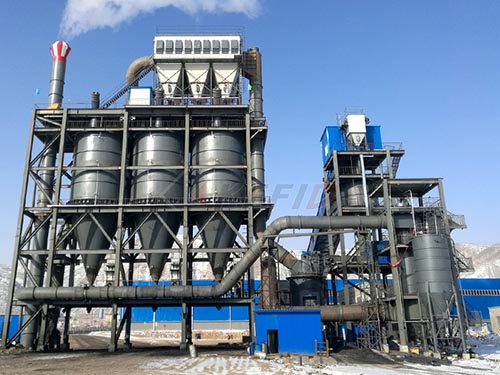
Operational workflow (typical 4stage circuit):
1. Préparation des aliments — ROM material loaded into hopper, vibrating grizzly removes fines ahead of primary crusher
2. Réduction primaire — Jaw or gyratory reduces 600–1,200 mm feed to 100–300 mm
3. Secondary/tertiary reduction — Cone or impact crusher reduces to 0–40 mm or finer depending on product spec
4. Dépistage et classification — Multideck screens separate into 0–5, 5–10, 10–20, 20–40 mm fractions
5. Stockpiling and transfer — Conveyors deliver sized product to stockpiles or loadout
Champ d'application: Production globale (construction, asphalte, béton), exploitation minière (minerai de fer, cuivre, or, bauxite), construction demolition waste recycling, manufactured sand production, and cement raw material preparation.
Limites: ODM configurations are optimized for specific feed characteristics (dureté, abrasivité, humidité, teneur en argile). A plant designed for limestone at 150 MPa compressive strength will not perform to rated capacity on granite at 250 MPa without chamber and liner changes. Moisture above 8–10% may require screen media adjustments or predrying.
Fonctionnalités principales
Hydraulic Chamber Adjustment | Base technique: Dual hydraulic cylinders position the mantle via wedge or tramprelease mechanism | Avantage opérationnel: Operators change CSS from the control panel in under 3 minutes sans entrer dans le broyeur | Impact sur le retour sur investissement: Reduces liner change downtime by 4–6 hours per event, saving $8,000–$14,000 annually in labor and lost production
HighThrow Eccentric Design | Base technique: Increased eccentric throw (typically 40–55 mm on cone crushers) creates greater compression ratio per pass | Avantage opérationnel: Higher reduction ratio means fewer recirculating loads and lower circulating tonnage | Impact sur le retour sur investissement: Field data shows 12–18% reduction in recirculating load, cutting connected power draw by 8–10%
Système de médias d'écran modulaire | Base technique: Polyurethane or rubber panels with quickrelease pin retention, interchangeable with wire mesh | Avantage opérationnel: Media changes completed in 30–45 minutes instead of 2–3 hours | Impact sur le retour sur investissement: Reduces screen maintenance labor cost by approximately 60% and improves plant availability
Automated Load Monitoring and Feed Control | Base technique: Power draw and pressure transducers on crusher drive provide realtime feedback to PLC | Avantage opérationnel: Prevents chamber packing and overload stalls that damage eccentric shafts | Impact sur le retour sur investissement: Eliminates 2–3 stall events per month, each costing $3,000–$6,000 in cleanup and restart labor
WearLiner Metallurgy Options | Base technique: Mn18Cr2, Mn22Cr2, or martensitic steel liners matched to feed abrasiveness index | Avantage opérationnel: Liner life extended from 600–800 hours to 1,200–1,600 hours in abrasive applications | Impact sur le retour sur investissement: Reduces annual liner spend by 35–45% and halves liner change labor events
Dust Suppression and Enclosure Integration | Base technique: Water spray nozzles at transfer points plus rubber dust curtains on screen decks | Avantage opérationnel: Meets PM10 emission limits without full plant enclosure | Impact sur le retour sur investissement: Avoids $50,000–$150,000 in regulatory retrofit costs and potential fines
Containerized/Modular Structural Design | Base technique: Bolttogether frame sections sized for 40ft HC container shipment | Avantage opérationnel: Site erection in 5–7 days versus 3–4 weeks for stickbuilt plants | Impact sur le retour sur investissement: Reduces installation labor cost by 40–50% and accelerates timetoproduction
Avantages compétitifs
| Mesure de performances | Norme de l'industrie | ODM Crushing and Screening Equipment Solution | Avantage (% Amélioration) |
|||||
| Disponibilité du concasseur (annuel) | 82–86% | 91–94% | +8–10% |
| Screen media change time | 2–3 hours | 30–45 minutes | 60–70% plus rapide |
| Charge de recirculation (cone circuit) | 25–35% | 18–24% | 20–28% reduction |
| Génération d'amendes (below spec) | 8–12% excess | 4–7% excess | 40–50% de réduction |
| Durée de vie du revêtement (alimentation abrasive) | 600–800 heures | 1,200–1,600 hours | 50–100% longer |
| Plant erection time | 3–4 semaines | 5–7 jours | 65–75% plus rapide |
| Consommation d'énergie par tonne | 1.8–2.2 kWh/t | 1.5–1.8 kWh/t | 15–20% de moins |
Data based on field comparisons across aggregate plants in Southeast Asia and the Middle East, 2022–2024.
Spécifications techniques
| Paramètre | Gamme de spécifications |
|||
| Capacité | 50–800 TPH (single line); 1,200+ TPH (multiline configuration) |
| Taille maximale du flux | 1,200 mm (mâchoire primaire); 300 mm (cône); 80 mm (TOUT LE MONDE) |
| Gamme de tailles de produits | 0–5 mm to 0–40 mm (CSS réglable) |
| Puissance installée | 75–1,200 kW depending on circuit configuration |
| Alimentation | 380V/50 Hz, 440V/60 Hz, or 6.6kV/11kV for large drives |
| Material compressive strength | Jusqu'à 320 MPa (granit, basalte, minerai de fer) |
| Feed moisture tolerance | Jusqu'à 8% (standard); 12% with modified screen media |
| Plage de température de fonctionnement | 20°C à +50°C ambiant |
| Niveau de bruit | 85–95dB(UN) à 1 m from crusher (boîtier en option) |
| Structural steel grade | Q345B / S355JR equivalent |
| Largeur de la bande transporteuse | 500–1,400 mm |
| Screen deck dimensions | 1.2 × 3.0 m à 2.4 × 6.0 m |
| Système de contrôle | Automate avec IHM, Prêt pour SCADA, capable de surveillance à distance |
Scénarios d'application
Aggregate Production — Hard Rock Quarry | Défi: UN 300 TPH granite quarry in Southeast Asia was producing 14% excess fines and experiencing cone crusher liner failures every 650 heures. Product gradation failed ASTM C33 on 3 of every 10 loads. | Solution: ODM supplied a 3stage circuit with jaw primary (CJ411 equivalent), hydraulic cone secondary with mediumcoarse chamber, and 3deck inclined screen. Liner metallurgy upgraded to Mn22Cr2 with optimized chamber profile. | Résultats: La génération des amendes est tombée à 6.2%. Durée de vie du revêtement prolongée à 1,380 heures. Product compliance reached 97% firstpass acceptance. Annual operating cost reduced by $187,000.
Construction Demolition Recycling — Urban Site | Défi: Un entrepreneur traitant 150 TPH of mixed C&D waste faced frequent crusher blockages from rebar and unbreakable material. Temps d'arrêt moyenné 18 heures par mois. | Solution: ODM impact crusher (HSI) with hydraulic opening and automatic tramp release, plus overband magnet and vibrating grizzly with 80 mm spacing for prescreening. | Résultats: Blockagerelated downtime reduced to 4 heures par mois. La récupération des métaux a augmenté de 22%. Plant availability improved from 78% à 91%.
Manufactured Sand — Limestone Processing | Défi: A concrete producer needed 80 TPH of manufactured sand meeting FM 2.6–2.9 with less than 10% passage 75 microns. Existing VSI produced excessive fines and inconsistent gradation. | Solution: ODM VSI with rockonrock configuration, cascade feed control, and airclassification system integrated with 2deck finishing screen. | Résultats: FM consistency achieved at 2.7 ± 0.1. Material passing 75 microns reduced from 18% à 8.5%. Résistance à la compression du béton améliorée par 6% due to better gradation.
Considérations commerciales
Niveaux de tarification des équipements (indicatif, FOB origin):
| Étage | Configuration | Plage de capacité | Gamme de prix (USD) |
|||||
| Entrée | Mâchoire + cône + 2écran de pont | 50–150 TPH | $180,000–350 000$ |
| Milieu de gamme | Mâchoire + cône + 3écran de pont + convoyeurs | 150–400 TPH | $350,000–750 000$ |
| Haute capacité | Mâchoire + 2 cônes + 3deck screens + automation | 400–800 TPH | $750,000–1 800 000 $ |
| Coutume | Multiline, highautomation, special metallurgy | 800+ TPH | Quoted per project |
Fonctionnalités facultatives:
Forfaits de services:
Options de financement:
FAQ
1. Can ODM crushing and screening equipment handle both limestone and granite in the same plant?
Oui, with correct chamber and liner selection. Calcaire (100–150 MPa) et du granit (200–280 MPa) require different crushing chamber profiles and eccentric throws. Specify your feed blend, and the ODM configuration will include changeable components to accommodate both. Expect a 10–15% capacity reduction when switching from limestone to granite without mechanical changes.
2. What is the typical lead time for an ODM crushing and screening plant?
Standard configurations ship in 45–60 days from design approval. Custom circuits with specialized metallurgy or automation require 75–90 days. Modular designs reduce onsite erection to 5–7 days, but shipping time depends on destination port and customs clearance.
3. How does the ODM solution address spare parts availability?
ODM wholesalers maintain regional spare parts warehouses for highwear items (doublures, médias d'écran, roulements, ceintures). Critical components are stocked for 48–72 hour delivery. Noncritical parts ship from the factory within 7–10 days. A recommended 12month spare parts inventory is quoted with every plant.
4. What automation level is included as standard?
Standard ODM plants include PLCbased control with crusher load monitoring, conveyor interlocking, and emergency stop circuits. Intégration SCADA, surveillance à distance, and predictive maintenance sensors are optional. The control system supports Modbus and Ethernet/IP protocols for integration with existing plant networks.
5. Can the plant be configured for container shipping to remote sites?
Oui. Modular frame sections are designed to fit standard 40ft HC containers. UN 300 TPH plant typically requires 6–8 containers for the complete circuit. Onsite assembly uses bolted connections — no field welding required for structural components.
6. What is the warranty and postwarranty support structure?
La garantie standard est 12 mois à compter de la mise en service ou 2,000 heures d'ouverture, selon la première éventualité. Wear parts are warranted against manufacturing defects for 6 mois. Postwarranty support includes annual maintenance contracts, diagnostic à distance, and onsite service visits at agreed rates.
7. How do I determine the correct plant capacity for my operation?
La capacité dépend de la taille de l'aliment, dureté du matériau, teneur en humidité, et la gradation de produit requise. Provide a feed sample for laboratory crushability testing (Bond Work Index and abrasion index). ODM engineers will size the circuit based on your specific material characteristics and production targets, with a guaranteed throughput range.