
Personnalisation des exportateurs de mines de calcaire


1. OUVERTURE ENTRAÎNÉE PAR POINT DE DOULEUR
La gestion de l'exportation du calcaire de haute qualité est une opération de précision où la cohérence, pureté, et le débit détermine directement la rentabilité. Vos processus actuels provoquent-ils des goulots d'étranglement coûteux? Les défis courants incluent:
Taille d'alimentation incohérente: La distribution incontrôlée de la taille des particules lors du concassage primaire entraîne un colmatage en aval dans les concasseurs et cribles secondaires., augmentant les temps d'arrêt imprévus d'environ 1520%.
Pénétration de contaminants: Sol, argile, et les impuretés de silice non éliminées au stade primaire compromettent la pureté chimique (Teneur en CaCO3) de votre produit final, risquer le rejet des expéditions et l’érosion des prix premium.
Faible efficacité de concassage primaire: Les concasseurs à mâchoires ou à percussion obsolètes luttent contre la nature abrasive du calcaire, ce qui entraîne des coûts excessifs de remplacement des pièces d'usure et un rendement sous-optimal des fractions d'exportation souhaitées.
Coûts opérationnels élevés: Cycles d'entretien fréquents, consommation d'énergie élevée par tonne traitée, et le tri manuel pour le contrôle de la contamination gonflent votre coût par tonne exportée.
Votre étape de transformation primaire est-elle équipée pour fournir un, une alimentation propre qui maximise la capacité et la longévité de l’ensemble de votre lavage en aval, tri, et circuit de chargement?
2. APERÇU DU PRODUIT
Le Grizzly Feeder est un robuste, Solution d'alimentation primaire et de scalpage de conception robuste, conçue pour la phase initiale du traitement du calcaire. Il constitue le premier point de contact critique pour les matériaux de carrière., assurer un fonctionnement stable en aval.
Flux de travail opérationnel:
1. Les camions de carrière déversent des matières premières, calcaire non calibré directement sur le pont robuste du chargeur.
2. Alors que le pont vibre avec un mouvement linéaire, matériaux nobles (sol trop petit, argile, et des petits rochers) traverser les grizzlys (pont principal), contourner le concasseur primaire pour réduire l'usure.
3. Matière surdimensionnée (la roche calcaire cible) est transporté le long du pont et déchargé dans la trémie du concasseur primaire à un débit contrôlé.
4. Le débit d'alimentation contrôlé évite la surcharge du concasseur et le déversement des tas.
Champ d'application: Idéal pour les opérations de carrière à fort tonnage alimentant des concasseurs à mâchoires primaires ou giratoires. Efficace pour éliminer les fines naturelles et les contaminants mous avant le broyage.
Limites: Pas un appareil de broyage; le dimensionnement final est effectué par l'équipement en aval. Les performances sur argile extrêmement collante peuvent nécessiter des solutions supplémentaires comme un tamis à rouleaux ou un grizzly de lavage.
3. CARACTÉRISTIQUES PRINCIPALES
Pont Grizzly robuste | Base technique: Construction en acier au manganèse moulé ou en barre d'acier AR400 | Avantage opérationnel: Résiste à l'impact direct des grosses roches de carrière (jusqu'à 1500 mm) avec une déformation ou une rupture par fatigue minimale | Impact sur le retour sur investissement: Réduit la fréquence de remplacement des terrasses jusqu'à 40% par rapport aux tabliers en acier standard.
Vitesse d'alimentation contrôlée | Base technique: Variateur de fréquence (VFD) sur moteurs vibrateurs à double arbre excentrique | Avantage opérationnel: Les opérateurs peuvent adapter avec précision le débit de l'alimentateur à la capacité du concasseur primaire en temps réel, éliminer l’étouffement ou les conditions d’alimentation sous-alimentée | Impact sur le retour sur investissement: Optimise la consommation de puissance et le profil d'usure du concasseur, améliorer le rendement global de l'usine en 812%.
Scalping efficace | Base technique: Espacement des barres grizzly réglable (généralement 50 150 mm) réglé sur la taille cible de votre pré-calp | Avantage opérationnel: Élimine une partie importante des fines et des contaminants avant qu'ils n'entrent et n'abrasent la chambre du concasseur primaire. | Impact sur le retour sur investissement: Réduit les coûts d’usure du revêtement du concasseur d’environ 2530% et améliore la pureté du produit final.
Système d'entraînement à faible entretien | Base technique: Roulements à rouleaux à étanchéité par labyrinthe avec système de purge de graisse sur un ensemble vibrateur renforcé | Avantage opérationnel: Les roulements sont protégés de la pénétration de poussière; la purge de la graisse expulse le lubrifiant contaminant sans démontage | Impact sur le retour sur investissement: Prolonge la durée de vie des roulements au-delà 20,000 heures dans des conditions normales, réduire les événements de maintenance planifiés.
Sections de casseroles modulaires | Base technique: Revêtements de pont Bolton et sections de grizzly remplaçables | Avantage opérationnel: Les sections usées ou endommagées peuvent être remplacées individuellement sans retirer toute la structure du plateau d'alimentation. | Impact sur le retour sur investissement: Réduit de plus de temps les temps d'arrêt pour le remplacement du revêtement 60% et réduit le coût des stocks de pièces de rechange.
Système de montage résilient | Base technique: Ressorts hélicoïdaux en acier ou supports de cisaillement en caoutchouc adaptés à la masse du chargeur & accident vasculaire cérébral | Avantage opérationnel: Isole plus 90% des forces dynamiques de la structure porteuse, empêchant la transmission des vibrations aux trémies au sol ou aux structures en acier de support | Impact sur le retour sur investissement: Élimine les réparations de fissures structurelles et réduit les coûts de fondation.
4. AVANTAGES CONCURRENTIELS
| Mesure de performances | Solution standard de l'industrie | Notre solution d'alimentation pour grizzlis robuste | Avantage (% Amélioration) |
| : | : | : | : |
| Espérance de vie du pont| Barres d'acier standard T1 (1218 mois) | Manganèse coulé / Barres AR400 (2436 mois) | +100% durée de vie |
| Efficacité énergétique| Entraînements à vitesse fixe (consommation d'énergie constante et élevée) | Moteurs vibrants contrôlés par VFD (puissance réglable)| Jusqu'à 35% consommation d'énergie réduite pendant les périodes de charge hors pointe |
| Efficacité du scalping| Grizzli statique (sujet à l'aveuglement avec un matériau collant)| Action de vibration linéaire à course élevée| +50% élimination efficace des fines dans des conditions humides |
| Intégrité structurelle| Construction de pont soudé (fissures aux points de contrainte)| Pont modulaire BoltOn & Doublures| Permet une réparation ponctuelle; élimine le remplacement complet du pont |
5. SPÉCIFICATIONS TECHNIQUES
Gamme de modèles & Capacité: Séries GFH1200 à GFH2400; Vitesses d'alimentation à partir de 600 MT/h à 2,500 MT/h.
Exigences d'alimentation: Moteurs à double vibrateur de 2 x 15 kW à 2 x 45 kW; Tension d'alimentation standard: 415V/50Hz ou personnalisable.
Spécifications matérielles: Châssis principal Plaque d'acier lourde fabriquée; Pont Hardox 450 base avec doublures Bolton AR400; Barres Grizzly en acier au manganèse moulé (facultatif); Revêtements latéraux Acier résistant à l'abrasion.
Dimensions physiques: Largeurs d'ouverture d'alimentation de 1 200 mm à 2 400 mm; Longueurs de 4500 mm à 7500 mm; Plage de poids approximative: 8 – 22 tonnes.
Plage de fonctionnement environnementale: Conçu pour des températures ambiantes de 20°C à +50°C; Moteurs protégés contre la poussière (IP65); Peut être fourni avec des barres de pulvérisation pour les applications de lavage.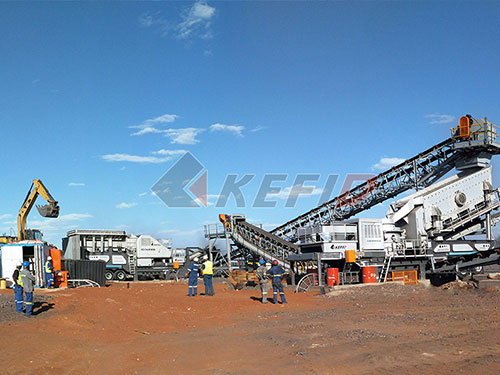
6. SCÉNARIOS D'APPLICATION
Exportation de calcaire de qualité chimique de haute pureté
Défi Un important exportateur asiatique a été confronté à des sanctions constantes pour contamination par la silice dépassant les limites strictes du contrat. (<1%). Le pré-tri manuel était laborieux et peu fiable.
Solution Installation d'un alimentateur à grizzlis GFH1800 avec des barres précisément espacées en avant de la ligne de concasseur à mâchoires.
Résultats Le chargeur a été scalpé 90% de nodules de chert riche en silice et de sable fin avant concassage. Pureté du produit final constamment respectée <0.8% spécification de la silice dans les six mois.
Projet d'expansion du débit de la carrière
Défi Un producteur européen de granulats devait augmenter le débit de son usine de 25% mais a été limité par de fréquentes surcharges du concasseur primaire provoquant des arrêts du système.
Solution Mise à niveau de leur alimentateur à tablier statique vers un alimentateur pour grizzlis GFH2000 équipé d'un VFD avec une capacité de débit d'alimentation contrôlé.
Résultats L'alimentation contrôlée a entièrement éliminé les événements de surcharge du concasseur tout en permettant des débits d'alimentation de pointe dans des conditions optimales.. L'usine a enregistré une augmentation soutenue du débit moyen de >22%.
7. CONSIDÉRATIONS COMMERCIALES
Nos mangeoires pour grizzlis sont proposées en trois niveaux:
Service standard: Pour un tonnage inférieur (<800 MT/h), applications moins abrasives utilisant des revêtements Hardox.
Robuste (Recommandé): Pour la plupart des opérations de calcaire axées sur l'exportation avec des revêtements AR400/manganèse & Entraînements VFD en standard.
Très résistant: Pour les conditions d'impact extrêmes (>1500mm avance), comportant des ensembles vibrateurs renforcés & aciers alliés spécialisés.
Les fonctionnalités optionnelles incluent:
Convoyeur de collecte sous-plateau
Systèmes de rampes de pulvérisation intégrés
Kit de montage pour brise-roche
Capteurs de surveillance à distance
Les offres de services vont de l'assistance de base à la mise en service jusqu'aux contrats d'inspection annuels complets comprenant des rapports d'analyse des vibrations sur les composants d'entraînement..
Des options de financement flexibles sont disponibles, notamment des structures de location d'équipement qui préservent les budgets d'investissement..
8. FAQ
Q1 Comment puis-je déterminer l'espacement correct des barres de grizzly?
L'espacement A1 est généralement réglé à environ 80 % du réglage du côté fermé de votre concasseur principal. (CSS). Notre équipe d'ingénierie analysera vos données de gradation d'alimentation ainsi que votre profil de taille de sortie cible lors de la spécification du projet..
Q2 Cet équipement peut-il gérer du calcaire humide ou collant?
A2 Oui. La course linéaire à haute énergie aide à prévenir l'adhérence du matériau sur nos terrasses inclinées mieux que les grilles statiques ou les alimentateurs à faible course, mais peut nécessiter des pulvérisations de nettoyage périodiques si la teneur en argile est exceptionnellement élevée. (>15%).
Q3 Ce qui est requis pour l'installation?
A3 Vous aurez besoin de fondations préparées selon nos dessins détaillés ainsi que d'une capacité de levage appropriée sur place. (~1025T). Nous fournissons une supervision complète de l'installation dans le cadre de notre package de mise en service si sélectionné
Q4 Comment cela s'intègre-t-il à mon système PLC/contrôle existant?
A4 Notre panneau de commande VFD comprend des protocoles de communication standard tels que Modbus TCP/IP permettant une intégration transparente dans la plupart des systèmes SCADA de l'usine pour les commandes de démarrage/arrêt centralisées.
Q5 Quels sont les délais de livraison habituels?
A5 Les délais de livraison varient en fonction de la complexité du modèle, mais se situent généralement entre douze semaines après l'approbation de la conception, en grande partie en raison des processus de fabrication rigoureux impliqués.
Q6 Les pièces de rechange sont-elles facilement disponibles dans le monde entier?
A6 Oui, nous maintenons des stocks d'entrepôts régionaux de composants d'usure critiques tels que des ensembles de moteurs de vibrateur à barres de manganèse moulées, garantissant des délais d'expédition accélérés minimisant les risques potentiels d'arrêt.