
Curseur de mâchoire

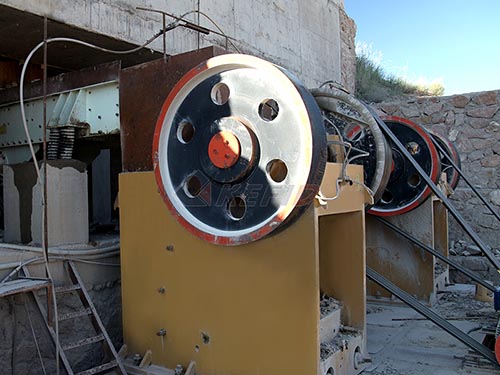
Un concasseur à mâchoires est une machine de concassage primaire utilisée dans l'exploitation minière, carrière, and construction industries to reduce large rocks, minerais, ou d'autres matériaux durs en plus petits, pièces plus maniables. Voici une répartition détaillée:
Comment ça marche
1. Mécanisme de broyage:
- A jaw crusher consists of two vertical jaws—one fixed (stationnaire) and one movable (mâchoire pivotante).
- The movable jaw exerts force on the material by pressing it against the fixed jaw.
- Material is crushed progressively until small enough to pass through the bottom gap (ouverture de décharge).
2. Composants clés:
- Plaque à mâchoire fixe: Attached to the crusher frame.
- Movable Jaw Plate: Driven by an eccentric shaft (pitman) that creates an elliptical motion.
- Plaque à bascule: Safety mechanism to protect the crusher from overload.
- Flywheel: Stores energy for consistent crushing force.
Types de concasseurs à mâchoires
1. Blake (Double Toggle): Older design with a pivoted swing jaw; robust but less efficient.
2. Dodge (Single Toggle): Movable jaw pivots at the bottom; simpler but limited in capacity.
3. Universal (Overhead Eccentric): Modern single-toggle design with higher efficiency and adjustability.
Applications
- Primary crushing of hard materials (granit, basalte, minerai de fer).
- Recyclage du béton et des déchets de démolition.
- Laboratory-scale crushing for research.
Avantages
- Simple structure, low maintenance.
- High reduction ratio (typiquement 6:1 à 8:1).
- Handles abrasive materials well.
Inconvénients
- Less efficient than gyratory crushers for high-capacity needs.
- Wear-prone parts (plaques à mâchoires) require regular replacement.
Conseils d'entretien
- Regularly check jaw plates for wear and replace as needed.
- Lubricate bearings and eccentric shafts to prevent overheating.
- Monitor discharge settings to ensure optimal particle size output.
Would you like details on sizing, operational parameters, ou comparaisons avec d'autres concasseurs (par ex., cône/impact)?