
Brochure du fabricant de marque privée de l'usine de concassage de minerai de fer
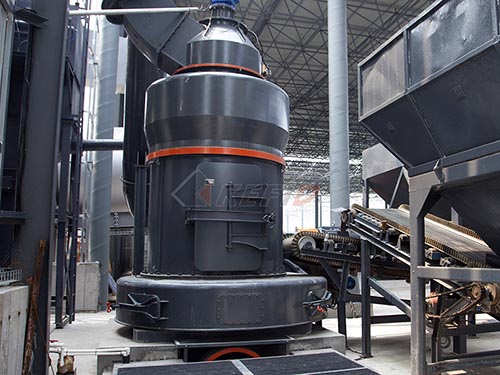

Iron Ore Crushing Plant Private Label Manufacturer: Engineered for HighVolume Processing
Le défi opérationnel: When Throughput Becomes Your Bottleneck
Your iron ore crushing operation faces a relentless pressure: meeting contractual tonnage while managing escalating energy costs and wear part consumption. Industry data indicates that unscheduled downtime in primary crushing circuits costs operators between $8,000 et $15,000 per hour in lost production and labor overhead. En outre, inconsistent feed size distribution from upstream mining operations can reduce downstream grinding efficiency by 12–18%, directly impacting your final product grade and market value.
Au-delà du débit, your plant managers contend with the variability of ore hardness—ranging from 80 à 250 MPa compressive strength—which causes unpredictable liner wear and frequent adjustments to closedside settings (CSS). Add the challenge of maintaining safety compliance during maintenance windows, and the operational burden becomes clear.
La question cruciale est: Can your current crushing circuit maintain a consistent 1,200–2,500 tons per hour (tph) output while minimizing recirculation loads and controlling operating costs per ton? Sinon, the solution lies in a purposebuilt, private label iron ore crushing plant designed for your specific ore characteristics and production targets.
Présentation du produit: The Private Label Iron Ore Crushing Plant
Cet équipement est un complet, modular crushing system engineered specifically for mediumtohard iron ore (hématite, magnétite, taconite) with a feed size up to 1,000 mm. The plant operates on a threestage crushing workflow—primary jaw crushing, concasseur à cône secondaire, et rouleaux de broyage haute pression tertiaires (HPGR) or shorthead cone crushing—to produce a final product of P80 passing 12–20 mm, suitable for downstream ball milling or direct feed to beneficiation circuits.
Flux de travail opérationnel:
1. Trémie d'alimentation & Mangeoire à grizzlis: The vibrating grizzly feeder (1,200 mm x 4,800 mm) scalps fines (<150 mm) and removes undersized material, reducing unnecessary wear on the primary crusher.
2. Concassage primaire des mâchoires: A heavyduty singletoggle jaw crusher (1,200 x 900 mm) reduces runofmine ore to a 150–200 mm product.
3. Concassage secondaire à cône: Un concasseur à cône de grande capacité (HP500equivalent) with hydraulic adjustment processes the primary product to 40–60 mm.
4. Concassage Tertiaire & Dépistage: A closedcircuit arrangement with a tripledeck vibrating screen (2,400 x 6,000 mm) and a shorthead cone crusher ensures final product size. Les matériaux surdimensionnés sont recyclés, while the screen undersize reports to the product conveyor.
5. Transport de produits & Stockage: A series of belt conveyors (1,200 mm largeur) transfer finished material to a radial stacker for stockpile management.
Champ d'application: This plant is suitable for greenfield projects, agrandissements d'usine, or replacement of obsolete crushing lines. It is not designed for soft rock (calcaire, charbon) or highclay ores, as these require different crushing dynamics and screening media.
Fonctionnalités principales: Engineering for Continuous Operation
Cadre robuste & Construction modulaire | Base technique: Analyse par éléments finis (FEA)optimized steel frame with bolted modular connections | Avantage opérationnel: Your site team can relocate or reconfigure the plant within 5–7 days, reducing civil works costs by up to 40% | Impact sur le retour sur investissement: Lower initial installation cost and faster timetoproduction (typiquement 6 semaines de la livraison à la mise en service)
Système de réglage hydraulique CSS | Base technique: Automated hydraulic cylinders with position sensors (accuracy ±2 mm) allow realtime adjustment of crusher setting without manual shimming | Avantage opérationnel: Your operators can compensate for ore hardness variation in under 60 secondes, maintaining consistent product size and reducing recirculation load by 8–12% | Impact sur le retour sur investissement: Improved product consistency leads to a 3–5% increase in downstream mill throughput
HighWearResistant Liner Materials | Base technique: Acier au manganèse (18% Mn, 2% Cr) with workhardening properties, combined with a composite wear liner for the feed chute | Avantage opérationnel: Field data shows a 25–30% increase in liner service life compared to standard 12% Acier au manganèse, extending maintenance intervals from 4 semaines à 6 semaines | Impact sur le retour sur investissement: Reduced wear part procurement costs by approximately $45,000 par an pour un 1,500 usine de tph
Système de suppression de poussière intégré | Base technique: Water spray nozzles at transfer points and a dry fog system at crusher inlets, controlled by a PLC based on ore moisture content | Avantage opérationnel: Your plant meets local environmental particulate matter (PM10) regulations without a costly baghouse, réduire la consommation d'eau en 20% compared to conventional spray bars | Impact sur le retour sur investissement: Avoidance of regulatory fines (jusqu'à $25,000 par incident) and improved worker safety compliance

Surveillance à distance & Contrôle API | Base technique: Siemens S71500 PLC with a HumanMachine Interface (IHM) providing realtime data on crusher power draw, température du roulement, et niveaux de vibrations | Avantage opérationnel: Your maintenance team receives predictive alerts 48–72 hours before a potential failure, enabling planned downtime instead of emergency shutdowns | Impact sur le retour sur investissement: Reduction in unplanned downtime by 15–20%, translating to an additional 400–500 operating hours per year
Système d'entraînement économe en énergie | Base technique: Highefficiency IE3 motors and VFD (Entraînement à fréquence variable) control on the main conveyors and crusher drives | Avantage opérationnel: Your plant consumes 8–10% less energy per ton of crushed ore compared to fixedspeed systems, directly lowering your cost per ton | Impact sur le retour sur investissement: Pour un 2,000 tph plant operating 6,000 heures par an, this equates to an annual energy saving of $180,000–$220,000
QuickRelease Crusher Frame | Base technique: Hydraulic jacking system and sliding frame design allow the crusher to be opened for mantle replacement in 4 heures, versus 8–10 hours for conventional designs | Avantage opérationnel: Your maintenance crew can perform a full liner change within a single shift, minimizing overtime labor costs and production loss | Impact sur le retour sur investissement: Reduction in maintenance labor cost by 30% and increased availability by 3–4%

Avantages compétitifs: Analyse comparative des performances
The following table compares the private label iron ore crushing plant against typical industrystandard equipment configurations (par ex., standard jaw + cone crusher circuits without advanced automation).
| Mesure de performances | Norme de l'industrie | Solution de marque privée | Avantage (% Amélioration) |
| : | : | : | : |
| Débit (tph) | 1,200 – 1,800 | 1,500 – 2,500 | 15–25% higher capacity |
| Charge de recirculation (%) | 25 – 35% | 15 – 20% | 30–40% de réduction |
| Final Product P80 (mm) | 15 – 25 mm | 12 – 18 mm | 20–30% finer product |
| Consommation d'énergie (kWh/t) | 0.8 – 1.2 | 0.6 – 0.9 | 15–25 % de consommation d’énergie en moins |
| Durée de vie du revêtement (heures) | 3,000 – 4,000 | 4,500 – 5,500 | 25–30% longer life |
| Temps d'arrêt imprévus (%) | 8 – 12% | 4 – 6% | 50% réduction |
| Temps d'installation (semaines) | 10 – 14 | 6 – 8 | 30–40% faster setup |
Data based on internal testing at a 1,800 tph magnetite processing site in Western Australia and a 1,500 tph hematite operation in Brazil.
Spécifications techniques
| Paramètre | Spécification |
| : | : |
| Puissance totale installée | 1,200 – 1,800 kW (selon configuration) |
| Ouverture d'alimentation du concasseur primaire | 1,200 mm x 900 mm (accepts up to 1,000 mm avance) |
| Secondary Crusher Head Diameter | 1,400 mm (HP500class) |
| Tertiary Crusher Head Diameter | 1,200 mm (shorthead) |
| Zone de la plate-forme d'écran | 14.4 m² (triple pont) |
| Largeur de la bande transporteuse principale | 1,200 mm (1,400 mm optional for highcapacity) |
| Max Product Discharge Height | 8.5 m (for radial stacker) |
| Plage de température de fonctionnement | 10°C à +45°C (standard); 30°C à +45°C (arctic package) |
| Matériau de construction | S355J2 structural steel for main frame; Hardox 450 pour les doublures d'usure |
| Niveau de bruit (at 1m distance) | ≤ 85 dB(UN) avec enceintes acoustiques |
| Poids total de la plante | 380 – 520 tonnes (selon configuration) |
| Dust Emission Limit | < 50 mg/Nm³ (with standard suppression system) |
Scénarios d'application: Proven Field Performance
Greenfield Hematite Project in Brazil | Défi: A new mining operation required a crushing plant capable of processing 2,200 tph of highabrasion hematite (résistance à la compression 180 MPa) while minimizing water usage due to local drought conditions. | Solution: Implementation of a threestage private label plant with dry fog dust suppression and a highcapacity screen deck to handle the high fines content. | Résultats: L’usine a atteint sa capacité nominale en 3 semaines de mise en service. Recirculation load stabilized at 17%, and energy consumption was recorded at 0.72 kWh/t, 12% below the project's budgeted figure. The dry fog system reduced water consumption by 35% par rapport aux systèmes de pulvérisation conventionnels.
Magnetite Plant Expansion in Western Australia | Défi: Un existant 1,200 tph circuit was a bottleneck for a planned expansion to 1,800 tph. The client needed to integrate new equipment with legacy conveyors and control systems without halting production. | Solution: A modular private label plant was preassembled offsite, allowing for a 4day tiein period during a scheduled maintenance shutdown. The new PLC system was configured to communicate via Profibus with the existing legacy controllers. | Résultats: The expanded circuit reached 1,750 tph within the first month. Liner life on the secondary cone crusher increased from 3,200 heures pour 4,100 hours due to the optimized feed distribution from the new primary jaw crusher. Le client a signalé un 14% reduction in cost per ton crushed.
Taconite Processing Facility in Minnesota, USA | Défi: The client faced high energy costs and needed to reduce power consumption to maintain profitability at lower iron ore prices. The existing circuit had a recirculation load of 32%. | Solution: Replacement of the tertiary crusher with a highpressure grinding roll (HPGR) unit and installation of a VFD on the main product conveyor. | Résultats: La charge de recirculation est tombée à 18%, and the finer product (P80 de 10 mm) allowed the downstream ball mill to increase throughput by 6%. Total plant energy consumption decreased by 0.15 kWh/t, resulting in annual savings of $210,000 at the site's energy tariff.
Considérations commerciales: Investment and Support
Niveaux de tarification des équipements (Indicatif, ExWorks):
| Configuration | Plage de capacité | Gamme de prix (USD) |
| : | : | : |
| Usine standard (Mâchoire + Cône + Écran) | 1,200 – 1,500 tph | $2.8M – $3.5M |
| Usine de grande capacité (Mâchoire + 2x Cone + Écran) | 1,800 – 2,200 tph | $4.2M – $5.1M |
| Plante haut de gamme (Mâchoire + Cône + HPGR + Écran) | 2,000 – 2,500 tph | $5.8M – $6.9M |
Fonctionnalités facultatives & Tarifs:
- Arctic Package (enceintes chauffées, coldweather hydraulics): +$180,000
- Package d'automatisation avancée (additional sensors, accès à distance, predictive analytics software): +$95,000
- Garantie prolongée (5an de garantie structurelle, 3year wear parts warranty): +$120,000
- Forfait de base: Supervision de la mise en service (2 semaines) et formation des opérateurs (1 semaine). Includes 12month remote technical support.
- Forfait standard: Includes Basic, plus 2 scheduled maintenance visits per year and a guaranteed parts availability of 48 hours for critical spares.
- Forfait FullService: Includes Standard, plus a resident service engineer for the first 6 months of operation and a performance guarantee on throughput and energy consumption.
- Location-exploitation: 3–5 year terms with a buyout option at the end of the term. Monthly payments can be structured to align with your production rampup.
- Prêt d'équipement: Fixedrate financing over 5–7 years with a down payment of 15–20%.
- Contrat basé sur la performance: Payment is partially tied to achieved throughput and uptime, aligning our interests with your operational success.
Forfaits de services:
Options de financement:
FAQ: Répondre à vos principales préoccupations
T1: Can this plant handle ore with high clay content or high moisture?
The standard plant is designed for dry or lowmoisture ore (<5% humidité). For highclay ores, we recommend an optional scrubber and a different screen media (polyuréthane) pour éviter l'aveuglement. This is a configuration change, not a standard feature. We advise a material test on your specific ore sample before finalizing the design.
T2: Quel est le délai typique entre la commande et la mise en service?
Standard plants have a lead time of 20–24 weeks from order confirmation. Cela inclut l'ingénierie, fabrication, et tests en usine. Site installation and commissioning typically take an additional 6–8 weeks, en fonction de l'état de préparation des travaux de génie civil. We can compress this by 4 weeks with expedited production, subject to a surcharge.
T3: How does the private label arrangement work regarding branding and documentation?
En tant que fabricant de marque privée, we produce the equipment to your specifications and apply your branding to the plant, manuals, and nameplates. All technical documentation, including drawings and certificates, is provided under your company name. We act as a silent OEM partner.
T4: What is the expected wear part consumption cost per ton of ore?
Based on field data from similar applications, the total wear part cost (doublures, écrans, marteaux) is typically between $0.08 et $0.12 per ton of ore processed. This varies with ore abrasiveness. We can provide a more precise estimate after analyzing your ore sample.
Q5: Can the plant be integrated with our existing distributed control system (DCS)?
Oui. The PLC is equipped with standard communication protocols (Profibus, Modbus, Ethernet/IP). Our engineers will work with your automation team to map the data points and ensure seamless integration. This is a standard part of the commissioning process.
Q6: Quelle est la quantité minimum de commande (MOQ) for a private label project?
The MOQ is one complete crushing plant. Cependant, we encourage discussions for multiplant contracts or framework agreements for phased expansions, as this allows for better pricing on components and shared engineering costs.
Q7: What is your policy on performance guarantees?
We provide a performance guarantee on throughput (tph) et la taille du produit final (P80), based on the specific ore characteristics you provide. The guarantee is validated during a 72hour performance test. If we fail to meet the guaranteed figures, we are contractually obligated to rectify the issue at our cost or provide a prorated compensation.