
Chaîne d'approvisionnement des distributeurs d'usines de concassage de minerai de fer
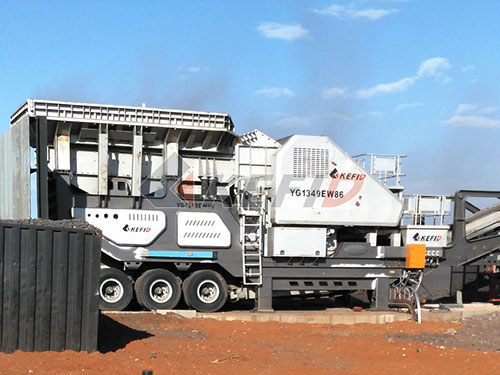

Chaîne d'approvisionnement des distributeurs d'usines de concassage de minerai de fer: Securing Reliable Equipment Flow for Continuous Operations
The Hidden Cost of Supply Chain Disruption in Iron Ore Crushing
Every hour of unscheduled downtime at an iron ore crushing plant costs operators between $15,000 et $50,000 en production perdue, en fonction de la capacité de débit. Yet the most common cause of extended stoppages isn't mechanical failure—it's the failure of the supply chain that delivers the crushing equipment, pièces d'usure, and replacement components in the first place.
Plant managers across the Pilbara, Carajás, and Minnesota Iron Range face the same recurring challenges:
- Lead time volatility: Standard cone crusher liners can take 12–16 weeks from OEM order to site delivery, but when distributor inventory is depleted, that timeline stretches to 26 weeks or more.
- Incohérence de la qualité: Sourcing from noncertified distributors introduces metallurgical variance that reduces wear life by 20–40%, directly increasing cost per ton crushed.
- Logistics bottlenecks: Iron ore sites are often in remote regions with limited transport infrastructure, making freight coordination a critical path activity.
- Inventory capital trap: Carrying excessive safety stock ties up working capital, while insufficient stock creates production risk—finding the balance requires data, not guesswork.
- Compatibility uncertainty: Aftermarket parts that claim "OEMequivalent" specifications may not account for the specific manganese content, géométrie de la chambre de concassage, or eccentric throw settings of your particular plant configuration.
- Primary crushing stations (gyratory and jaw crushers)
- Secondary and tertiary cone crushing circuits
- Rouleaux de broyage haute pression (HPGR) retrofits
- Screening and classification equipment
- Inventory Management System: Cloudbased ERP with realtime stock visibility across all distribution centers
- Quality Control Equipment: Spectrometers for chemical analysis, Brinell hardness testers, CMM for dimensional verification
- Logistics Capability: Multimodal freight coordination (route, rail, mer, air for emergency items)
- Documentation: Full ISO 9001:2015 système de gestion de la qualité, OIN 14001 conformité environnementale
- Regional Distribution Centers: Strategically located within 500 km of major iron ore producing regions
- Warehouse Capacity: 2,000–10,000 square meters per center, with heavylift crane capability (jusqu'à 50 tonnes)
- Climate Control: Dehumidified storage for sensitive components; outdoor hardstand for large crusher shells
- Température de fonctionnement: 20°C to +50°C for storage facilities
- Site Conditions: Equipment must withstand dust, vibration, and humidity typical of iron ore crushing environments
- Altitude: Functional up to 4,000 meters above sea level for highaltitude operations (par ex., Andes regions)
- Emergency Stock Program: Guaranteed 72hour dispatch for critical components (additional 10–15% premium)
- Technical Audits: Semiannual crusher circuit assessments with wear optimization recommendations
- Entraînement: Operator and maintenance crew training on wear part installation and monitoring
- Logistique inversée: Used liner recycling and scrap value recovery programs
- Standard: Parts supply with delivery confirmation and basic technical support
- Amélioré: Adds dedicated account manager, quarterly performance reviews, and priority technical response
- Prime: Includes onsite inventory management, full condition monitoring integration, and performance guarantee with penalty/reward structure
- Filet 30/60/90 termes: Standard payment terms based on credit assessment
- Consignment inventory: Parts held at your site, billed only upon consumption
- Location d'équipement: For major capital items such as complete crusher assemblies
- Contrats basés sur la performance: Monthly billing tied to achieved costperton metrics
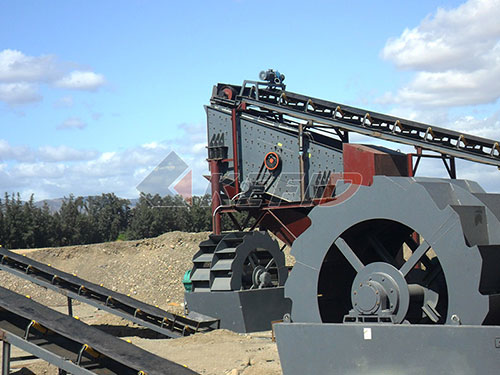
The question is not whether you need a reliable supply chain for your iron ore crushing plant—it's whether your current distributor network can deliver the right equipment, at the right time, with the right quality, at a predictable cost. This page examines how a structured distributor supply chain addresses these operational realities.
Présentation du produit: Integrated Distributor Network for Iron Ore Crushing Plants
An iron ore crushing plant distributor supply chain encompasses the sourcing, gestion des stocks, coordination logistique, and technical support for all crushing equipment—from primary gyratory crushers to tertiary cone crushers, tamis vibrants, and associated wear components.
Flux de travail opérationnel
1. Demand Assessment: Your plant's crushing circuit configuration (primaire, secondaire, tertiary stages) determines the specific equipment and wear parts required, including crusher liners, manteaux, concaves, joues, et supports d'écran.
2. Distributor Sourcing: The distributor network identifies and vets manufacturers capable of producing components to your plant's exact specifications, including manganese steel grades (12–22% Mn), chrome iron alloys, and rubber or polyurethane screen panels.
3. Inventory Positioning: Strategic stock levels are maintained at regional distribution centers positioned to minimize freight time to your site, with safety stock calculated based on your historical consumption patterns and lead time variability.
4. Vérification de la qualité: Incoming components undergo dimensional inspection, essai de dureté, and chemical composition analysis before being certified for release to your plant.
5. Logistics Execution: Coordinated transport via road, rail, or sea freight, with customs clearance and site delivery scheduling aligned to your maintenance windows.
6. Surveillance des performances: Wear life data from your operations feeds back into the supply chain, enabling continuous refinement of part specifications and inventory levels.
Champ d'application
This supply chain model applies to iron ore crushing operations ranging from 2 million to 60+ millions de tonnes par an, y compris:
Limites
The distributor model does not replace OEM engineering support for major crusher rebuilds or modifications. For complete crusher replacements or significant design changes, direct OEM engagement remains necessary. En plus, the supply chain cannot compensate for fundamentally incorrect crusher specifications—it optimizes the flow of correct equipment, not the selection of it.
Core Features of a HighPerformance Distributor Supply Chain
Inventory PrePositioning | Base technique: Demand forecasting using consumption data and lead time statistics | Avantage opérationnel: Reduces emergency procurement incidents by 60–70% | Impact sur le retour sur investissement: Eliminates premium freight costs ($8,000–$25,000 per emergency shipment) and prevents production losses valued at $15,000–$50,000 per hour
MultiSource Qualification | Base technique: Supplier auditing against ISO 9001 and ASTM A128/A532 standards | Avantage opérationnel: Maintains supply continuity even when individual manufacturers face capacity constraints or raw material shortages | Impact sur le retour sur investissement: Reduces supply disruption risk by 45% compared to singlesource arrangements
Metallurgical Traceability | Base technique: Batchlevel documentation of chemical composition and heat treatment records | Avantage opérationnel: Enables rootcause analysis when premature wear occurs, allowing specification adjustments | Impact sur le retour sur investissement: Extends wear part life by 10–25% through datadriven specification refinement
Lead Time Compression | Base technique: Prenegotiated production slots with manufacturers and expedited logistics agreements | Avantage opérationnel: Cuts standard lead times from 16–26 weeks to 8–12 weeks for critical components | Impact sur le retour sur investissement: Reduces required safety stock by 30–40%, freeing working capital
ConditionBased Replenishment | Base technique: Integration with crusher monitoring systems to track wear liner thickness and predict replacement timing | Avantage opérationnel: Aligns parts delivery with actual maintenance schedules, not estimated timelines | Impact sur le retour sur investissement: Minimizes both stockout risk and excess inventory carrying costs
Technical Compatibility Verification | Base technique: 3D scanning and dimensional validation against your specific crusher models | Avantage opérationnel: Eliminates installation delays caused by illfitting aftermarket parts | Impact sur le retour sur investissement: Reduces installation labor costs by 15–20% and prevents unplanned downtime during changeouts
PerformanceBased Contracting | Base technique: Agreements structured around costperton metrics rather than perpart pricing | Avantage opérationnel: Aligns distributor incentives with your operational efficiency goals | Impact sur le retour sur investissement: Achieves 5–15% reduction in total wear cost per ton processed
Avantages compétitifs: Distributor Supply Chain vs. Norme de l'industrie
| Mesure de performances | Norme de l'industrie (Direct OEM or Unstructured Sourcing) | Iron Ore Crushing Plant Distributor Supply Chain | Avantage (% Amélioration) |
|||||
| Average Lead Time for Wear Parts | 16–20 semaines | 8–12 semaines | 40–50% plus rapide |
| Inventory Stockout Rate | 15–20% of order lines | 3–5% of order lines | 70–80% reduction |
| ParttoPart Quality Variance | ±15% in wear life | ±5% in wear life | 60–70% more consistent |
| Emergency Freight Costs | $12,000–$25,000 per incident | $3,000–$8,000 per incident | 60–70% cost reduction |
| Total Cost per Ton Crushed (Porter) | $0.08–$0.12 | $0.06–$0.09 | 15–25% cost reduction |
| Supplier Audit Compliance Rate | 60–70% | 95–100% | 35–45% higher compliance |
| Temps de réponse du support technique | 5–10 business days | 24–48 heures | 75–80% plus rapide |
Spécifications techniques
Capacity and Rating Parameters
| Paramètre | Gamme de spécifications |
|||
| Supported Plant Throughput | 500 – 8,000 tonnes par heure |
| Crusher Types Covered | Giratoire (42–70 inch), Mâchoire (30×42 to 60×89), Cône (HP200–HP900 equivalents), Impactors |
| Wear Part Weight Range | 50 kg à 25,000 kg per component |
| Manganese Steel Grades | 12% Mn (workhardening), 18% Mn (à fort impact), 22% Mn (abrasionresistant) |
| Chrome Iron Alloys | 15–28% Cr for impact and abrasion applications |
| Options de support d'écran | Polyuréthane (modulaire), Caoutchouc (tensioned), Fil (woven), Hybride |
Power and Operational Requirements
Physical Infrastructure
Plage de fonctionnement environnementale
Scénarios d'application
Greenfield Iron Ore Project in Western Australia | Défi: A new 12 MTPA crushing plant required complete equipment provisioning with a 14month construction timeline, but OEM lead times for primary crusher components exceeded 20 mois. | Solution: The distributor supply chain prenegotiated production capacity with three qualified manufacturers, staged deliveries to align with construction milestones, and positioned critical longlead items at a regional distribution center in Perth. | Résultats: All crushing equipment arrived on schedule, the plant commenced production 3 weeks ahead of plan, and initial wear part inventory was fully stocked at commissioning—saving an estimated $4.2 million in potential delay penalties.
Brownfield Expansion in Minas Gerais, Brésil | Défi: Un existant 8 MTPA plant planned to increase throughput to 11 MTPA, requiring additional secondary crushing capacity. The site had experienced 22% downtime in the previous year due to wear part stockouts. | Solution: The distributor implemented conditionbased replenishment using ultrasonic wear monitoring on existing crusher liners, established a dedicated inventory buffer at a São Paulo distribution center, and transitioned to a costperton contracting model. | Résultats: Wear part stockouts dropped to zero in the first year, crusher availability improved from 78% à 93%, and total wear cost per ton decreased by 18%—generating annual savings of $2.7 million.
Remote Operation in Northern Canada | Défi: A flyin/flyout iron ore operation faced 10day freight lead times from the nearest railhead, making emergency parts delivery effectively impossible during winter months. | Défi: The distributor established a preseason inventory buildup strategy, stockage 6 months of critical wear parts before the winter freeze, and implemented a weekly barge delivery schedule during the icefree season. | Solution: The plant maintained 97% equipment availability through two consecutive winter seasons, eliminating the previous pattern of extended downtime (moyenne 14 days per winter) caused by parts unavailability. | Résultats: Production continuity preserved 180,000 tons of output annually, valued at approximately $9 million in revenue.
Considérations commerciales
Niveaux de tarification des équipements
| Étage | Portée | Indicative Annual Cost |
||||
| Basic Supply | Wear parts only, standard lead times, quarterly deliveries | $500,000 – $1.5 million |
| Managed Inventory | Pièces d'usure + inventory holding + condition monitoring integration | $750,000 – $2.5 million |
| Contrat de performance | Full wear management, costperton pricing, guaranteed availability | $1.2 million – $4 million |
Fonctionnalités facultatives
Forfaits de services
Options de financement
FAQ
T1: How does the distributor supply chain ensure parts compatibility with my specific crusher models?
Every part undergoes dimensional verification using 3D scanning against your crusher's original specifications. The distributor maintains a database of OEM drawings and reverseengineered measurements for all major crusher models. Before any part is shipped, it must pass a dimensional checklist that includes critical mounting surfaces, taper angles, and bolt patterns. Field data from installations is continuously fed back to refine these specifications.
T2: What is the realistic lead time for a complete set of cone crusher liners through this supply chain?
For standard manganese liners (18% Mn), the typical lead time is 8–12 weeks from order confirmation to site delivery, assuming inventory is not already stocked at a regional distribution center. If the exact specification is held in stock, delivery can occur within 5–10 business days. Custom metallurgy or nonstandard chamber profiles extend lead times to 14–16 weeks.
T3: How does the costperton contracting model work, and what are the risks?
Under a costperton model, you pay a fixed rate for every ton of ore processed through your crushing circuit, and the distributor assumes responsibility for wear part supply, gestion des stocks, and performance optimization. The rate is calculated based on your ore abrasiveness, crusher configuration, et la taille du produit cible. The primary risk is that the distributor may use lowerquality parts to protect their margin—this is mitigated through contractual minimum wear life guarantees and independent performance testing.
T4: Can this supply chain support multiple sites within the same company?
Oui, multisite agreements are common and often provide better pricing due to volume consolidation. The distributor can pool inventory across sites, allowing one location's excess stock to cover another's shortage. This approach typically reduces total inventory investment by 20–30% compared to sitespecific stocking.
Q5: What happens if a critical part fails and the distributor doesn't have it in stock?
The distributor's emergency protocol activates a threetier response: (1) check all regional distribution centers for the part, (2) check manufacturer production schedules for the next available slot, et (3) initiate expedited manufacturing with priority allocation. Pour pièces d'usure standard, this emergency process typically delivers within 72 heures pour 2 semaines, depending on the component's complexity. The cost of this emergency service is included in premium service packages or billed at a negotiated rate.
Q6: How does the distributor verify the quality of parts from different manufacturers?
All parts undergo the same incoming inspection protocol regardless of source: chemical composition analysis via spectrometer, hardness testing per ASTM E10, dimensional verification using CMM or 3D scanning, and visual inspection for casting defects. Parts that fail any criterion are rejected and returned to the manufacturer. En plus, the distributor maintains a qualified supplier list, and each manufacturer is audited annually against ISO 9001 and industryspecific standards.
Q7: What data does the distributor need from my plant to optimize inventory levels?
The distributor requires: (1) historical wear part consumption data (at least 12 mois), (2) crusher operating parameters (réglage côté fermé, lancer excentrique, distribution de la taille des aliments), (3) caractéristiques du minerai (indice d'abrasion, résistance à la compression), (4) planned maintenance schedules, et (5) production forecasts. This data enables statistical inventory modeling that balances stockout risk against carrying costs. The more accurate your data, the more precisely the distributor can position inventory.
Q8: Are there any geographical limitations to the distributor supply chain coverage?
The network covers all major iron ore producing regions globally, including Australia, Brésil, Chine, Inde, Russia, Ukraine, Afrique du Sud, Canada, et les États-Unis. In remote regions, the distributor establishes forward stocking locations or uses scheduled freight consolidation to maintain service levels. For operations in extremely isolated areas, the distributor may recommend increased safety stock levels to compensate for longer logistics lead times.