
High Quality Coke Vibration Screen Datasheet
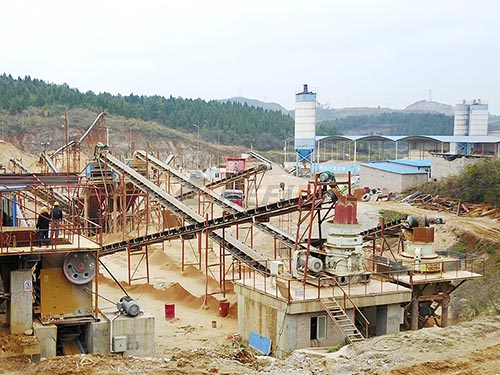

Écran vibrant de coke de haute qualité: Reduce Downtime, Cut Screening Costs, and Protect Your Downstream Equipment
Operational Challenges This Equipment Solves
Coke screening operations face persistent bottlenecks that directly impact your bottom line. If your plant handles metallurgical coke, coke de pétrole, or coke breeze, you're likely dealing with:
- Excessive screen media wear — Inferior vibration screens force replacement of woven wire or polyurethane panels every 4–8 weeks, costing $12,000–$28,000 annually per unit in parts and labor alone.
- Aveuglement et ancrage — Moistureladen coke particles wedge into screen apertures, reducing open area by 30–50% within a single shift and forcing manual cleaning that exposes operators to safety risks.
- High downtime from structural fatigue — Side plates crack, cross members fracture, and bearing housings fail under continuous highamplitude vibration, translating to 40–120 hours of unplanned downtime per year.
- Inconsistent cut points — Fluctuating feed rates and improper stroke control cause oversize carryover into product or excessive fines in the oversize stream, triggering customer rejections and reprocessing costs.
- Excessive power draw — Older linearmotion screens consume 15–25% more kW per ton of material processed compared to modern highefficiency designs.
- Metallurgical coke screening (coke de haut fourneau, coke de fonderie)
- Petroleum coke (coke de pétrole) sizing and dedusting
- Coke breeze recovery and briquetting feed preparation
- Coke handling in steel mills, coke ovens, and port terminals
- Not suitable for feeds exceeding 300 mm top size without prior crushing
- Moisture content above 12–14% may require elliptical motion or heated decks
- High clay content in feed demands special media or prescreening
- Remote vibration monitoring and diagnostics (Compatible IoT) — $8,000–$15,000
- Heated deck panels for highmoisture coke — $12,000–$22,000
- Stainless steel or specialty alloy liners for corrosive petcoke — $15,000–$30,000
- Mobile chassis with hydraulic lift — $25,000–$45,000
- Kit de pièces de rechange (1year recommended inventory) — $6,000–$18,000
- Standard: 12mois de garantie, assistance technique par téléphone/e-mail, aide à la mise en service
- Prime: 24mois de garantie, mise en service sur site, inspection annuelle, 48garantie des pièces d'une heure
- Entreprise: 36mois de garantie, gestionnaire de compte dédié, analyse de maintenance prédictive, réponse garantie 24h/24
- Location d'équipement (36–60 mois) avec $1 rachat
- Renttoown programs for pilot installations
- Performancebased contracts tied to throughput or efficiency guarantees
La question est: how much is your current screening inefficiency costing you every month?
A highquality coke vibration screen engineered for your specific feed characteristics eliminates these losses through precision motion control, abrasionresistant construction, and applicationmatched screening media.
Présentation du produit: Écran vibrant de coke de haute qualité
Cet équipement est un robuste, doubledeck or singledeck vibrating screen specifically configured for coke screening applications. It employs either mouvement linéaire (for highcapacity scalping and sizing) ou elliptical motion (for difficult, humide, or sticky coke feeds). The screen separates coke into distinct size fractions — typically 0–10 mm, 10–25 mm, 25–40mm, et +40 mm — depending on your blast furnace, fonderie, or export specifications.
Flux de travail opérationnel:
1. Feed distribution — Coke enters via a feed box or chute, spreading evenly across the full screening width using a stationary or vibrating distributor.
2. Stratification and separation — The vibratory motion lifts and throws material forward, causing fines to migrate downward through the bed while oversize travels toward the discharge end.
3. Size classification — Material passes through apertures on the top and bottom decks, producing multiple calibrated products simultaneously.
4. Décharge — Each size fraction exits through dedicated discharge chutes, ready for conveying, stockage, or downstream processing.
5. Selfcleaning — Optional ball decks, polyurethane strips, or rotary brushes maintain aperture integrity during operation.
Champ d'application:
Limites:
Fonctionnalités principales
DualMass Resonant Drive System | Base technique: Natural frequency amplification reduces motor power required to maintain stroke | Avantage opérationnel: Consistent amplitude regardless of feed load fluctuations | Impact sur le retour sur investissement: 20–30% lower energy consumption versus bruteforce drives, saving $8,000–$15,000 annually per screen

HeavyDuty Side Plates with HuckBolted Construction | Base technique: 16–25 mm mild steel or HSLA side plates, stressrelieved and Huckbolted (non soudé) at critical joints | Avantage opérationnel: Eliminates weld cracking under cyclic fatigue; maintains structural integrity for 10+ années | Impact sur le retour sur investissement: Avoids $45,000–$80,000 in premature screen replacement costs over a 10year lifecycle
Modular Polyurethane or Rubber Screen Media | Base technique: 30–60 Shore A durometer panels with reinforced steel inserts, available in 10–100 mm apertures | Avantage opérationnel: 3–7× longer wear life than woven wire in coke service; reduces noise by 8–12 dBA | Impact sur le retour sur investissement: Cuts media replacement costs by 60–70%, saving $18,000–$35,000 annually per unit
SelfCleaning Ball Deck or FlipFlow Mechanism | Base technique: Rubber balls or polyurethane slats impact the underside of the screen panel on each vibration cycle | Avantage opérationnel: Prevents blinding and pegging in moist coke (8–14% moisture) | Impact sur le retour sur investissement: Eliminates 2–4 hours per shift of manual cleaning labor, recovering $22,000–$40,000 in annual production time
Precision Stroke and Angle Adjustment | Base technique: Adjustable eccentric weights and variablepitch springs allow stroke from 6–16 mm and angle from 15–25° | Avantage opérationnel: Operators can finetune screening efficiency for changing coke quality without replacing equipment | Impact sur le retour sur investissement: Maintains cutpoint accuracy within ±2%, reducing product rejections and reprocessing costs
Scellé, GreaseLubricated Spherical Roller Bearings | Base technique: Doublerow spherical roller bearings in labyrinthsealed housings with remote grease points | Avantage opérationnel: 20,000–30,000hour L10 bearing life in dusty coke environments | Impact sur le retour sur investissement: Reduces bearingrelated downtime from 40 hours/year to under 8 heures/an, saving $15,000–$25,000 in lost production
Entraînement à fréquence variable (VFD) Compatibilité | Base technique: Motors rated for inverter duty with class F insulation and thermistor protection | Avantage opérationnel: Soft start reduces mechanical shock; speed adjustment optimizes screening efficiency for different coke types | Impact sur le retour sur investissement: Extends drive component life by 30–40%; reduces peak demand charges by 10–15%
Avantages compétitifs
| Mesure de performances | Norme de l'industrie | Solution d'écran vibrant de coke de haute qualité | Avantage (% Amélioration) |
|||||
| Screen media life (polyuréthane) | 3–5 months | 12–18 mois | 200–300% |
| Blindingrelated downtime | 2–4 hours/shift | 0–0.5 hours/shift | 75–100% |
| Consommation d'énergie par tonne | 0.8–1,2 kWh/t | 0.55–0,75 kWh/t | 30–40% |
| Structural fatigue life | 5–7 ans | 10–15 years | 80–120% |
| Cutpoint accuracy | ±5 à 8 % | ±2–3% | 60–75% |
| Durée de vie des roulements | 8,000–12 000 heures | 20,000–30,000 hours | 150–200% |
| Niveau de bruit à 1 m | 95–105 dBA | 82–88 dBA | 12–20% |
| Unplanned downtime per year | 80–120 heures | 15–30 heures | 70–80% |
Spécifications techniques
| Paramètre | Spécification |
|||
| Plage de capacité | 50–500 t/h (en fonction de la taille de l'aliment, humidité, and cut point) |
| Screen Width | 1.2 m – 3.6 m |
| Screen Length | 3.0 m – 8.0 m |
| Ponts | 1 ou 2 (custom 3deck available) |
| Taille maximale d'alimentation | 300 mm (taille supérieure) |
| Accident vasculaire cérébral | 6–16 mm (réglable) |
| Fréquence | 750–1 000 tr/min (50 Hz) / 900–1 200 tr/min (60 Hz) |
| Puissance du moteur | 7.5–75 kW per unit (dualmotor configuration) |
| Tension | 380–480 V, 50/60 Hz, 3phase |
| Options de support d'écran | Panneaux en polyuréthane, panneaux en caoutchouc, fil tissé, plaque perforée |
| Aperture Range | 3 mm – 100 mm |
| Matériau du corps | 16–25 mm mild steel or HSLA side plates; abrasionresistant liners in highwear zones |
| Type de roulement | Rouleau sphérique, lubrifié à la graisse, labyrinthsealed |
| Température de fonctionnement | 20°C à +80°C (4°F to +176°F) |
| Niveau de bruit | ≤85 dBA at 1 m (with rubber media) |
| Dust Enclosure | Optional full enclosure with inspection doors |
| Montage | Coil springs or rubber buffers; fixed or mobile chassis |
| Plage de poids | 2,500–18,000 kg (selon la taille et la configuration) |
| Conformité | CE, OIN 9001:2015, ATEX Zone 22 (facultatif) |
Scénarios d'application
Steel Mill Coke Oven Battery | Défi: Dépistage 180 t/h of blast furnace coke at 10 mm cut point with 9% humidité; existing woven wire screens blinded every 3 heures, causing furnace feed interruptions and $14,000/hour production losses | Solution: Installé 2.4 m × 6.0 m doubledeck linear motion screen with polyurethane flipflow panels on top deck and selfcleaning ball deck on bottom deck | Résultats: Blinding eliminated; cutpoint efficiency improved from 82% à 96%; temps d'arrêt imprévu réduit de 110 hours/year to 18 heures/an; annual savings of $1.2M in recovered production
Terminal d'exportation de coke de pétrole | Défi: Dimensionnement 350 t/h of petcoke (0–50 mm feed) into 0–25 mm and +25 mm fractions for export; high abrasive wear destroyed woven wire in 4 semaines; dust generation exceeded environmental limits | Solution: Déployé 3.0 m × 7.2 m singledeck elliptical motion screen with 40 mm polyurethane panels, full dust enclosure, and VFDcontrolled stroke | Résultats: Durée de vie du support d'écran étendue à 14 mois; dust emissions reduced by 85% (meeting local regulations); energy consumption dropped 28%; ROI réalisé en 7 mois
Foundry Coke Processing | Défi: Producing 25–40 mm foundry coke with less than 3% amendes; existing screen generated 8–12% fines due to excessive drop height and inefficient stratification | Solution: Installé 1.8 m × 4.8 m doubledeck screen with adjustable stroke (réglé sur 10 mm), 18° incline, and rubbercovered discharge lips | Résultats: Génération d’amendes réduite à 2.5%; product yield increased by 6.2%; customer rejections eliminated; période de récupération 5.5 mois
Considérations commerciales
Niveaux de tarification des équipements:
| Étage | Configuration | Fourchette de prix typique (USD) | Idéal pour |
|||||
| Standard | Pont unique, mouvement linéaire, support en polyuréthane, manual stroke adjustment | $45,000 – $85,000 | Small to midsize coke operations, 50–150 t/h |
| Professionnel | Double étage, linear or elliptical motion, flipflow or ball deck, VFD, dust enclosure | $95,000 – $180,000 | Aciéries, petcoke terminals, 150–350 t/h |
| Coutume | Triple pont, dualmotor resonant drive, automatisation complète, ATEX compliance, surveillance à distance | $185,000 – $320,000 | Largescale export terminals, hazardous environments, 350–500 t/h |
Fonctionnalités facultatives:
Forfaits de services:
Options de financement:
FAQ
T1: Can this coke vibration screen handle both metallurgical and petroleum coke without modification?
UN: Oui, with proper media selection. Metallurgical coke typically requires polyurethane or rubber panels with 10–40 mm apertures. Petroleum coke — being more abrasive and often finer — may require thicker polyurethane (40–60 mm) or specialty wear liners. The stroke and angle adjustments accommodate both materials. For operations processing both coke types, we recommend a dualmedia configuration.
T2: Quel est le délai typique entre la commande et la mise en service?
UN: Standard configurations ship in 8–12 weeks. Professional and custom units require 14–20 weeks. Commissioning and operator training add 3–5 days onsite. We provide a detailed project timeline upon order confirmation.
T3: How does this screen perform with highmoisture coke (au-dessus de 12%)?
UN: For moisture content above 12%, we recommend the elliptical motion configuration with flipflow screen media and optional heated decks. Field data shows that this combination maintains 90%+ efficacité du dépistage à 14% humidité, whereas standard linear screens drop below 70%.
T4: Quel entretien est nécessaire, and what are the associated costs?
UN: Routine maintenance includes greasing bearings every 200–400 hours (en fonction du devoir), inspecting screen media monthly, and checking bolt torque quarterly. Annual maintenance costs typically run 2–4% of the equipment purchase price, compared to 6–10% for industrystandard screens. This translates to $2,000–$7,000 annually for most installations.
Q5: Can the screen be integrated into our existing PLC or SCADA system?
UN: Oui. The VFD and optional IoT monitoring package support Modbus, Profibus, and Ethernet/IP protocols. We provide integration documentation and can coordinate with your controls contractor. Remote start/stop, réglage de la vitesse, and vibration alarm signals are standard.
Q6: What is the expected ROI period for a typical coke screening installation?
UN: Basé sur les données de terrain de 40+ installations, the average payback period is 6–11 months. This accounts for reduced media costs, consommation d'énergie réduite, diminution des temps d'arrêt, and improved product yield. For highcapacity operations (300+ ème), payback can be as short as 4 mois.
Q7: Do you offer trial or rental units for pilot testing?
UN: Oui. We offer 30–90 day rental units for pilot testing at your site. Rental costs are credited toward purchase if you proceed within 6 mois. This allows you to validate performance with your specific coke feed before committing to capital expenditure.