
Usine d'assemblage d'exploitation minière de calcaire écologique
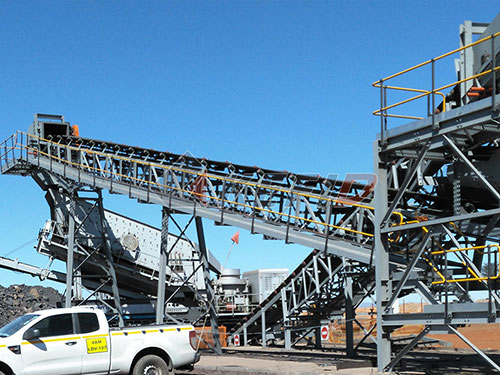

H1: Usine d'assemblage de traitement de calcaire optimisée pour un rendement élevé, Exploitation minière à faible impact
1. OUVERTURE ENTRAÎNÉE PAR POINT DE DOULEUR
La gestion d'une carrière de calcaire implique d'équilibrer la productivité avec des pressions environnementales et économiques strictes.. Les défis opérationnels courants comprennent:
Génération d’amendes excessives: Les méthodes de concassage conventionnelles produisent souvent un pourcentage plus élevé de fines non spécifiées (matériau inférieur à 5 mm), réduisant directement le rendement et les revenus des produits vendables.
Haute intensité énergétique: Étapes de concassage primaire et secondaire, ainsi que la manutention des matériaux, représentent la majorité de la consommation énergétique d’un site, conduisant à des coûts opérationnels volatils et croissants.
Contrôle des émissions de poussière: Le confinement des particules en suspension dans l'air aux points de transfert et pendant le traitement nécessite un investissement important dans les systèmes de suppression, avec des coûts permanents en eau et en produits chimiques.
Temps d'arrêt fréquents pour la maintenance: Les arrêts imprévus dus à une défaillance de pièces d'usure ou à une panne de composants dans des environnements calcaires difficiles perturbent les calendriers de production et augmentent les coûts de main d'œuvre..
Classement des produits inflexible: L'ajustement des spécifications du produit final pour répondre aux demandes changeantes du marché peut être lent et inefficace avec les anciennes usines à circuit fixe..
Comment augmenter le débit de l'agrégat de spécification tout en contrôlant les amendes, réduisez l’empreinte énergétique de votre usine par tonne, et réduisez systématiquement votre fardeau de conformité environnementale?
2. APERÇU DU PRODUIT
L'usine d'assemblage d'exploitation minière EcoFriendly Limestone est une installation modulaire, système de traitement semi-mobile conçu pour la réduction primaire et secondaire du calcaire extrait en agrégats calibrés avec précision. Il est conçu pour les entrepreneurs et les opérations minières nécessitant un équilibre de capacité élevée, flexibilité du produit, et un impact environnemental réduit.
Flux de travail opérationnel:
1. Alimentation primaire & Présélection: Tout au long de la carrière (ROQ) le calcaire est alimenté via une mangeoire vibrante pour grizzly, qui contourne les matériaux subdimensionnés pour réduire la charge du concasseur primaire.
2. Concassage primaire sélectif: Un concasseur primaire dédié utilise la compression interparticulaire pour décomposer les matières premières de grande taille avec un minimum de déchets fins..
3. Traitement secondaire intelligent & Classification: Le matériau broyé est transporté vers un concasseur secondaire et un tamis à circuit fermé., permettant un ajustement en temps réel de la taille du produit.
4. Gestion intégrée de la poussière: Des points de transfert encapsulés et des systèmes de brouillard sec ou de brumisation stratégiquement placés suppriment la poussière à la source sans saturer le matériau..
5. Commande centralisée & Contrôle: Une interface opérateur unique surveille le débit, consommation d'énergie, et des mesures de performances critiques pour une prise de décision optimisée.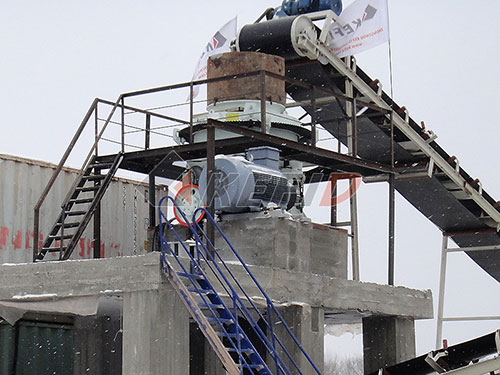
Champ d'application & Limites:
Portée: Idéal pour le développement de nouvelles carrières, fosses satellites, ou des projets de remplacement d'usines existantes visant une production cohérente d'agrégats de construction (par ex., ¾", ½", RCA).
Limites: Non conçu pour un broyage ultrafin (sub3mm) ou le traitement de pierres très abrasives ou riches en silice sans configurations de revêtement spécifiques. La taille maximale de l'alimentation est déterminée par le modèle de concasseur primaire sélectionné..
3. CARACTÉRISTIQUES PRINCIPALES
Chambre de concassage sélectif | Base technique: Principe du broyage interparticulaire dans un concasseur à percussion à rotor vertical | Avantage opérationnel: Dirige l'énergie vers la rupture de la roche plutôt que vers le contact métal-roche., produire un produit plus cubique avec beaucoup moins de microfractures conduisant à des fines | Impact sur le retour sur investissement: Les données de terrain montrent un 1525% augmentation du rendement du produit commercialisable en réduisant la génération de fines indésirables.
Entraînement à fréquence variable (VFD) Système de convoyeur | Base technique: Entraînements de moteurs à courant alternatif à commande électronique sur les convoyeurs clés | Avantage opérationnel: Permet un démarrage progressif pour réduire les contraintes mécaniques et permet d'adapter la vitesse à la décharge réelle du concasseur, éliminant l'accumulation et le déversement de matériaux | Impact sur le retour sur investissement: Réduit l'usure de la courroie jusqu'à 30% et réduit la consommation d'énergie sur les circuits de convoyage d'en moyenne 18%.
Conception de point de transfert encapsulé | Base technique: Capots scellés avec plinthes en caoutchouc à toutes les jonctions du convoyeur | Avantage opérationnel: Contient physiquement des particules de poussière en suspension dans l'air à leur point de génération avant qu'elles ne puissent devenir en suspension dans l'air | Impact sur le retour sur investissement: Réduit la consommation d’eau pour le contrôle de la poussière d’environ 60% et réduit le travail d'entretien ménager tout en simplifiant le respect des particules (PM10/PM2,5) règlements.
Assemblage modulaire monté sur patins | Base technique: Skids en acier de construction préassemblés pour les principales sections de l'usine (par ex., module de concassage, module de dépistage) | Avantage opérationnel: Réduit considérablement les travaux de génie civil sur site et le temps d'installation; facilite la relocalisation future ou la reconfiguration de l’usine | Impact sur le retour sur investissement: Réduit les temps d'arrêt typiques de l'installation jusqu'à 40%, accélérer les délais de réalisation des nouveaux projets.
Lubrification centralisée & Système hydraulique | Base technique: Distribution automatisée de lubrification en un seul point vers les principaux roulements et l'unité de puissance hydraulique centralisée | Avantage opérationnel: Assure une protection cohérente des composants selon les intervalles planifiés; simplifie les contrôles de maintenance; réduit le risque de contamination dû au graissage manuel | Impact sur le retour sur investissement: Les tests de l'industrie démontrent un 20% prolongation de la durée de vie des roulements et réduction des incidents de temps d'arrêt liés à la lubrification.
Tableau de bord de surveillance de la production en temps réel | Base technique: Système SCADA basé sur un API avec IHM à écran tactile affichant les taux de tonnage, consommation d'énergie (kWh/tonne), et mesures d'efficacité de l'écran | Avantage opérationnel: Fournit aux directeurs d’usine une visibilité immédiate sur l’efficacité opérationnelle, permettant des ajustements basés sur les données pour des performances optimales | Impact sur le retour sur investissement: Permet une identification proactive des goulots d’étranglement, soutenir des améliorations durables du débit de 510%.
4. AVANTAGES CONCURRENTIELS
| Mesure de performances | Norme de l'industrie (Usine fixe héritée) | Solution d'usine d'assemblage de calcaire écologique | Avantage (% Amélioration) |
| : | : | : | : |
| Consommation d'énergie électrique| ~0,8 1.2 kWh/tonne traitée| ~0,65 0.85 kWh/tonne traitée| Jusqu'à 20% réduction |
| Rendement du produit vendable| Typiquement 7582% de la masse alimentaire totale| Réalise 8288% de la masse alimentaire totale| Jusqu'à 8% augmentation absolue |
| Durée de l'installation sur site| 812 semaines pour les travaux de génie civil & assemblée| 46 semaines avec modules préassemblés| Environ 50% plus rapide |
| Utilisation de l'eau pour la suppression de la poussière| Barres de pulvérisation à grand volume en plusieurs points| Brouillard sec ciblé aux points de transfert confinés| Jusqu'à 60% réduction |
| Temps moyen entre les pannes (MTBF)
(Roulements critiques pour concasseur)| ~1 200 1,800 heures| ~2 000 2,400 heures| Sur 25% amélioration |
5. SPÉCIFICATIONS TECHNIQUES
Plage de capacité de conception: Configurable à partir de 250 à 600 tonnes métriques par heure (TPH), en fonction de la dureté de la taille de l'alimentation (Indice de travail des liaisons ~1015 kWh/t) et gradation du produit cible.
Exigences d'alimentation: Charge totale connectée entre 450 kVA – 900 kVA basé sur la configuration; conçu pour le raccordement au réseau ou aux groupes électrogènes de première puissance.
Spécifications matérielles: Composants d'usure primaires en acier martensitique à haute teneur en chrome; les cadres structurels utilisent de l'acier de qualité S355JR; doublures résistantes à l'abrasion à tous les points d'usure élevés.
Dimensions physiques (Empreinte typique de l'ensemble de l'usine): Environ L40m x L20m x H15m; la conception modulaire permet la séparation en unités transportables sous permis routier standard.
Plage de fonctionnement environnementale: Conçu pour des températures ambiantes de 20°C à +45°C; systèmes de suppression de poussière évalués comme efficaces jusqu'à des vitesses de vent de <28 km/h au point de fusion.
6. SCÉNARIOS D'APPLICATION
Producteur d’agrégats – Mise à niveau d’une ancienne usine
Défi: L’usine fixe d’une carrière de taille moyenne produisait des fines hors marché (>30%), aux prises avec des plaintes concernant la poussière provenant des communautés voisines, et faire face à des factures d'énergie élevées dues à des moteurs inefficaces.
La mise en œuvre de la solution a été notre usine d'assemblage d'exploitation minière de calcaire écologique de milieu de gamme, configurée comme un circuit de remplacement immédiat après le concasseur à mâchoires principal..
Résultats dans les six mois:
Le rendement des produits vendables est passé de <78%.
Les plaintes concernant la poussière dans la communauté ont diminué <90%.
La consommation spécifique d'énergie du site a diminué de <17%.
Concassage sous contrat & Opération de recyclage
Défi Une entreprise de téléphonie mobile avait besoin d'une capacité plus élevée, mais était confrontée à des délais d'autorisation restrictifs sur les nouveaux sites en raison de préoccupations environnementales concernant les niveaux de bruit de ruissellement.
Le déploiement de la solution était notre version montée sur remorque dotée d'un puisard de recyclage d'eau intégré à encapsulation acoustique avancée.
Résultats La solution a permis:
Les délais d'approbation des permis ont été réduits grâce à une conception démontrable à faible impact
Le temps d'installation par nouveau site a été réduit de cinq jours à deux jours, augmentant ainsi la capacité contractuelle annuelle
Production cohérente obtenue, répondant aux spécifications du DOT
Considérations commerciales
Les niveaux de tarification des équipements sont structurés autour de la configuration principale de la capacité de débit:
Niveau I (<300 Configuration de base TPH): Comprend des modules de concassage primaires et secondaires, un panneau de commande central de criblage de base
Niveau II (<300–500 TPH Configuration avancée): Ajoute un module de pré-criblage, un système amélioré de suppression de la poussière, des VFD sur tous les principaux convoyeurs, un ensemble étendu de pièces d'usure
Niveau III (<500–600 TPH Configuration Premium): Conception entièrement encapsulée Lubrification automatisée Capteurs de surveillance prédictive avancés Garanties de composants haut de gamme
Fonctionnalités facultatives disponibles à tous les niveaux:
Ensemble de production d'énergie diesel embarqué
Système en boucle fermée de recyclage de l’eau
Abonnement télésurveillance télématique
Doublures d'usure spécialisées pour des indices d'abrasion plus élevés
Forfaits de services:
1 Plan de maintenance d'inspection annuelle Remplacement programmé des pièces
2 Plan de soins complet incluant la surveillance à distance, l'expédition prioritaire des pièces, la couverture de la main d'œuvre, les pannes planifiées
3 Plan de garantie de performance Disponibilité garantie soutenue par des mesures de performance définies Rendement en kWh/tonne
Les options de financement sont disponibles auprès de partenaires, y compris la location d'équipement, les prêts de capital, les structures de location opérationnelle, les besoins de trésorerie adaptés, les conditions typiques, en mois et en années.
FAQ concernant l'usine d'assemblage d'exploitation minière de calcaire écologique
Quel niveau de préparation du sol a nécessité l'installation?
Les modules montés sur skid nécessitent une sous-base compactée et des fondations en béton minimales par rapport aux installations fixes traditionnelles, réduisant considérablement les coûts de génie civil et les délais de livraison.
Comment cette usine gère-t-elle les variations de dureté du calcaire au sein d'un même gisement ??
Les entraînements du rotor à vitesse variable de la chambre de concassage sélectif permettent aux opérateurs d'ajuster les paramètres du concasseur et de maintenir une répartition constante de la forme et de la taille du produit malgré des fluctuations modérées de la dureté de l'alimentation.
Quelles sont les économies continues en matière de coûts d'exploitation par rapport aux installations conventionnelles?
Les économies primaires proviennent de trois domaines : réduction de la consommation d'énergie, réduction de la consommation d'eau, contrôle de la poussière, réduction des coûts des pièces d'usure grâce au principe efficace de concassage rockonrock, année du rapport d'exploitation typique, période de récupération basée uniquement sur ces économies.
Une formation est-elle dispensée à notre personnel de maintenance des opérations ??
Oui, un programme de formation complet comprenait l'achat couvrant un fonctionnement sûr, la maintenance de routine, le dépannage effectué en usine pendant la mise en service sur le site
Ce système peut-il intégrer un concasseur giratoire à mâchoire primaire existant?
Oui, il est conçu pour fonctionner car un circuit tertiaire secondaire complet peut être conçu pour accepter l'alimentation de votre étape de concassage primaire existante, maximisant ainsi votre investissement actuel dans les actifs.