
Producteurs d'usines de concassage de scories personnalisées
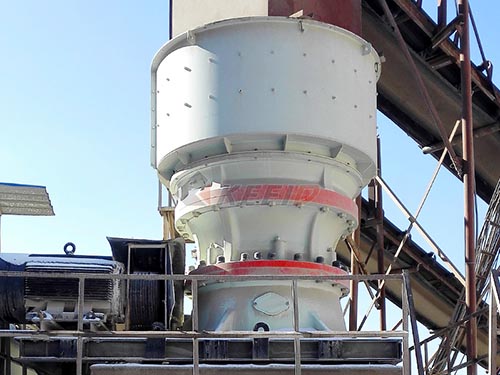

Contenu pour: Producteurs d'usines de concassage de scories personnalisées
The Hidden Cost of Inefficient Slag Processing: Is Your Plant Losing 1520% of Potential Revenue?
Every ton of slag you process carries embedded costs: énergie, pièces d'usure, et du travail. Encore, many operations accept 3040% downtime during material changeovers, struggle with inconsistent final product gradation that fails to meet ASTM specifications, and watch as valuable ferrous content is lost to the waste stream. Industry data indicates that a poorly configured slag crusher plant can consume up to 25% more power per ton than a system designed for your specific slag chemistry. Are your current producers forcing you to choose between throughput and product quality? Can your existing setup handle the varying abrasiveness of aircooled versus granulated blast furnace slag without weekly liner replacements?
Présentation du produit: Engineered Slag Reduction Systems
UN custom slag crusher plant is a multistage processing system designed specifically for the physical properties of ferrous and nonferrous slags. Contrairement aux concasseurs de granulats standards, these plants account for high abrasion, contenu métallique, and variable feed sizes.
Flux de travail opérationnel:
1. Réduction primaire: Runofpile slag (up to 36inch lumps) enters a heavyduty jaw crusher or impactor with manganese alloy liners.
2. Séparation magnétique: Overband magnets and drum separators extract 8095% of recoverable ferrous metals before secondary crushing.
3. Secondaire & Concassage Tertiaire: Concasseurs à cône ou impacteurs à arbre vertical (ISBC) with closedcircuit screening reduce material to target gradations (par ex., 010mm, 1020mm).
4. Projection finale & Dépoussiérage: Multideck screens classify product, while baghouse filters capture respirable silica and metallic dust.
Champ d'application: Convient aux scories de haut fourneau (BFS), voler un coup (EAF/LF), laitier de cuivre, and nickel slag. Limites: Non conçu pour une humidité élevée ( >15%) matériaux collants sans pré-séchage; nécessite un minimum 500 sq. meter footprint for a 100 Usine TPH.
Core Features of Custom Slag Crusher Plants
Customized Wear Package | Base technique: Slagspecific metallurgy (par ex., 1214% Mn steel for impact zones, chromemoly for abrasion) | Avantage opérationnel: Prolonge la durée de vie du revêtement de 4060% compared to standard aggregate crushers | Impact sur le retour sur investissement: Réduit le coût annuel d’approvisionnement en pièces d’usure de $18,000$45,000 par unité de concasseur
Integrated Ferrous Recovery System | Base technique: Multistage magnetic separation with adjustable belt speed and gauss strength | Avantage opérationnel: Récupère 95%+ of magnetic iron, creating a secondary revenue stream from scrap metal | Impact sur le retour sur investissement: UN 200 TPH plant can recover 58 tons of scrap daily, generating $300$600/day in byproduct sales
Entraînement à fréquence variable (VFD) Contrôles | Base technique: Motor speed modulation based on crusher load feedback | Avantage opérationnel: Réduit la consommation d'énergie de 1522% during partial load conditions | Impact sur le retour sur investissement: Enregistre $12,000$30,000 annually in electricity costs for a 300 HP system
ClosedCircuit Screening with AntiBlinding Mesh | Base technique: Heated screen decks or fleximesh technology to prevent slag fines from clogging apertures | Avantage opérationnel: Maintient 95% screening efficiency even with 812% teneur en humidité | Impact sur le retour sur investissement: Élimine 23 hours of weekly manual screen cleaning labor
Hydraulic Tramp Iron Relief System | Base technique: Accumulatordriven cylinder that opens crusher gap instantly upon encountering noncrushable steel | Avantage opérationnel: Prevents catastrophic damage from stray billets or rebar, réduisant les temps d'arrêt imprévus de 90% | Impact sur le retour sur investissement: Évite $15,000$50,000 in potential crusher rebuild costs per incident
Conception d'usine modulaire | Base technique: Préconçu, containerized modules with quickconnect electrical and conveyor interfaces | Avantage opérationnel: Réduit le temps d'installation du site de 12 semaines à 4 semaines | Impact sur le retour sur investissement: Accélère la génération de revenus en 8 semaines, évalué à $80,000$200,000 in early production
Avantages compétitifs: Personnalisé vs. Standard Aggregate Plants
| Mesure de performances | Norme de l'industrie (Usine de granulats) | Solution d'usine de concasseur de scories personnalisée | Avantage (% Amélioration) |
| : | : | : | : |
| Durée de vie des pièces d'usure (Liner Set) | 400600 heures | 9001,400 heures | 5560% durée de vie plus longue |
| Ferrous Recovery Rate | 5060% (passage unique) | 9297% (multistage) | 4555% récupération plus élevée |
| Product Fines Control (< 75 micron) | 1825% in final product | 812% in final product | 5055% reduction in unwanted fines |
| Temps de changement (Spécification du produit) | 46 heures | 12 heures (réglage hydraulique) | 6070% changement plus rapide |
| Consommation d'énergie (kWh/tonne) | 4.5 6.0 | 3.2 4.0 | 2833% consommation d'énergie réduite |
| Temps d'arrêt imprévus (Annuel) | 250350 heures | 80120 heures | 6065% moins de temps d'arrêt |
Spécifications techniques (Exemple: 150 TPH Steel Slag Plant)
- Capacité nominale: 150 tonnes par heure (TPH) à 90% disponibilité, taille d'alimentation jusqu'à 24 pouces
- Exigences d'alimentation: 450550 kVA total installed; 480V/60Hz ou 400V/50Hz
- Spécifications matérielles: Doublures: 18% acier au manganèse (primaire), chromemoly white iron (secondaire); Cadre principal: ASTM A36 structural steel with 1/4inch wear plate lining
- Dimensions physiques: Primary crusher module: 40ft x 10ft x 12ft (LxlxH); Empreinte totale de l'usine: 120ft x 80ft (conveyor layout dependent)
- Plage de fonctionnement environnementale: Température ambiante: 20°C à 50°C; Designed for outdoor operation with dust suppression; Niveaux de bruit: <85 dB à 1 mètre (with acoustic enclosures optional)
- Niveau d'entrée (5080 TPH): $350,000 $550,000 (Basic controls, single magnetic separator)
- Milieu de gamme (100200 TPH): $750,000 $1,400,000 (VFD, multistage magnets, hydraulic relief)
- HauteCapacité (250400 TPH): $1,800,000 $3,200,000 (Automatisation complète, dual screening, surveillance à distance)
- Remote telemetry and PLC integration: $25,000 $45,000
- Acoustic enclosures for noise compliance: $40,000 $80,000
- Water spray dust suppression system: $15,000 $30,000
- Garantie standard: 12 mois / 2,000 heures d'ouverture
- Contrat de service prolongé: Comprend des inspections trimestrielles, audits pièces d'usure, and priority dispatch (environ. $45,000/année)
- Options de financement: Location d'équipement en propre (3660 mois) or secured equipment loans available through partner lenders; typical down payment 2030%.
Scénarios d'application & Études de cas
Traitement des scories d'aciérie (EAF Dust & Scories) | Défi: A midwest US minimill was landfilling 40,000 tons of slag annually due to high metallic iron content (12%) causing excessive wear on standard crushers. | Solution: Installation of a custom slag crusher plant with a dedicated primary impactor with replaceable wear segments and a threestage magnetic separation system. | Résultats: Reduced wear part consumption by 60%. Rétabli 3,800 tons of scrap metal in the first year (valeur: $285,000). Produced a clean aggregate meeting state DOT spec for road base, eliminating landfill costs of $18/ton.
Traitement des sous-produits de la fonderie de cuivre | Défi: A South American copper smelter needed to process granulated copper slag (teneur élevée en silice, 55% SiO2) into a blasting abrasive without generating excessive dust. | Solution: A custom plant featuring a VSI crusher with ceramic wear inserts, a closedcircuit air classification system, and a highefficiency baghouse. | Résultats: Produced a consistent G40 grit abrasive with <2% humidité. Émissions de poussières réduites à <5 mg/Nm³, meeting local environmental standards. The plant paid for itself in 18 months through abrasive sales.
Considérations commerciales
Niveaux de tarification des équipements (Estimé, Port de chargement FOB):
Fonctionnalités facultatives:
Forfaits de services:
Foire aux questions (FAQ)
T1: Can a custom slag crusher plant handle both aircooled and granulated blast furnace slag?
Oui, but the configuration differs. Aircooled slag requires a primary jaw crusher for initial breakage, while granulated slag can often feed directly into a secondary impactor. Your plant producer must specify the slag type during design to select the correct rotor speed and liner configuration.
T2: What is the typical ROI period for a custom slag crusher plant?
Basé sur les données de terrain de 15 installations, la période de récupération moyenne est 1824 mois. Ceci est dû à trois facteurs: elimination of landfill tipping fees ($15$30/tonne), revenue from recovered ferrous scrap ($150$250/tonne), and sale of processed aggregate ($8$15/tonne).
T3: How does the plant handle the variable moisture content in slag?
The plant design includes a moisture tolerance of up to 12% sans dégradation des performances. Pour une humidité plus élevée, we recommend a predrying system or heated screen decks. The VFD controls also adjust feed rate automatically to prevent packing in the crusher chamber.
T4: What is the required operator training for a custom slag plant?
Your existing plant operators can typically be trained within 57 jours. The training covers PLC interface navigation, wear part inspection intervals, and magnetic separator cleaning procedures. No specialized engineering degree is required.
Q5: Can the plant be expanded in the future if my production needs increase?
Oui. The modular design allows for capacity expansion by adding a secondary crushing module or an additional screening deck. The electrical and conveyor systems are designed with 2030% excess capacity to accommodate future upgrades without a complete rebuild.
Q6: What is the lead time for a custom slag crusher plant?
L'ingénierie et la fabrication nécessitent généralement 1620 semaines à compter de la confirmation de la commande. Préparation du terrain (fondations, alimentation électrique) can be done concurrently. Total project timeline from order to first production is usually 2024 semaines.
Q7: How does the plant ensure consistent product gradation for ASTM C33 or similar specifications?
The closedcircuit system with a variablespeed feeder and realtime crusher setting adjustment maintains product gradation within +/ 3% de cible. Automated sampling ports allow for quick quality checks without stopping production.