
Custom Iron Ore Crushing Plant Makers


Solutions ciblées pour usines de concassage de minerai de fer pour un tonnage élevé, HighAvailability Operations
Are your crushing circuits struggling to keep pace with production targets while maintenance costs escalate? Pour les directeurs d’usine et les entrepreneurs en ingénierie, the bottlenecks in primary and secondary crushing directly impact downstream processing and overall site profitability. Les points douloureux courants incluent:
Temps d'arrêt imprévus: Bearing failures or wear part changes in abrasive iron ore applications can halt production for 1224 heures, coûtant plus de $50,000 par heure de débit perdu.
Taille d'alimentation incohérente: Fluctuations du ROM (Le mien) ore size and hardness lead to crusher chokefeed or idle running, reducing optimal capacity by 1530% et augmentation de la consommation d’énergie spécifique.
Coûts opérationnels élevés: Premature wear on mantles, concaves, and jaw plates due to nonoptimized crushing chambers and inadequate material flow design can increase consumable costs by 40%.
Poussière & Gestion des vibrations: Excessive dust generation at transfer points creates environmental compliance risks and health hazards, while uncontrolled vibration accelerates structural fatigue.
La question centrale est: how can you achieve a reliable, highyield crushing circuit that delivers consistent 6" product for your SAG mills or 1.5" for your ball mill lines, while controlling total operational expenditure?
Présentation du produit: HeavyDuty Custom Iron Ore Crushing Stations
Our engineered solution is a customconfigured stationary or semimobile crushing plant specifically designed for the abrasive and highdensity characteristics of magnetite and hematite ores. The system integrates primary, secondaire, and tertiary crushing modules with robust feeding, dépistage, et composants de manutention.
Flux de travail opérationnel:
1. Réduction primaire: Dump trucks or shovels feed ROM iron ore (jusqu'à 48") into a heavyduty apron feeder, which regulates material flow to a gyratory or jaw crusher for initial reduction.
2. Présélection & Concassage secondaire: Primary crushed material is conveyed to a scalping screen. Oversize is routed to a cone crusher for secondary reduction. This closedcircuit design ensures optimal feed size for downstream grinding.
3. Concassage Tertiaire & Dimensionnement du produit: For plants requiring finer product, a tertiary cone crusher stage operates in closed circuit with final sizing screens to achieve precise product specifications (par ex., 25mm or 19mm).
Champ d'application: Ideal for greenfield mine development or brownfield expansion projects requiring processing capacities from 1,000 à plus 10,000 tonnes par heure (tph). Limitations include requirement for significant foundational engineering and capital investment; not suitable for smallscale or exploratory operations.
Core Features of Our Custom Iron Ore Crushing Plant
Conception adaptative de la chambre de concassage | Base technique: Dynamic chamber geometry optimization via CAD/ DEM (Modélisation d'éléments discrets) simulation | Avantage opérationnel: Maintains consistent product gradation and throughput even as wear parts degrade | Impact sur le retour sur investissement: Jusqu'à 20% longer liner life reduces part change frequency and labor costs.
Charge intelligente & Système de contrôle d'alimentation | Base technique: Capteurs de pression et variateurs de fréquence intégrés au PLC (VFD) on feeders and crushers | Avantage opérationnel: Prevents crusher overloads and eliminates idle running, ensuring operation at peak power draw | Impact sur le retour sur investissement: Les données de terrain montrent un 1218% réduction de la consommation énergétique spécifique (kWh/tonne).
Centralized Dust Suppression Integration | Base technique: Laminarflow spray systems at all transfer points tied to belt conveyor operation sensors | Avantage opérationnel: Reduces airborne particulate matter at source without overwetting ore | Impact sur le retour sur investissement: Mitigates environmental noncompliance risks and reduces cleanup labor by an estimated 30%.

Modular Maintenance Platform Design | Base technique: Engineered access platforms, hydraulic assist systems for wear part replacement, and standardized tooling points | Avantage opérationnel: Enables scheduled mantle/liner changes in under 8 heures contre. norme industrielle de 16+ heures | Impact sur le retour sur investissement: Directly increases plant availability by >2% annuellement.
AbrasionResistant Material Flow Lining | Base technique: Ceramicreinforced composite liners on hoppers, chutes, and skirts with impactresistant steel backing | Avantage opérationnel: Eliminates premature wearthrough at highimpact zones, ensuring structural integrity | Impact sur le retour sur investissement: Reduces chute replacement cycles from every 6 months to planned 36month intervals.
Robust Structural Dynamics Engineering | Base technique: Analyse par éléments finis (FEA) on support structures to manage dynamic loads from crusher forces up to 500 kN | Avantage opérationnel: Minimizes harmful vibration transmission; extends service life of all connected components | ROI Impact Lowers lifetime cost of ownership by reducing stressinduced cracking and fatigue failures.
Avantages compétitifs
| Mesure de performances | Moyenne standard de l’industrie | Our Custom Iron Ore Crushing Plant Solution | Avantage documenté |
| : | : | : | : |
| Disponibilité des installations | 85 88% (prévu & temps d'arrêt imprévu)| >92% disponibilité cible| +5% amélioration |
| Durée de vie de la doublure (Primaire)| ~1.2 million tonnes per set| ~1.5 million tonnes per set| +25% amélioration |
| Consommation d'énergie spécifique| Varie; baseline set per project| Optimized circuits show consistent reduction| Jusqu'à 15% amélioration |
| Émission de poussière aux points de transfert| Often requires secondary control| Controlled at source below regulatory limits|<70 mg/m³ achieved |
| Temps moyen de réparation (MTTR)| Major liner change >16 heures|<8 hours with integrated systems|50% réduction du temps |
Spécifications techniques
Plage de capacité: Engineered for throughputs from 1,000 tph à plus 10,000 tph, depending on feed size index (Fi) et rapport de réduction requis.
Exigences d'alimentation: Primary crusher drive motors up to 600 kW. La puissance totale installée de la centrale varie généralement de 1.5 MW à plus 8 MW, supplied via HV substation.
Spécifications matérielles: Fabriqué en acier à haute résistance (Catégorie ASTM A572 50+). Critical wear areas use AR400/500 steel plate or ceramiclined composites. Crusher components manufactured from alloy steels (par ex., Acier au manganèse ASTM A128).
Dimensions physiques: Primary station footprint approximately 25m L x 15m W x 20m H. Full modular plant dimensions are projectspecific.
Plage de fonctionnement environnementale: Conçu pour des températures ambiantes de 30°C à +50°C, with optional heating/cooling packages. Dust protection rating standard at IP65 for electrical enclosures.
Scénarios d'application
Greenfield Magnetite Operation in Pilbara Region
Défi: Required a primary crushing circuit capable of processing highly abrasive banded iron formation (FIF) à 2,400 tph with minimal downtime in a remote location with limited maintenance personnel.
Solution: Implementation of a singletoggle jaw crusher as the primary unit with our Adaptive Crushing Chamber Design and Modular Maintenance Platforms. The plant was designed as three transportable modules.
Résultats: A atteint un débit soutenu de 2,450 tph. First liner change completed in under 7 hours by site crew. Plant availability recorded at 93.5% au cours de la première année.
Agrandissement de l'usine d'hématite de friches industrielles
Défi: Existing secondary/tertiary circuit was bottlenecking expansion goals; space constraints limited equipment footprint; dust emissions were problematic.
Solution: A compact tertiary crushing station featuring two cone crushers in closed circuit with a multislope screen. The system included full Centralized Dust Suppression Integration within the existing footprint.
Résultats: Capacité du circuit augmentée de 35%. Final product consistency improved (+/ 3mm specification). Dust emissions measured at less than 50 mg/m³ postinstallation.
Considérations commerciales
Our custom iron ore crushing plants are capital projects priced according to scope complexity:
Tier I – Primary Station Only: Includes feeder primary crusher discharge conveyor dust suppression basic controls ($4M – $9M).
Tier II – Primary & Secondary Closed Circuit: Adds scalping screen secondary crushers surge bin advanced PLC control system ($12M – $22M).
Tier III – Turnkey Crushing & Usine de criblage: Fullcircuit design including tertiary stage all interconnecting conveyors advanced automation package full EPC services ($25M+).
Optional features include automated lubrication systems remote monitoring diagnostics advanced wear particle analysis integration semimobile skid designs.
Service packages range from annual inspection plans through comprehensive multiyear performance contracts covering parts labor scheduled maintenance financing options include traditional capital equipment loans operating lease structures project financing partnerships tailored payment schedules aligned with commissioning milestones are available upon application.
Foire aux questions
Q1 Are your custom plants compatible with our existing SAG mill feed conveyor system?
A1 Yes integration is fundamental Our engineering team will design the discharge hopper conveyor interface complete with transfer chutes controls handshake protocols based on your existing system specifications ensuring seamless material transfer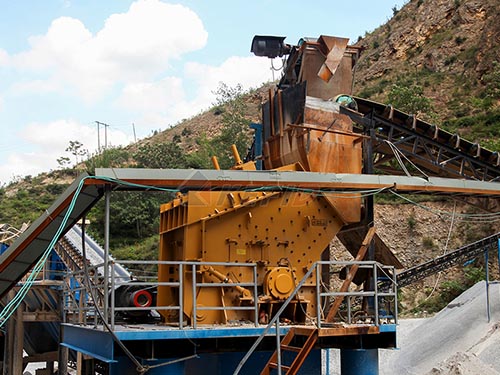
Q2 What is the typical implementation timeline from order placement commissioning?
A2 For Tier IIIII plants typical lead times are between 14 months depending on final scope complexity This includes detailed engineering procurement fabrication FAT worksite construction erection commissioning
Q3 How do you quantify the operational efficiency gains promised?
A3 We provide detailed process simulation reports based on your specific ore characteristics using DEM software These projections form part of the commercial proposal Postinstallation we conduct performance acceptance tests against contracted KPIs like throughput power consumption product gradation
Q4 What are the key factors affecting final pricing?
A4 Major cost drivers include required throughput capacity number of crushing stages level of automation environmental control requirements sitespecific conditions transport logistics required spare parts package
Q5 Do you offer training for our operations maintenance teams?
A5 Yes comprehensive training is mandatory We provide both classroom instruction handson training during commissioning covering safe operation routine maintenance troubleshooting procedures specific documentation manuals
Q6 Can we source wear parts locally after installation?
A6 While we recommend genuine OEM parts due guaranteed metallurgical specifications dimensional tolerances we provide full manufacturing drawings approved vendor lists facilitate local sourcing critical spares subject quality audits
Q7 What happens if the plant does not meet guaranteed performance metrics?
A7 Our contracts include performance warranties liquidated damages clauses tied key metrics like minimum throughput maximum power consumption We commit work collaboratively rectify any deficiencies through adjustments modifications ensure contractual obligations met