
Service de conception de grossistes en équipements de concassage et de criblage
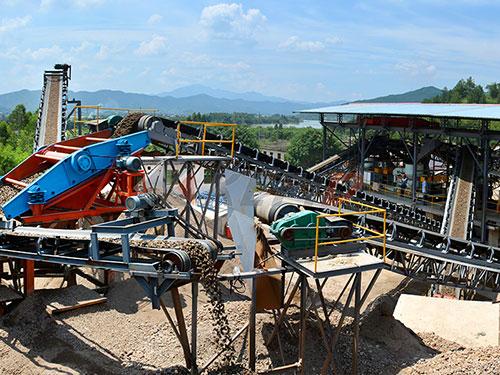

Service de conception de grossistes en équipements de concassage et de criblage
Your Crushing Circuit Is Only as Strong as Its Design—And Your Bottom Line Depends on It
Every hour of unscheduled downtime in a crushing and screening operation costs between $5,000 et $15,000 en production perdue, depending on tonnage and material value. Plant managers report that poorly designed circuits waste 12–18% of available throughput due to bottlenecks, charges de recirculation, and undersized screening decks. Engineering contractors face the added burden of redesign costs when initial layouts fail to account for material variability or site constraints.
Are you struggling with excessive recirculation that clogs your cone crusher? Do your screen media wear out three times faster than projected because of improper feed distribution? Is your plant layout forcing operators to choose between production targets and safety compliance?
UN crushing and screening equipment wholesalers design service addresses these challenges by applying engineered solutions that match equipment specifications to your material characteristics, état des lieux, and production targets—before you commit capital.
Présentation du produit: Integrated Design Service for Crushing and Screening Systems
This design service provides complete system engineering for stationary, modulaire, and mobile crushing and screening plants. The service covers equipment selection, circuit configuration, layout optimization, and commissioning support for aggregate, exploitation minière, et applications de recyclage.
Flux de travail opérationnel:
1. Site and Material Assessment – Engineers analyze feed material (abrasivité, teneur en humidité, résistance à la compression), topographie du site, and access constraints
2. Configuration des circuits – Primary, secondaire, and tertiary crushing stages are matched with appropriate screening decks, convoyeurs, and surge bins
3. Spécification de l'équipement – Crusher types (mâchoire, cône, impact, or gyratory) and screen models are selected based on throughput targets and product gradation requirements
4. Ingénierie d'implantation – 3D modeling ensures proper clearances, accès pour l'entretien, and material flow paths
5. Validation des performances – Simulation software predicts throughput, consommation d'énergie, and product quality under varying feed conditions
Champ d'application: Suitable for greenfield installations, agrandissements d'usine, and retrofit projects in hard rock quarries, gravières, construction and demolition recycling, et opérations de traitement des minéraux.
Limites: Service does not include structural steel fabrication, installation électrique, or onsite construction management unless specified in a separate contract.
Fonctionnalités principales
Conception de circuits personnalisés | Base technique: Mass balance calculations using Bond Work Index and particle size distribution analysis | Avantage opérationnel: Eliminates bottlenecks by matching crusher reduction ratios to screen cut points | Impact sur le retour sur investissement: 8–12% increase in usable throughput without additional horsepower
Equipment Selection Matrix | Base technique: Database of 200+ OEM models with verified performance curves | Avantage opérationnel: Reduces specification errors that cause 30% of commissioning delays | Impact sur le retour sur investissement: Cuts equipment procurement cycle by 4–6 weeks
Recirculating Load Optimization | Base technique: Closedcircuit analysis using circulating load ratios and screen efficiency curves | Avantage opérationnel: Lowers recirculation from typical 150–200% to 80–120% | Impact sur le retour sur investissement: Reduces conveyor wear costs by 18% and crusher liner consumption by 12%
SiteSpecific Layout Engineering | Base technique: 3D scanning and BIM modeling with minimum clearance requirements per OSHA and MSHA standards | Avantage opérationnel: Ensures safe maintenance access and material flow without rework | Impact sur le retour sur investissement: Eliminates 2–3 layout revisions that add $15,000–$25,000 in engineering costs
Material Variability Accommodation | Base technique: Feed analysis with moisture sensitivity and clay content thresholds | Avantage opérationnel: Prevents screen blinding and crusher packing during wet seasons | Impact sur le retour sur investissement: Maintient 92%+ uptime during highmoisture periods
Pack d'assistance à la mise en service | Base technique: Startup checklist with 150+ verification points | Avantage opérationnel: Réduit le temps de mise en service de 14 jours pour 7 jours | Impact sur le retour sur investissement: Accelerates revenue generation by one week
Analyse des coûts du cycle de vie | Base technique: Wear rate projections based on Bond Abrasion Index and operating hours | Avantage opérationnel: Provides accurate 5year maintenance budget | Impact sur le retour sur investissement: Prevents 20–30% budget overruns on wear parts
Avantages compétitifs
| Mesure de performances | Norme de l'industrie | Service de conception de grossistes en équipements de concassage et de criblage | Avantage (% amélioration) |
|||||
| Designtocommissioning timeline | 16–20 semaines | 10–14 semaines | 30–37% faster |
| Précision du débit vs. spécification | ±15% | ±5% | 67% amélioration |
| Recirculating load ratio | 150–200% | 80–120% | 40–47% reduction |
| Efficacité de l'écran (first pass) | 75–82% | 88–94% | 13–15% d’amélioration |
| Commissioning delays due to design errors | 3–5 incidents | 0–1 incidents | 80% réduction |
| Maintenance access compliance | 60–70% of OSHA standards | 100% conformité | 43–67% improvement |
| Wear part cost overrun (first year) | 18–25% | 5–8% | 68–72% reduction |
Spécifications techniques
Plage de capacité: 150–1,200 metric tons per hour (depending on feed material and circuit configuration)
Exigences d'alimentation: 250–2,500 kW total installed power, 480V or 4160V threephase, 60 Hz ou 50 Hz
Spécifications matérielles:
- Taille de l'alimentation: Jusqu'à 1,200 mm (primaire) ou 300 mm (secondaire/tertiaire)
- Material types: Roche dure (résistance à la compression jusqu'à 350 MPa), gravier, calcaire, béton recyclé, scories
- Tolérance à l'humidité: Jusqu'à 8% surface moisture with standard screens; jusqu'à 15% with highfrequency or washing screens
- Empreinte végétale: 2,500–8,000 m² (depending on capacity and configuration)
- Hauteur maximale des composants: 18 m (conveyor discharge)
- Minimum clearance for maintenance: 3 m (crusher access), 2.5 m (ponts d'écran)
- Température: 20°C à 45°C
- Altitude: Jusqu'à 4,000 m (derating required above 2,500 m)
- Contrôle de la poussière: Engineered for compliance with local particulate emission standards
- Étage 1 (150–300 t/h): $1.2–2.5 million (automatisation de base, pièces d'usure standards)
- Étage 2 (300–600 t/h): $2.5–5.0 million (Contrôle par API, doublures d'usure haut de gamme, suppression de la poussière)
- Étage 3 (600–1 200 t/h): $5.0–12.0 million (full SCADA, surveillance à distance, custom chutework)
- Pack de surveillance et de diagnostic à distance: $45,000–85 000$
- Garantie prolongée (3 années/10 000 heures): 8–12% du coût de l’équipement
- Programme de formation des opérateurs (5 jours sur place): $18,000
- Spare parts inventory package (first year): 5–7% of equipment cost
- Basique: Conception, spécification, et assistance à la mise en service (included in equipment pricing)
- Prime: Ajoute 12 months of performance monitoring and quarterly optimization reviews ($35,000/année)
- Entreprise: Full lifecycle management including wear part procurement and predictive maintenance ($85,000/année)
- Location de matériel: 36–60 mois, 4.5–7,5% TAEG (based on credit profile)
- Paiement différé: 10% vers le bas, 90% à la mise en service
- Financement basé sur la performance: Paiements liés à des jalons de débit
Dimensions physiques:
Plage de fonctionnement environnementale:
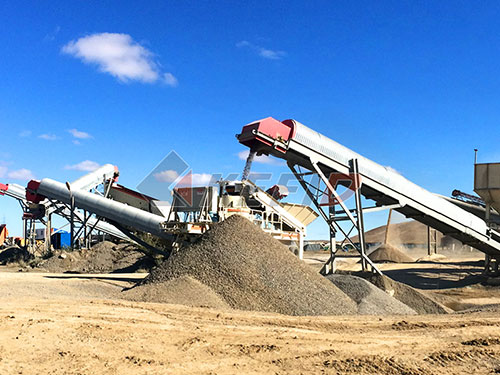
Scénarios d'application
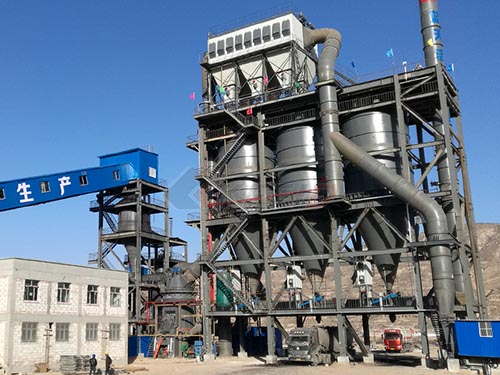
Agrandissement de la carrière de roche dure | Défi: Existant 400 tph plant was bottlenecked at secondary crushing stage, provoquant 22% recirculation and 14 hours/week of overtime to meet production targets | Solution: Redesigned circuit with larger cone crusher and dualdeck screen, added surge bin to regulate feed | Résultats: Le débit a augmenté à 580 tph, recirculation reduced to 95%, overtime eliminated, gain de revenus annuel de $1.2 million
Construction & Installation de recyclage de démolition | Défi: Mixed feed (béton, asphalte, barres d'armature) causé 40% downtime from crusher jams and screen blinding | Solution: Specified impact crusher with hydraulic release system, highfrequency screen with polyurethane media, and magnetic separator integration | Résultats: Uptime improved from 60% à 88%, wear part life extended by 35%, rebar removal efficiency reached 97%
Gravel Pit with High Moisture Content | Défi: Seasonal rainfall caused screen blinding that reduced throughput by 30% pendant 4 months of the year | Solution: Installed washing screen system with spray bars and sand recovery unit, modified circuit to bypass wet material during heavy rain | Résultats: Yearround throughput maintained at 95% de capacité en saison sèche, product quality improved to meet spec for concrete aggregate
Considérations commerciales
Niveaux de tarification des équipements (Design Service Included):
Fonctionnalités facultatives:
Forfaits de services:
Options de financement:
FAQ
Q: How does the design service account for different feed material types?
UN: Engineers conduct Bond Work Index testing and abrasion analysis on your specific material. The circuit design adjusts reduction ratios, profils de chambre de concasseur, and screen media selection based on compressive strength (jusqu'à 350 MPa) and abrasiveness (jusqu'à 0.8 g/t for hard rock).
Q: Can the design service retrofit an existing plant without full replacement?
UN: Oui. Environ 40% of our projects involve retrofits. We analyze existing equipment condition, structural capacity, and electrical infrastructure to identify upgrade points—typically replacing screens, adding surge capacity, or reconfiguring conveyor paths.
Q: What is the typical timeline from design approval to commissioning?
UN: Pour le niveau 1 systèmes, 10–12 semaines. Étage 2 systems require 12–14 weeks. Étage 3 systems take 14–18 weeks. These timelines include equipment procurement, fabrication, and onsite installation supervision.
Q: How does the service handle environmental and safety compliance?
UN: Layouts are designed to meet OSHA and MSHA standards for clearance, garde, and emergency access. Dust control systems are specified based on local particulate matter regulations. Noise mitigation options (boîtiers, silencers) are available for sensitive locations.
Q: What happens if the actual throughput falls short of the design specification?
UN: The design carries a ±5% throughput guarantee based on specified feed conditions. If actual performance falls outside this range due to design error, we provide corrective engineering at no cost. Performance testing occurs during the commissioning phase.
Q: Are spare parts and wear items included in the equipment pricing?
UN: Non. Spare parts are quoted separately. We provide a recommended inventory list based on projected wear rates. Typical firstyear wear part costs range from 3–5% of equipment value for hard rock applications.
Q: Can the design service accommodate future expansion?
UN: Oui. Layouts include provisions for additional crushing stages, ponts d'écran, ou convoyeurs. Foundation designs account for future loads, and electrical systems include spare capacity for 20–30% expansion.