
concasseur à cône vs concasseur secondaire
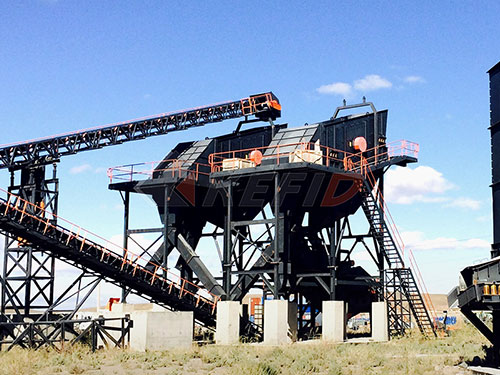

Au-delà du béguin: Demystifying Cone Crushers & Secondary Crushers for Optimal Aggregate Production
The journey from blasted rock to precisely graded aggregates essential for construction, asphalte, and concrete is a complex orchestration of size reduction. At the heart of this process, particularly after primary crushing, lies a critical decision point: selecting the optimal secondary crushing equipment. The debate often centers on Cone Crushers versus other types classified as Secondary Crushers, primarily Impact Crushers (Impacteurs à arbre horizontal - HSI). This choice profoundly impacts product quality, coûts opérationnels, overall efficiency, et finalement, rentabilité. Understanding the distinct characteristics, strengths, limites, and ideal applications of each technology is paramount for any aggregate producer or mineral processor aiming to optimize their circuit.
Understanding the Role: What is Secondary Crushing?
Concasseurs primaires (like jaw or gyratory crushers) handle the initial size reduction of large run-of-mine (ROM) material down to a manageable size, typiquement 6 à 10 pouces (150-250mm). Secondary crushing takes this pre-crushed feed and further reduces it to the desired intermediate sizes required for tertiary crushing or directly to final product specifications (par ex., cours de base, ballast ferroviaire). objectives include:
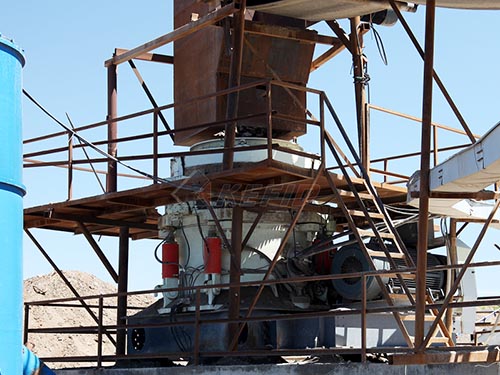
1. Further Size Reduction: Achieving target intermediate or final product sizes.
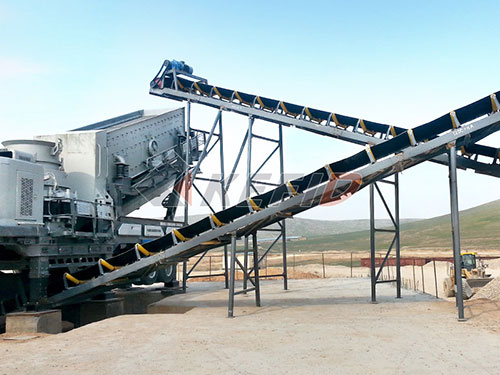
2. Product Shape Optimization: Producing cubical particles crucial for high-quality concrete and asphalt mixes.
3. Capacity Enhancement: Increasing overall plant throughput efficiently.
4. Libération: Dans le traitement des minéraux, further liberating valuable minerals from gangue.
The Contenders: Cone Crushers vs. Concasseurs à percussion (HSI)
While "concasseur secondaire" can technically encompass cone crushers themselves (as they are often used in secondary stages), the common industry comparison pits cone crushers against impact crushers (HSI) for secondary crushing duties.
je. Concasseur à cône: The Pressure Master
Operating Principle: Cone crushers operate on the principle of compressive force. Rock is fed into the top of a chamber lined with wear-resistant manganese steel concave liners (mantle and bowl liner). A gyrating mantle eccentrically driven by a shaft exerts immense pressure on the rock against the stationary concave. Rock particles are crushed as they are nipped and compressed between these surfaces multiple times as they travel down through progressively narrower gaps until they exit through the bottom discharge opening (Réglage du côté fermé - CSS).
Caractéristiques &