
Commercial Sand Gravel Mining Producer
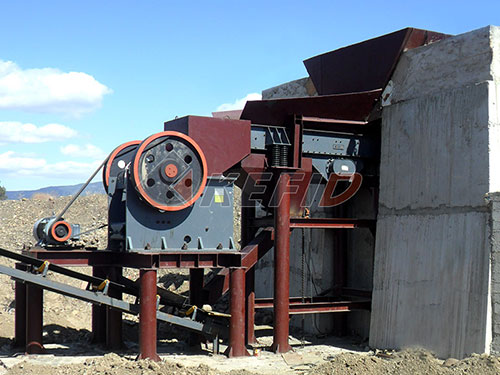

Addressing the Core Challenges of Modern Sand & Gravel Processing
Your operation faces relentless pressure: maximizing yield from variable deposits, controlling escalating energy and maintenance costs, and meeting stringent spec requirements—all while minimizing downtime. Inefficient processing directly impacts your bottom line. Are you experiencing inconsistent product gradation leading to premium product loss? Is unscheduled maintenance on aging equipment cutting into production hours? Are you struggling to balance throughput with the rising cost of water, pouvoir, and wear parts? The solution lies in precisionengineered equipment designed for the specific demands of commercial sand and gravel extraction.
Présentation du produit: HauteCapacité, Modular Sand Classification & Dewatering System
This system is engineered for the continuous, highvolume separation and dewatering of sand fractions (typiquement 100 mesh to ¼”) from a slurry feed. It optimizes the critical final stages of your wash plant to deliver dry, inspec product directly to stockpile.
Flux de travail opérationnel:
1. Slurry Infeed: Sandladen slurry from a cyclone or screen is distributed evenly across the full width of the system.
2. DensityBased Separation: A rising current of water fluidizes the sand bed, allowing fine, lowdensity particles to overflow while higherdensity, coarser sand settles.
3. Contrôle des gradations: Adjustable weirs and splitter gates enable precise cutpoint control, creating up to three product grades.
4. Mechanical Dewatering: Settled sand is conveyed up an inclined deck, where gravity and screen vibration remove free surface moisture.
5. Stockpile Discharge: Dewatered sand (typiquement 912% teneur en humidité) is discharged via conveyor for stockpiling or loadout.
Champ d'application: Ideal for medium to largescale sand operations processing bank run or pitrun material. Best suited for materials with a specific gravity consistent with natural silica sands or similar aggregates.
Limites: Not designed for primary washing of heavily claybound material or for processing gravel larger than 1/2". Feed preparation via scrubbing and screening is a prerequisite for optimal performance.
Fonctionnalités principales: Engineered for Profitability
Patented Rising Current Classifier | Base technique: Controlled upward hydraulic velocity | Avantage opérationnel: Precise separation of silt/clay from target sand fractions without blinding | Impact sur le retour sur investissement: Increases saleable product recovery by up to 5%, reducing waste pond volume.
DualFrequency Vibratory Deck | Base technique: Independently controlled vibratory motors for linear motion | Avantage opérationnel: Optimized material conveyance and water drainage for consistent discharge moisture | Impact sur le retour sur investissement: Lowers hauling costs and prevents stockpile freezing by ensuring uniform product dryness.
Modular Splitter Gate System | Base technique: Manually or hydraulically adjustable discharge gates | Avantage opérationnel: Onthefly creation of multiple spec products from a single feed stream | Impact sur le retour sur investissement: Enables premium product segmentation (par ex., sable à béton, sable de maçon) from one deposit, maximizing resource value.
Ensemble de doublure résistante à l'abrasion | Base technique: UHMW polyethylene and hardened steel wear shoes at critical contact points | Avantage opérationnel: Prolonge considérablement la durée de vie dans les zones à forte usure | Impact sur le retour sur investissement: Reduces annual wear part replacement costs and associated downtime by an estimated 3040%.

Centralized Grease Bank Lubrication | Base technique: Automated manifold delivering grease to all key bearings | Avantage opérationnel: Élimine les points de lubrification manuelle, ensuring bearing longevity and reducing safety hazards | Impact sur le retour sur investissement: Réduit le temps de maintenance programmée de 15 hours per month and prevents costly bearing failures.
Avantages compétitifs: Gains de performances quantifiables
| Mesure de performances | Norme de l'industrie (Conventional Screw Washer/Classifier) | Ce système de classification du sable | Avantage (% Amélioration) |
| : | : | : | : |
| Tonnage par heure (pour 30 mesh sand)| 75 100 TPH par unité | 150 200 TPH par unité| +80% à +100% |
| Average Moisture Content at Discharge| 18% 25%| 9% 12%| ~50% reduction in carried water |
| Consommation d'énergie spécifique (kWh/tonne)| ~0.45 0.60 kWh/tonne| ~0,25 0.35 kWh/tonne| ~35% more energy efficient |
| Annual Wear Part Cost per Ton| $0.08 $0.12/Tonne| $0.04 $0.06/Tonne| ~50% lower consumable cost |
Estimated based on processing average silica sand.
Spécifications techniques
Plage de capacité: Configurable à partir de 100 à plus 600 TPH depending on model and feed gradation.
Exigences d'alimentation: Charge totale connectée entre 40 HP à 125 HP (30 kW – 93 kW), en fonction de la taille du modèle.
Spécifications matérielles: Constructed with ASTM A36 steel mainframe; critical wear surfaces lined with AR400 steel or UHMW polyethylene; stainless steel components in water manifolds.
Dimensions physiques (Model SC200): Longueur: 28 pi (8.5m); Largeur: 12 pi (3.7m); Hauteur (décharge): 14 pi (4.3m).
Plage de fonctionnement environnementale: Designed for continuous outdoor operation in temperatures from 20°F to +120°F (29°C à +49°C). Dust covers and weatherproof motor enclosures are standard.
Scénarios d'application
[Midwest Aggregate Producer] Défi: Needed to replace three aging screw classifiers that could not meet new concrete sand spec fineness modulus consistently, resulting in high recirculating load and pond silt buildup.
Solution: Installation of a single highcapacity classification system with adjustable splitter gates after the primary screen.
Résultats: Achieved precise FM control (±0.05), increased total plant throughput by 22%, reduced pond dredging frequency from biannual to every four years.
[Southwestern Construction Materials Company] Défi: High fuel costs were eroding margins due to hauling excessive water weight in washed sand; winter freezeups also caused stockpile handling issues.
Solution: Integration of a dewateringfocused classification system into their existing wash plant circuit.
Résultats: Reduced average moisture content from 21% à 10%, calculated annual fuel savings of over $48,000 in hauling costs, eliminated winter processing shutdowns due to frozen stockpiles.
Considérations commerciales
La tarification des équipements est échelonnée en fonction de la capacité et de la configuration:
Niveau du système de base ($250400 000 $): Includes standard classifier/dewaterer with single product discharge, basic liners, electric vibrators.
Advanced Configuration Tier ($400600 000 $): Includes dualproduct splitter gates, hydraulic gate adjustment, paquet d'abrasion premium, centralized lubrication system.
Optional features include automated density control systems, camerabased monitoring packages, et conceptions modulaires montées sur skid pour une installation plus rapide.
Des forfaits de services sont disponibles:
1.
2
3
Financing options include traditional equipment loans through our partner network as well as leasetoown agreements designed to match cash flow with seasonal production cycles.
Foire aux questions
T1:
T2:
T3:
T4:
Q5:
Q6:
Q7