
Usine de transformation d'équipement de concassage de ballast de carrière commerciale
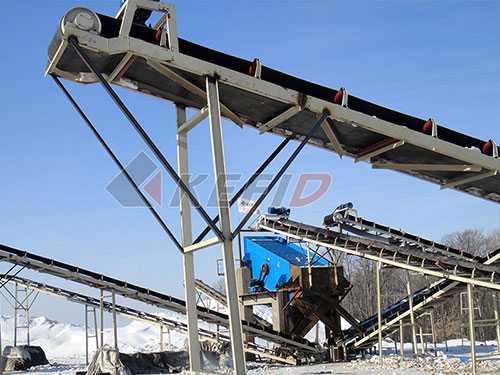

Usine de transformation d'équipement de concassage de ballast de carrière commerciale
1. OUVERTURE ENTRAÎNÉE PAR POINT DE DOULEUR
L'augmentation des coûts opérationnels et la qualité incohérente des produits érodent-elles la rentabilité de votre carrière? Pour les directeurs d’usine et les entrepreneurs en ingénierie, la production de ballast ferroviaire conforme aux spécifications présente des défis distincts. Un matériau d'alimentation incohérent entraîne des charges de recirculation excessives, accélère l'usure des revêtements du concasseur et augmente les temps d'arrêt imprévus pour la maintenance. Ajustements manuels du classement pour répondre à une distribution granulométrique stricte (PSD) les normes entraînent une perte de rendement et des pertes de produits. En outre, les étapes de concassage énergivores qui ne sont pas optimisées pour la tâche spécifique de production de ballast gonflent directement votre coût par tonne. Gérez-vous des reconfigurations fréquentes d’équipements, consommation élevée de pièces d'usure, et des coûts énergétiques qui compromettent les marges de votre projet? La solution réside dans une usine de traitement conçue spécifiquement pour les exigences rigoureuses de la production commerciale de ballast..
2. APERÇU DU PRODUIT
Ce système est un dédié Usine de traitement d'équipement de concassage de ballast de carrière, conçu comme une solution stationnaire ou semi-mobile pour la production en grand volume de granulats de ballast ferroviaire. L'usine est conçue pour transformer la roche brute de carrière en roches classées avec précision., matériau de ballast cubique répondant aux normes ferroviaires internationales (par ex., AREMA, RSSB).
Flux de travail opérationnel:
1. Scalping primaire & Écrasement: Les matériaux déversés subissent un scalpage initial pour éliminer les fines, suivi d'un concassage primaire à mâchoires pour réduire la roche à une taille gérable.
2. Secondaire & Façonnage tertiaire: Le matériau est ensuite traité à travers un concasseur à cône configuré pour une réduction et une mise en forme intermédiaires., produire la fraction de ballast préliminaire.
3. Projection finale & Recirculation: L'agrégat concassé est criblé sur des véhicules lourds, écrans multi-étages. Le produit cubique selon les spécifications est transporté vers les stocks. Les matériaux surdimensionnés sont recirculés vers le concasseur à cône, tandis que les fines de petite taille sont détournées pour être utilisées comme sous-produits ou déchets.
Champ d'application & Limites:
Portée: Idéal pour les contrats de fourniture de ballast dédié, projets d'infrastructures à grande échelle, et carrières avec d'importantes réserves de roche compétente (granit, basalte, piège à pierres).
Limites: Non conçu pour le traitement de roches molles ou très abrasives sans options de revêtement spécifiques. La taille optimale de l'alimentation est généralement limitée par l'ouverture du broyeur principal. (par ex., jusqu'à 900 mm). Une alimentation constante en roche dynamitée est nécessaire pour une efficacité maximale.
3. CARACTÉRISTIQUES PRINCIPALES
Chambre de concassage adaptative | Base technique: Ajustement CSS Hydroset & système de contrôle automatisé | Avantage opérationnel: Permet l'ajustement en temps réel du réglage du côté fermé (CSS) pendant le fonctionnement pour maintenir la taille du produit cible malgré les conditions d'alimentation changeantes | Impact sur le retour sur investissement: Réduit la perte de rendement jusqu'à 15% et minimise les temps d'arrêt liés aux interventions manuelles.
Optimisation des produits cubiques | Base technique: Criblage multicouche avec angles de pont précis et vibrations à haute fréquence | Avantage opérationnel: Garantit le strict respect des spécifications PSD (par ex., 5025mm) et améliore la forme des particules (cubique) pour une stabilité supérieure de la plate-forme | Impact sur le retour sur investissement: Maximise le rendement des produits vendables et réduit le risque de rejet de la part des autorités ferroviaires.
Gestion intégrée de la charge de recirculation | Base technique: Acheminement stratégique des convoyeurs avec boucles de rétroaction à détection de charge | Avantage opérationnel: Gère automatiquement le flux de matériaux en recirculation pour éviter la surcharge du concasseur et optimiser le débit | Impact sur le retour sur investissement: Protège les équipements en aval contre les dommages et maintient des taux de production stables.
Automatisation centralisée des API | Base technique: Contrôleur logique programmable avec interface homme-machine (IHM) panneau | Avantage opérationnel: Permet le contrôle par un seul opérateur de l'ensemble du circuit de concassage, du démarrage à l'arrêt, y compris le suivi des performances | Impact sur le retour sur investissement: Réduit les besoins en main-d'œuvre et fournit des données pour l'optimisation de la production et la planification de la maintenance préventive.
Résistance à l'abrasion robuste | Base technique: Revêtements en alliage de fer à haute teneur en chrome et acier résistant à l'abrasion aux points d'usure critiques | Avantage opérationnel: Prolonge la durée de vie opérationnelle des revêtements, aprons, et ponts de criblage dans les environnements de concassage de ballast à haute abrasion | Impact sur le retour sur investissement: Réduit la fréquence de changement des pièces d’usure d’en moyenne 30%, réduisant à la fois les coûts des pièces et la main d’œuvre de maintenance associée.
4. AVANTAGES CONCURRENTIELS
| Mesure de performances | Solution standard de l'industrie | Solution d'usine de concassage de ballast de carrière | Avantage (% Amélioration) |
| : | : | : | : |
| Rendement du produit (Ballast InSpec) | 7582% | 8892% | +10% (Moyenne) |
| Consommation d'énergie par tonne | Référence (100%) | Conception de circuits optimisée & des entraînements efficaces | 18% |
| Durée de vie du revêtement dans les roches abrasives | ~120,000 tonnes | ~160,000 tonnes| +33% |
| Temps d'arrêt non planifié moyen/mois| 1218 heures/mois| 50% réduction |
5. SPÉCIFICATIONS TECHNIQUES
Capacité/cote: Configurable à partir de 200 à 600 tonnes par heure (tph), en fonction de la dureté de la roche et de la taille de l'aliment.
Exigences d'alimentation: La puissance totale installée varie généralement de 350 kW à 800 kW pour le circuit complet; fourni pour 400 V/50 Hz ou autres normes régionales.
Spécifications matérielles: Conçu pour traiter des roches compétentes avec une résistance à la compression uniaxiale (SCU) jusqu'à 300 MPa. Composants d'usure standard conçus pour les matériaux hautement abrasifs.
Dimensions physiques: Conception modulaire; l'empreinte au sol varie selon la configuration mais nécessite généralement un site préparé d'environ 40 mx 25 m.
Plage de fonctionnement environnementale: Conçu pour fonctionner à des températures comprises entre 20°C et +45°C avec des systèmes de suppression de poussière et des enceintes acoustiques en option pour répondre aux réglementations locales.
6. SCÉNARIOS D'APPLICATION
Entrepreneur de projets ferroviaires nationaux à grand volume
Défi: Un entrepreneur avait besoin d'un approvisionnement garanti en 500 tph d'AREMA 4 ballast pour un calendrier de projet serré, mais confronté à une géologie d'alimentation variable provoquant un colmatage constant du tamis et un produit hors spécifications.
Solution: Mise en œuvre d'une usine de concassage de ballast de carrière dédiée, dotée d'un scalpage agressif avant le concassage secondaire et de ponts de criblage de grande capacité..
Résultats: Production constante de 520 matériel d'inspection tph; réduction des arrêts liés à la contamination de plus de 80%, permettre au segment du projet de se terminer deux semaines avant la date prévue.
Carrière de granit établie diversifiant les gammes de produits
Défi: Un exploitant de carrière a cherché à entrer sur le marché de la fourniture ferroviaire, mais son usine de granulats existante n'a pas pu atteindre l'indice de cubique requis. (<3% desquamation) sans perte de débit significative.
Solution: Intégration d'un concasseur à cône de troisième étage avec une chambre cubique dans une nouvelle ligne de traitement spécifiquement configurée pour le ballast dans le cadre de leur plan de site existant.
Résultats: Production réussie d'un ballast conforme à la norme EN 13450 à 280 tph comme nouvelle gamme de produits; augmentation des revenus globaux du site d'environ 22% sans perturber le cœur de métier des granulats.
7. CONSIDÉRATIONS COMMERCIALES
La tarification des équipements suit une structure à plusieurs niveaux basée sur la capacité:
Niveau A (<250 tph): Configuration d'entrée de gamme idéale pour compléter les opérations existantes ou les petits contrats.
Niveau B (250450 tph): La configuration la plus courante offrant un équilibre optimal entre les dépenses en capital de production pour la production de ballast commercial dédié.
Les fonctionnalités optionnelles incluent des systèmes avancés de suppression de la poussière, des systèmes télématiques de surveillance à distance, des systèmes de lubrification automatisés
Les offres de services vont de l'assistance de base à la mise en service aux contrats de maintenance complets sur plusieurs années, incluant la disponibilité garantie des pièces.
Des options de financement sont disponibles, y compris des prêts pour dépenses en capital de location d'équipement
8. FAQ
1.Q Quel niveau d'infrastructure électrique est requis sur le site?
A La centrale nécessite une alimentation triphasée proportionnelle à sa puissance totale installée en kW. Les exigences spécifiques sont détaillées dans la documentation de planification préalable à l'installation.
2.Q Cette usine peut-elle traiter d'autres produits que le ballast ferroviaire?
A Bien qu'optimisé pour le ballast, il peut être reconfiguré via des changements de plate-forme de criblage. Les ajustements CSS produisent d'autres granulats grossiers tels que des couches de drainage ou des matériaux de sous-couche, bien qu'avec une efficacité potentiellement inférieure à celle des conceptions spécialisées.
3.Q Comment ce système gère-t-il les matières premières humides ou collantes ??
A Les options incluent des scalpers grizzly robustes, des ponts de tamis chauffants, des types de supports de tamis alternatifs. Ces caractéristiques résolvent les problèmes d'adhérence courants dans certaines conditions géologiques.
4.Q Quel est le temps d'installation typique?
A Pour les installations modulaires sur des fondations préparées, l'installation mécanique nécessite généralement des semaines. L'optimisation de la mise en service ajoute du temps supplémentaire. Les travaux de génie civil spécifiques au site sont une variable distincte.
5.Q Les pièces de rechange sont-elles facilement disponibles?
A Pièces d'usure critiques Consommables courants détenus dans un réseau de distribution mondial Les accords de niveau de service garantissent la disponibilité minimisent les coûts de détention des stocks pour les opérateurs
6.Q Quelle formation des opérateurs a été fournie?
A Une formation complète couvre le fonctionnement normal, le dépannage de base, les procédures de sécurité effectuées lors de la mise en service. Modules supplémentaires disponibles, personnel de maintenance.
7.Q Une garantie de performance est-elle offerte?
A Oui, des garanties de performance couvrant le débit, les spécifications du produit, la consommation d'énergie offerte, sous réserve des caractéristiques convenues des matières premières et des conditions du site.