
Coke Vibration Screen Processing Plant Price
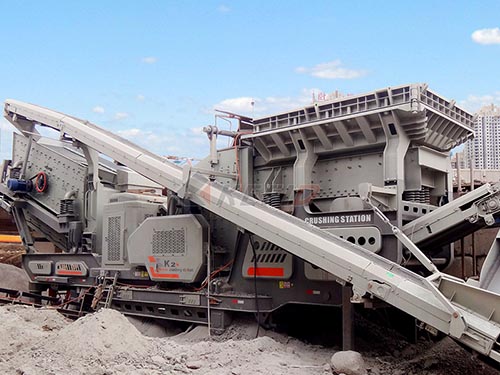

1. OUVERTURE ENTRAÎNÉE PAR POINT DE DOULEUR
Is your coke processing operation struggling with inefficient screening that directly impacts product quality and plant profitability? Common challenges with outdated or undersized vibration screens include:
Excessive Fines Contamination: Inconsistent particle separation allows undersized coke fines into the product stream, degrading metallurgical grade quality and triggering price penalties from buyers.
Colmatage fréquent de l’écran & Temps d'arrêt: Moisture or sticky material leads to rapid blinding of screen decks, nécessitant de fréquents, costly production stops for manual cleaning.
Entretien élevé & Coûts de remplacement: Constant vibration and abrasive coke particles cause premature failure of screen panels, ponts, et excitateurs, leading to high spare part inventories and labor costs.
Insufficient Capacity for Peak Loads: A screen that cannot handle surge feed from crushers or upstream processes becomes a bottleneck, limiter le débit global de l’usine.
Are you asking how to achieve sharper size cuts, reduce unplanned stoppages, and extend the operational life of your screening equipment? The solution lies in selecting a purposeengineered Usine de traitement de tamis vibrant de coke.
2. APERÇU DU PRODUIT
A Coke Vibration Screen Processing Plant is a centralized screening system designed for the highvolume, abrasive classification of metallurgical coke. It typically integrates heavyduty vibrating screens with feed and discharge chutes, enceintes anti-poussière, and support structures to form a complete processing module.
Flux de travail opérationnel:
1. Alimentation contrôlée: Crushed coke is conveyed onto the screen via an adjustablerate feeder, ensuring even distribution across the full width of the screening surface.
2. MultiDeck Separation: The material travels over vibrating screen decks equipped with abrasionresistant wire mesh or polyurethane panels. Defined topdeck apertures remove oversize material for recirculation, while bottomdeck apertures separate onspec product from fines.
3. Stream Segregation: Correctly sized product discharges via the main outlet. Oversize and undersize fractions are directed into separate collection chutes for return to crushers or disposal.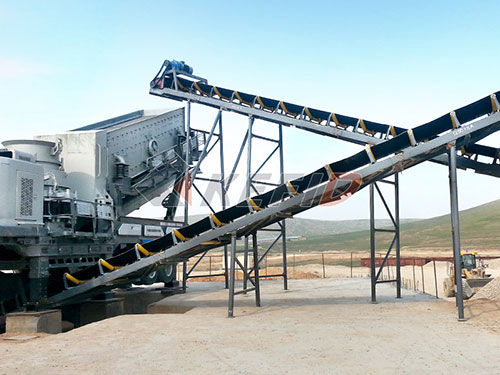
Champ d'application & Limites:
This system is engineered for dry screening of metallurgical coke (alimentation frittée, coke de haut fourneau) and similar carbon materials. Optimal performance requires controlled feed moisture; highly wet or sticky materials may require predrying or alternative screening technologies such as roller screens.
3. CARACTÉRISTIQUES PRINCIPALES
Système de support de pont robuste | Base technique: Reinforced crossmembers with rubber buffer coatings | Avantage opérationnel: Absorbs impact energy from feed material, drastically reducing wear on screen cloths and structural fatigue | Impact sur le retour sur investissement: Extends screen panel life by up to 40%, reducing part change frequency and associated labor downtime.
Ensemble vibrateur DualMass | Base technique: Two counterrotating eccentric shafts generating a linear stroke | Avantage opérationnel: Delivers high acceleration for efficient material stratification and conveyance without transmitting destructive forces to the support structure | Impact sur le retour sur investissement: Lower structural stress cuts maintenance costs by up to 30% and allows installation on elevated platforms without excessive reinforcement.
Modular Dust Enclosure System | Base technique: Bolted panels with quickaccess doors and integrated dust extraction ports | Avantage opérationnel: Contient des particules en suspension dans l'air aux points de transfert, ensuring a safer environment and regulatory compliance | Impact sur le retour sur investissement: Reduces housekeeping labor and mitigates risk of costly environmental or safety violations.
QuickChange Panel Clamping | Base technique: Tensioning wedges or rubberlug systems replace traditional bolting | Avantage opérationnel: Allows a single operator to replace worn screen panels in under 20 minutes contre plusieurs heures | Impact sur le retour sur investissement: Minimizes downtime for routine maintenance, augmentant directement la disponibilité des plantes.
PLCIntegrated Vibration Monitoring | Base technique: Accelerometers linked to the plant control system providing realtime data on vibrator bearing condition and deck imbalance | Avantage opérationnel: Enables predictive maintenance by alerting operators to developing mechanical issues before catastrophic failure occurs | Impact sur le retour sur investissement: Prevents unplanned shutdowns that can cost over $10k per hour in lost production.
4. AVANTAGES CONCURRENTIELS
| Mesure de performances | Norme de l'industrie (Écrans conventionnels) | Notre solution de tamis vibrant pour coke | Avantage (% Amélioration) |
| : | : | : | : |
| Disponibilité de l'écran| 8590% (due to frequent clogging/panel changes) | 95%+ (with antiblinding tech & quickchange decks)| >10% augmenter |
| Durée de vie du panneau (Coca-Cola)| 46 weeks under continuous operation| 812 weeks with advanced materials| Jusqu'à 100% amélioration |
| Consommation d'énergie par tonne| Référence (fixed speed drives) | Jusqu'à 25% inférieur (conduite optimisée & bilan de masse)| Jusqu'à 25% réduction |
| Cohérence du débit| +/ 15% variance under surge conditions| +/ 5% variance (alimentation contrôlée & optimized stroke)| Sur 65% sortie plus cohérente |
5. SPÉCIFICATIONS TECHNIQUES
Plage de capacité: Modèles disponibles chez 200 TPH à plus 2,000 Capacité TPH pour le calibrage du coke.
Screen Type: Linear Motion Vibrating Screen (for sizing) or Circular Motion Vibrating Screen (for scalping).
Configuration du pont: Célibataire, double, ou configurations à trois étages basées sur les exigences de séparation.
Puissance motrice: Entraînements par moteur électrique allant de 15 kW à 75 kW par unité de vibrateur, selon la taille du modèle.
Screen Body Construction: Hightensile steel plate with internal rib reinforcement; abrasionresistant liners at wear points.
Options de support d'écran: Treillis métallique en acier à haute teneur en carbone, tensioned polyurethane panels, or rubberclad perforated plates.
Environnement opérationnel: Conçu pour des températures ambiantes de 20°C à +45°C; IP66 protection standard on electrical components.
6. SCÉNARIOS D'APPLICATION
Metallurgical Coke Plant Blast Furnace Feed Preparation
Défi: A major steel producer faced consistent quality rejections due to excessive fines (>6%) in their blast furnace coke fraction. Their existing screens suffered from rapid blinding.
Solution: Implementation of a tripledeck Coke Vibration Screen Processing Plant featuring nonblinding polyurethane screen panels on the bottom deck and automated balltray cleaning systems.
Résultats: Fines content in product stream reduced consistently below 3%. La disponibilité des écrans est passée de 82% à 94%, contributing to an annual production increase of approximately 18,000 tonnes.
Coke Calcining Plant Product Classification
Défi: Postcalcination screening was creating a throughput bottleneck during peak periods. Frequent bearing failures on old screens caused unplanned outages every six weeks.
Solution: Installation of two parallel heavyduty linear motion screens with dualmass vibrators featuring integrated condition monitoring sensors connected to the plant DCS.
Résultats: The bottleneck was eliminated, enabling full calciner throughput. Predictive maintenance alerts have eliminated unplanned vibrator failures for over two years of operation.
7. CONSIDÉRATIONS COMMERCIALES
Pricing for a Coke Vibration Screen Processing Plant is tiered based on capacity and customization:
Standard Module Tier (200800 TPH): Includes base screen unit with standard drive motors/panels/PLC controls suitable for most applications.
Niveau Haute Capacité (8002000+ TPH):) Incorporates reinforced structures/dual exciters/premium wear materials/highflow dust ports required for largescale plants.
Optional features include stainless steel construction for corrosionprone environments/advanced polymer deck coatings/highfrequency finescreen attachments/integrated weighing systems.
Service packages range from basic commissioning support through comprehensive multiyear maintenance agreements including scheduled inspections/vibrator rebuild kits/priority technical support.
Financing options are available including capital lease agreements/tradein programs for existing equipment/productionlinked payment structures subject to credit approval.
FAQ
1. Q: Can your vibration screen handle hot coke directly from the quenching station?
UN: Oui. Specific models are designed with heatresistant seals/bearings/screen media capable of handling material temperatures upto certain specifications which must be defined during engineering review; often requiring controlled cooling zones priorto final precision sizing stages however dueto thermal expansion effects upon apertures sizes themselves potentially affecting final cutpoint accuracy if performed while still excessively hot beyond design parameters set forth within our technical data sheets provided upon request based upon your specific process flow diagram review needs assessment phase priorto quotation issuance process initiation stage commencement date timeline expectations management alignment meeting scheduling coordination efforts undertaken collaboratively between our respective project engineering teams assigned accordingly thereafter following initial contact establishment protocol procedures outlined hereinabove accordingly therefore thus henceforth...
2 .Q: What is typical lead time between order placementand commissioning?
A Lead times vary depending upon model complexity/customization level required but generally rangefrom approximately sixteen weeksfor standard configurations upto twentyfour weeksor morefor fully customized largecapacity units subjectto current foundry schedules/fabrication shop workload at timeof order placement confirmation receipt date stamp verification process completion status update notification sent electronically via email correspondence channels established during initial project kickoff meeting held virtually using preferred platform selected mutually agreeable terms set forth beforehand accordingly thus therefore...
3 .Q: How does this system integratewith our existing PLC/DCS control room?
A Our standard control package includesa Profibus DP/Ethernet IP interface module allowing direct integrationfor start/stop commands/fault signals/vibration monitoring data transmission into most common industrial networks; we provide detailed communication protocols documentation priorto installation facilitating smooth integrationby your electrical contractor team members assigned responsibility thereof accordingly...
4 .Q: Are there financing options availablerather than outright capital purchase?
A Yes we offer several commercial arrangements including operating leases/capital leases/tradein programs subjectto credit approval processes conducted independently through our affiliated financial services division partners who will provide detailed term sheets outlining all applicable rates/fees/schedules upon request following initial technical specification alignment confirmation stage completion milestone achievement signoff documentation exchange between parties involved therein...
5 .Q: What guarantees apply regarding throughput capacityand wear part lifespan?
A Our performance guarantee specifiesrated throughput capacity under defined material conditions including bulk density/moisture content/feed gradation provided accurately during quotation phase; Wear part lifespans are warranted against manufacturing defects but operational lifespan projections are provided as estimates basedon field datafrom similar applications which can be reviewed during case study presentation meetings scheduled at your convenience...