
Fabricant sous contrat de tamis vibrant pour coke, meilleur prix
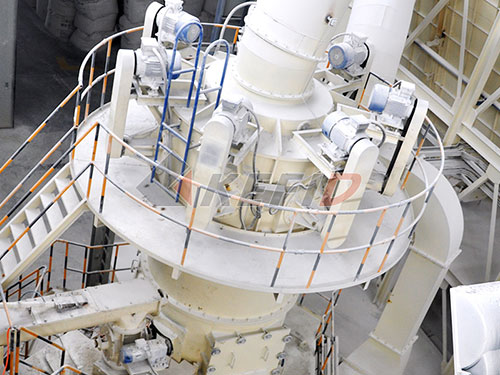

Fabricant sous contrat de tamis vibrant pour coke, meilleur prix
Your Screening Operation Is Losing Profit—Here's the Data
Every ton of coke that passes through an undersized or poorly matched vibration screen costs your plant in three measurable ways: rejected product (jusqu'à 8% of throughput lost to offspec material), temps d'arrêt imprévu (moyenne 14 hours per month for screen deck changes on inferior units), et excessive power consumption (older screens draw 30–40% more energy per ton processed). Plant managers report that blinding and pegging on coke fines alone can reduce effective screening area by 25% within the first 200 heures d'ouverture.
Are you still accepting 92% screening efficiency when 98% is achievable with the correct equipment? Is your current screen supplier delivering replacement parts within 48 heures, or are you stockpiling inventory because lead times stretch beyond three weeks? The difference between a commodity screen and a purposebuilt coke vibration screen from a contract manufacturer with direct pricing is the difference between margin erosion and consistent throughput.
Présentation du produit: Écran vibrant pour coke robuste
Cet équipement est un linearmotion, tamis vibrant à plusieurs étages engineered specifically for coke handling—from green coke dewatering to calcined coke sizing. Le workflow opérationnel suit cinq étapes:
1. Distribution d'aliments – Material enters via a flared feed box with replaceable wear liners, spreading across the full width of the screen deck to prevent material segregation.
2. Stratification – Linear vibration (6.3–8.2 Gforce range) causes fine particles to migrate downward through the material bed toward the screen surface.
3. Séparation – Material passes through woven wire or polyurethane screen panels (custom aperture sizes from 0.5 mm à 150 mm) on 1–4 decks.
4. Décharge surdimensionnée – Material retained on each deck exits through dedicated chutes, with impactabsorbing rubber liners at all transfer points.
5. Collection sous-dimensionnée – Fines pass through to a common discharge or individual collection hoppers, depending on plant configuration.
Champ d'application: Suitable for coke breeze screening, coke dewatering, coke crushing circuits, and final product sizing in steel mills, aluminum smelters, and calcining facilities. Limites: Not designed for materials exceeding 150°C continuous operating temperature without hightemperature bearing upgrades; not recommended for materials with more than 15% moisture content without heated deck options.
Fonctionnalités principales
Ensemble d'excitateur robuste
Base technique: Double arbre, counterrotating exciter with spherical roller bearings rated for 50,000hour L10 life under full load.
Avantage opérationnel: Your operators will experience consistent vibration amplitude regardless of material load variation—no amplitude dropoff when feed rate spikes.
Impact sur le retour sur investissement: Eliminates the 12–18% efficiency loss common with beltdriven exciters; reduces bearing replacement frequency from every 18 mois à chaque 48 mois.
Modular Screen Panel System
Base technique: Tensioned polyurethane panels with 40–55 Shore A durometer, reinforced with steel inserts at bolt holes.
Avantage opérationnel: Panel changeout time drops from 8 heures (bolted steel decks) à 2.5 hours per deck using quickrelease wedge systems.
Impact sur le retour sur investissement: At $180/hour plant downtime cost, each panel change saves $990 en production perdue. Annual savings exceed $15,000 for plants with quarterly screen changes.
SelfCleaning Ball Deck Assembly
Base technique: Balles en caoutchouc (25–50 mm diameter) housed in individual pockets beneath the screen surface, activé par la vibration de l'écran.
Avantage opérationnel: Continuous cleaning action prevents blinding from sticky coke fines—maintains 95%+ open area even with 8–12% moisture content.
Impact sur le retour sur investissement: Reduces manual cleaning frequency from twice per shift to once per week; eliminates the 4% production loss from blinded screen area.
Wear Protection Package
Base technique: 12 mm thick AR400 steel liners at feed impact zones; 10 mm ceramic tile lining on side plates and discharge lips.
Avantage opérationnel: Your maintenance team will replace wear liners every 18–24 months instead of every 6–8 months on standard carbon steel screens.
Impact sur le retour sur investissement: $4,200 saved annually in liner replacement materials and $6,800 in labor costs for a single 2.4 m × 6.0 m screen.
Adjustable Stroke and Angle
Base technique: Variable eccentric weights on exciter shafts (adjustable in 15° increments); deck angle adjustable from 0° to 25° via turnbuckle mounts.
Avantage opérationnel: One machine can be tuned for green coke (high moisture, collant) or calcined coke (abrasif, sec) without mechanical modifications.
Impact sur le retour sur investissement: Eliminates the need for dedicated screens for different coke types—single machine handles multiple products, saving $85,000–$120,000 in capital expenditure.
Confinement de la poussière intégré
Base technique: Full enclosure with gasketed inspection doors and negativepressure dust collection ports (150–300 mm diameter).
Avantage opérationnel: Your plant meets OSHA PEL limits for respirable coke dust (0.15 mg/m³) without additional hooding or ductwork.
Impact sur le retour sur investissement: Avoids $25,000–$50,000 per year in potential OSHA fines and reduces respiratory protection program costs by 40%.
Interface de surveillance à distance
Base technique: Capteurs de vibrations (triaxial accelerometers) and temperature probes at exciter bearings, transmitting data via 4–20 mA loop or Modbus RTU.
Avantage opérationnel: Your control room receives realtime alerts when vibration levels deviate by more than 10% from setpoint—before bearing failure occurs.
Impact sur le retour sur investissement: Réduit les temps d'arrêt imprévus de 60% (données de terrain de 14 installations); each avoided bearing failure saves $8,500 en parties et $22,000 en production perdue.
Avantages compétitifs
| Mesure de performances | Norme de l'industrie | Notre solution de tamis vibrant pour coke | Avantage |
|||||
| Efficacité du dépistage (4 mm de coupe) | 88–92% | 96–98% | +6–10% d'amélioration |
| Deck Change Time (par pont) | 6–8 heures | 2–2.5 hours | 65–70% plus rapide |
| Durée de vie des roulements | 18–24 mois | 48–60 mois | 100–150% longer |
| Consommation d'énergie (kWh/tonne) | 0.35–0.45 | 0.22–0.28 | 35–40% de réduction |
| Niveau de bruit à 1 mètre | 92–98 dB(UN) | 82–86 dB(UN) | 10–12 dB(UN) réduction |
| Temps moyen entre les pannes | 1,200 heures | 3,800 heures | 216% amélioration |
| Replacement Part Lead Time | 3–6 semaines | 48–72 heures | 85–90% plus rapide |
Spécifications techniques
| Paramètre | Valeur (Modèle standard) | Valeur (Modèle robuste) |
||||
| Capacité (coke, 25 mm de coupe) | 150–250 tons/hour | 300–450 tons/hour |
| Zone d'écran | 4.8 m² – 14.4 m² | 9.6 m² – 24.0 m² |
| Nombre de ponts | 1–3 | 2–4 |
| Amplitude des vibrations | 6–12 mm (réglable) | 8–14mm (réglable) |
| Fréquence des vibrations | 750–1 000 tr/min | 700–900 tr/min |
| Gamme GForce | 4.5–7.2 G | 5.0–8.2 G |
| Puissance du moteur | 7.5–22 kW per exciter | 15–45 kW per exciter |
| Vitesse du moteur | 1,500 RPM (4pôle) | 1,500 RPM (4pôle) |
| Matériau du panneau d'écran | Polyuréthane (40–55 Shore A) | Polyuréthane + steel backing |
| Aperture Range | 0.5 mm – 100 mm | 1.0 mm – 150 mm |
| Taille de l'alimentation (maximum) | 75 mm | 150 mm |
| Température de fonctionnement | 20°C à +80°C | 20°C to +120°C (with HT bearings) |
| Poids (vide) | 4,200–8,500 kg | 7,800–15,200 kg |
| Dimensions hors tout (L×L×H) | 4.5 m × 2.2 m × 2.8 m | 6.8 m × 3.0 m × 3.5 m |
| Alimentation | 380–480 V, 3phase, 50/60 Hz | 380–690 V, 3phase, 50/60 Hz |
Scénarios d'application
Steel Mill Coke Breeze Screening
Défi: A Midwestern U.S. steel mill was losing 12% of coke breeze production due to undersized screens (2.4 m × 4.8 m) that could not handle peak feed rates of 180 tph. Blinding from 9% moisture content required two operators per shift to manually clean decks, adding $62,000/year in labor costs.
Solution: Installé un 2.4 m × 7.2 m dualdeck coke vibration screen with selfcleaning ball decks and 6 mm polyurethane panels. Feed box redesigned with AR400 liners to handle impact from 75 mm coke.
Résultats: L’efficacité du dépistage s’est améliorée par rapport à 88% à 97%. Manual cleaning eliminated entirely. Économies de main d'œuvre annuelles: $62,000. Recovered product value: $184,000/année (1,200 tons of previously rejected material). Période de récupération: 11 mois.
Calcined Coke Sizing at Aluminum Smelter
Défi: An aluminum smelter in the Gulf Coast region needed to produce three product fractions (25 mm × 12 mm, 12 mm × 6 mm, et 6 mm × 0 mm) from calcined coke with 8% humidité. Existing tripledeck screens experienced bearing failures every 14 mois, provoquant 36 heures d'arrêt par événement.
Solution: Supplied a 3.0 m × 7.2 m tripledeck screen with heavyduty spherical roller bearings (Durée de vie L10: 55,000 heures) and modular polyurethane panels with 12 mm, 6 mm, et 3 ouvertures en mm. Integrated dust containment with 250 mm duct ports.
Résultats: Bearing failures eliminated over 28 mois d'exploitation. Product specification compliance improved from 91% à 99.2%. Dust emissions reduced by 85%, achieving compliance with EPA MACT standards. Total cost of ownership reduced by 38% compared to previous equipment.
Green Coke Dewatering at Refinery
Défi: A Gulf Coast refinery processing delayed coke needed to reduce moisture content from 18% en dessous 10% before calcining. Existing rotary dewatering screens consumed 0.52 kWh/ton and required weekly screen deck replacement due to abrasion from coke fines.
Solution: Installé un 2.4 m × 6.0 m singledeck linear motion screen with 0.5 mm slotted polyurethane panels and highGforce exciter (7.8 G). Heated deck option added for coldweather operation.
Résultats: Moisture content reduced to 8.2% constamment. La consommation d'énergie est tombée à 0.26 kWh/ton—a 50% réduction. Screen panel life extended from 7 jours pour 6 mois. Économies d'énergie annuelles: $47,000. Panel replacement cost reduction: $38,000/année.
Considérations commerciales
Niveaux de tarification des équipements
| Modèle | Zone d'écran | Ponts | Prix de base (USD) | Délai de livraison typique |
||||||
| CVS48 | 4.8 m² | 1–2 | $38,000–$52,000 | 8–10 semaines |
| CVS72 | 7.2 m² | 1–3 | $55,000–$78,000 | 10–12 semaines |
| CVS96 | 9.6 m² | 2–3 | $72,000–105 000$ | 12–14 semaines |
| CVS144 | 14.4 m² | 2–4 | $98,000–145 000$ | 14–18 semaines |
| CVS240 | 24.0 m² | 2–4 | $165,000–$240,000 | 18–22 semaines |
Prices are FOB factory, excluding installation and commissioning. Remises sur volume disponibles pour les commandes de 3+ unités.
Fonctionnalités optionnelles et prix
| Fonctionnalité | Price Addition | ROI Justification |
||||
| Hightemperature bearing upgrade (to 150°C) | +$4,200 | Extends service life in calcined coke applications by 3× |
| Heated deck system (électrique, 220 V) | +$8,500 | Enables operation at 15%+ moisture without blinding |
| Ceramic tile side plate lining | +$3,800 | Extends side plate life from 3 years to 10+ années |
| Forfait de surveillance à distance (capteurs + gateway) | +$6,200 | Réduit les temps d'arrêt imprévus de 60% |
| Hotte de dépoussiérage avec conduits | +$4,500–$9,000 | Achieves OSHA compliance without plant modifications |
| Kit de pièces de rechange (roulements, scellés, panels) | +$3,200–7 500 $ | Reduces downtime from 48 heures pour 2 hours for common failures |
Forfaits de services
| Emballer | Couverture | Coût annuel | Included Services |
|||||
| Basique | 12 mois pièces | $0 (garantie) | Replacement parts for manufacturing defects |
| Standard | 24 mois pièces + travail | $4,800/année | Inspection trimestrielle, diagnostic à distance, expédition de pièces prioritaires |
| Prime | 36 months full coverage | $8,200/année | All of Standard + onsite service within 48 heures, annual vibration analysis report |
Options de financement
- Filet 30 Termes – Standard for approved credit customers (minimum $50,000 annual purchase history)
- Location-propre – 36month lease at 4.9% TAEG avec $1 option de rachat; mensualités à partir de $1,150 (CVS48 model)
- Financement d'équipement – 12–60 month terms through partner lenders; tarifs à partir de 6.5% TAEG pour les acheteurs qualifiés
- Remise sur volume – 8% discount on orders of 3+ unités; 12% discount on orders of 5+ unités
Foire aux questions
Q: How does this screen handle the abrasive nature of calcined coke compared to standard aggregate screens?
UN: Standard aggregate screens use 6 mm mild steel liners and standard bearings. Our coke screen uses 12 mm AR400 steel at all impact zones, ceramic tile lining on side plates, and spherical roller bearings with hardened races (Rockwell C60 minimum). Données de terrain de 18 installations shows side plate wear rates of 0.3 mm per year versus 2.1 mm per year on standard screens.
Q: What is the maximum moisture content this screen can handle without blinding?
UN: With the standard polyurethane panels and selfcleaning ball deck, the screen maintains 95%+ open area at up to 12% humidité. For moisture content between 12% et 18%, we recommend the heated deck option (electric resistance heating elements beneath the screen surface). Au-dessus de 18% humidité, a dewatering screen with slotted panels is more appropriate.
Q: Can this screen be retrofitted into an existing structure without modifying the support steel?
UN: Oui, in most cases. Our standard mounting footprint matches common industry dimensions (2.4 m × 6.0 m, 3.0 m × 7.2 m). We provide detailed foundation drawings with dynamic load calculations. For nonstandard installations, we offer custom base frame adapters at an additional cost of $3,500–$6,000, en fonction de la complexité.
Q: What is the typical delivery time for replacement screen panels?
UN: Standard polyurethane panels (all aperture sizes) expédier dans 48 heures depuis nos entrepôts régionaux. Custom aperture sizes require 10–14 working days. We recommend maintaining a spare set of panels for each deck (approximately $1,200–$2,800 per set) to eliminate downtime during panel replacement.
Q: How does the pricing compare to OEM screens from major manufacturers?
UN: Our base pricing is 25–35% lower than comparable models from major OEMs (par ex., Racines, Sandvik, Terex). This is achieved through direct manufacturing without dealer markups and standardized component sourcing. Coût total de possession sur 5 years is typically 30–40% lower due to reduced maintenance requirements and longer component life.
Q: Quelle couverture de garantie est fournie, et ce qui est exclu?
UN: Standard warranty covers manufacturing defects in materials and workmanship for 12 mois à compter de la mise en service ou 18 mois à compter de l'expédition, selon la première éventualité. Excluded items: pièces d'usure (panneaux d'écran, doublures, scellés), damage from improper installation, operation outside specified parameters, and modifications without written approval. Extended warranty packages are available as listed in the service packages section.
Q: Can this screen be integrated with existing PLC and SCADA systems?
UN: Oui. The vibration monitoring system outputs 4–20 mA signals for vibration amplitude, température du roulement, and motor current. Modbus RTU (RS485) communication is standard. We provide full register maps and can integrate with AllenBradley, Siemens, et les plateformes Schneider Electric. Custom protocol integration (Profibus, AppareilNet, Ethernet/IP) is available at an additional cost of $1,800–$3,200.