
Prix de gros du producteur d'équipement de cimenterie
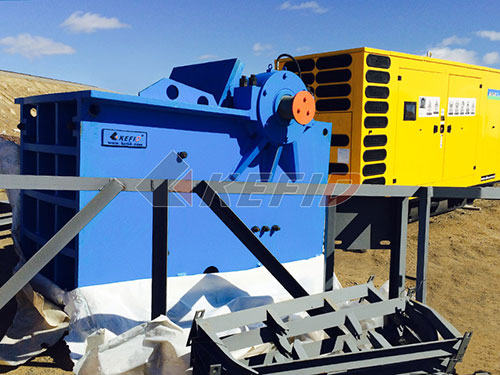

Cibler les directeurs d'usine, Directeurs des achats, et entrepreneurs en ingénierie: Un technique & Commercial Analysis of Modern Cement Plant Equipment
1. OUVERTURE ENTRAÎNÉE PAR POINT DE DOULEUR
Managing a cement production line requires balancing relentless output demands with stringent cost control. Inefficient or unreliable equipment directly erodes profitability. Êtes-vous confronté à ces défis persistants?
Temps d'arrêt imprévus: Critical path equipment failure can halt an entire production line, coûtant plus de $10,000 par heure de perte de production et de main d'œuvre.
Intensité énergétique: Rotary kilns and grinding systems often consume over 40% du budget énergétique total d’une usine. Inefficient thermal transfer and mechanical losses represent a direct, continuous financial drain.
Complexité de la maintenance: Equipment with poor service access or nonstandard parts leads to extended repair windows and high inventory costs for specialized components.
Product Consistency Variability: Inconsistent raw material preparation or clinker cooling results in offspec product, increasing reject rates and compromising final cement quality.
Pression de conformité environnementale: Respect des normes d'émission de poussière, NOx, and SOx requires equipment designed for integration with modern abatement technologies.
La question centrale est: how do you specify equipment that addresses these operational realities while delivering a clear return on investment?
2. APERÇU DU PRODUIT: ÉQUIPEMENT DE CIMENTERIE
This category encompasses the heavyduty machinery essential for transforming raw materials (calcaire, argile, schiste argileux) into finished cement. Le flux de travail principal implique:
1. Écrasement & Prehomogenization: Primary and secondary crushers reduce quarry rock to a manageable size for consistent raw mix.
2. Raw Material Grinding & Mélange: Vertical roller mills or ball mills pulverize materials, which are then homogenized in blending silos to ensure chemical uniformity.
3. Pyroprocessing in the Rotary Kiln: The preheated raw meal is calcined and sintered in a rotary kiln at ~1450°C to form clinker.
4. Refroidissement du clinker & Terminer le meulage: Hot clinker is rapidly cooled by a grate cooler to optimize quality, then ground with gypsum in a finish mill to produce cement.
5. Emballage & Expédition.
Champ d'application: This equipment is designed for integrated cement plants and grinding stations handling medium to highcapacity production (1,000 à 10,000+ DPT).
Limite clé: Optimal performance is contingent on correct sizing for plant capacity and proper integration with auxiliary systems (dépoussiéreurs à manches, les fans, convoyeurs).
3. CARACTÉRISTIQUES PRINCIPALES
Our engineered cement plant equipment is built to mitigate your core operational challenges through deliberate design.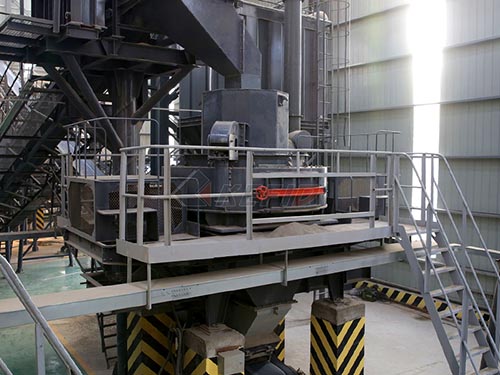
Conception avancée de la coque du four | Base technique: Analyse par éléments finis (FEA) optimized stiffnesstoweight ratio | Avantage opérationnel: Minimizes ovality under thermal load, prolongeant la durée de vie du revêtement réfractaire jusqu'à 20% | Impact sur le retour sur investissement: Réduit les coûts de remplacement des réfractaires et les temps d’arrêt du four associés
Refroidisseur à grille à haute efficacité | Base technique: Controlled air distribution across modular compartments with resistance grate plates | Avantage opérationnel: Achieves superior clinker quenching (<100°C + ambiant) with higher heat recovery rates | Impact sur le retour sur investissement: Recovers more thermal energy for secondary uses (par ex., raw meal drying), lowering net plant fuel consumption
Hybrid Drive System for Mills | Base technique: Dualpinion configuration with hightorque gearbox and synchronous motor | Avantage opérationnel: Provides smooth startup under load and consistent power transmission at variable speeds | Impact sur le retour sur investissement: Reduces electrical stress on the grid connection, lowering peak demand charges and improving power factor
Ports de surveillance d'état intégrés | Base technique: Preinstalled sensor mounts (vibration, température) on bearings and gearboxes | Avantage opérationnel: Enables predictive maintenance scheduling based on realtime equipment health data | Impact sur le retour sur investissement: Transforme la maintenance de réactive à planifiée, preventing catastrophic failures and reducing spare parts inventory
Conception de composants modulaires | Base technique: Standardized subassemblies with bolted connections where feasible | Avantage opérationnel: Dramatically reduces field welding and assembly time during installation or major overhauls | Impact sur le retour sur investissement: Réduit les coûts de main-d'œuvre d'installation d'environ 1525% and shortens timetoproduction
AbatementReady Gas Flow Design | Base technique: Optimized ducting geometry with lowpressure drop fan sizing for SCR/SNCR integration | Avantage opérationnel: Facilitates retrofitting of NOx reduction systems without major system redesign | Impact sur le retour sur investissement: Lowers future capital expenditure for compliance upgrades and avoids production curtailment
4. AVANTAGES CONCURRENTIELS
| Mesure de performances | Référence des normes de l'industrie | Notre solution d’équipement pour cimenterie | Avantage documenté |
| : | : | : | : |
| Consommation spécifique d'énergie thermique (Four) | 3.2 3.5 GJ/tonne de clinker | 75% taux de récupération démontré| >5 gain en points de pourcentage |
| Mill Drive Availability (Annuel)| ~96% availability| >98.5% objectif de disponibilité| Reduced downtime risk |
| Installation & Calendrier de mise en service| Baseline project schedule| Estimé 1015% reduction due to modularity| Faster capital deployment |
5. SPÉCIFICATIONS TECHNIQUES
Les spécifications dépendent du modèle; the following represents a range for key equipment lines.
Capacité/cote: Raw Mills from 50 450 ème; Fours rotatifs de 500 12,000 DPT; Cement Mills from 30 250 ème.
Exigences d'alimentation: Entraîner les moteurs de 500 kW jusqu'à >10 MW par unité. Supply voltage typically at medium voltage level (par ex., 6.6kV, 11kV).
Spécifications matérielles: Pièces d'usure critiques (pneus, rouleaux, grate plates) utilize highchrome alloys or nickelhard castings. Structural steel is grade S355JR minimum.
Dimensions physiques: Rotary kilns range from Ø3.2m x L48m to Ø6.5m x L110m+. Mill diameters range from Ø2.4m to Ø5.5m+.
Plage de fonctionnement environnementale: Conçu pour des températures ambiantes de 20°C à +50°C; electrical enclosures rated IP55 minimum for dust protection.
6. SCÉNARIOS D'APPLICATION
Plant Capacity Expansion Project – Southeast Asia
Défi: A growing market required a plant upgrade from 3,500 DPT à 5,000 TPD within strict space constraints on an existing brownfield site.
Solution: Implementation of a highefficiency vertical roller mill for raw grinding (saving footprint vs ball mill) paired with a precalciner kiln system upgrade.
Résultats: Capacity target met within the existing plot plan; specific power consumption reduced by approximately kWh/ton of raw meal.
Environmental Compliance Retrofit – North America
Défi: An older dryprocess plant needed to meet new NOx emissions limits without incurring excessive backpressure that would derate fan capacity and limit production.
Solution: Supply of an abatementready preheater tower section alongside a tailored lowresistance SCR system integration package.
Résultats: Achieved mandated NOx levels (<0.lb/ton clinker) while maintaining full nameplate production capacity postretrofit.
Grinding Station Optimization – Middle East
Défi: A standalone cement grinding station faced inconsistent product fineness and high maintenance costs on older twocompartment ball mills.
Solution: Replacement with a single largediameter horizontal roller press in semifinish configuration combined with a dynamic air classifier circuit.
Résultats: Achieved more consistent Blaine fineness (±15 cm²/g), reduced specific energy consumption by over kWh/ton cement.
7 . CONSIDÉRATIONS COMMERCIALES
Our commercial approach is structured around providing total cost of ownership clarity.
Niveaux de tarification: Equipment is offered across standard duty (+/10%), robuste (+/20%), or customengineered configurations (+/30%) relative to baseline pricing models based on material specifications required for your specific feed chemistry.
Fonctionnalités facultatives / Upgrades include advanced process control interfaces compatible with DCS systems ceramic composite wear liners where applicable extended lubrication intervals via automated greasing systems remote diagnostic gateway packages
Service Packages are available as annual inspection plans comprehensive longterm service agreements including parts coverage turnkey installation supervision commissioning support operator training programs conducted onsite
Financing Options can be explored through our network partners including leasetoown structures milestonebased project financing traditional assetbacked loans tailored support available via export credit agencies where eligible
8 . FAQ
Q1 Are your mills compatible with existing slurry or dry process feed systems?
A1 Our grinding equipment portfolio includes solutions tailored for both wet slurry feed traditional dry raw mix applications engineering review required confirm interface specifications like moisture content particle size distribution
Q2 What impact will this have on my current workforce training requirements?
A2 We provide comprehensive operational manuals maintenance checklists recommend structured onsite training sessions ensure your team achieves proficiency safe efficient operation typically spanning days depending system complexity
Q3 Can you supply individual components retrofit existing thirdparty equipment?
A3 Yes we provide engineered upgrades replacement parts like girth gears shell sections cooler grates subject technical audit ensure dimensional mechanical compatibility provide documented performance expectations prior commitment
Q4 What are typical lead times major equipment like rotary kiln?
A4 Lead times vary significantly based project scope current manufacturing load standard design heavyduty rotary kiln typically months from order placement fabrication delivery exworks expedited options may available additional cost critical path projects
Q5 How do you handle warranty what postcommissioning support look like?
A5 Standard warranty covers manufacturing defects materials workmanship months commissioning hours operation whichever comes first extended warranty available purchase our service packages include priority technical support spare parts provisioning scheduled health audits